Choosing a Car Thermostat: Temperature Rating and What to Buy
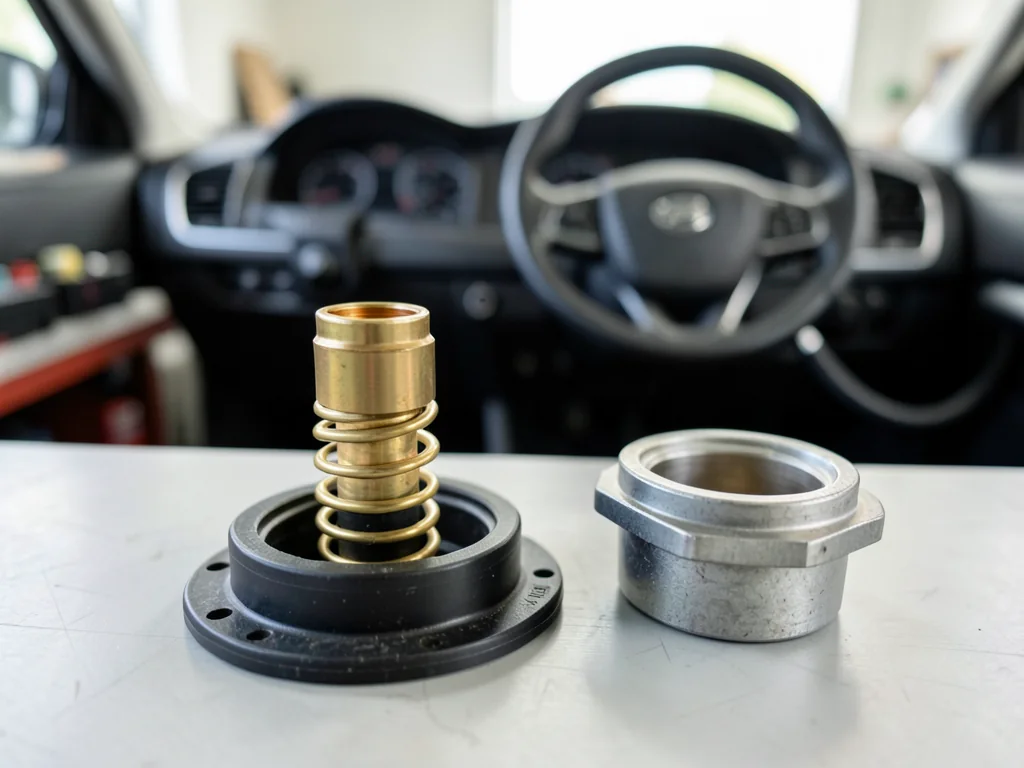
Choosing a replacement thermostat means matching the opening temperature your engine was designed for, not picking the lowest number on the shelf. The rating tells you when coolant starts circulating to the radiator, and changing it affects warm-up, fuel economy, cabin heat, and emissions. Whether you drive a daily commuter or a tuned project car, understanding what that degree stamp really means will help you select a thermostat that keeps the engine in its intended operating range without triggering new problems.
What the Degree Rating on a Car Thermostat Actually Means
The number stamped on a thermostat is the temperature at which its wax pellet begins expanding and the valve first lifts off its seat. It is not the engine's running temperature or a maximum limit. From that point, the valve opens progressively as coolant temperature climbs, reaching full travel typically 15 to 20 degrees Fahrenheit above the rated value. This means an engine fitted with a 195°F thermostat will normally operate somewhere between 195°F and about 210°F under light load, depending on airflow and radiator efficiency.
A lower degree rating does not make the cooling system remove more heat. It only changes when the thermostat starts sending coolant through the radiator. Once the valve is fully open, both a 180°F and a 195°F thermostat allow the same maximum flow, so the system's ultimate heat rejection capacity is identical. When comparing parts, pay attention to the units printed on the housing—a 195°F thermostat is roughly 90°C, and listings that omit Fahrenheit or Celsius can easily lead to ordering a part that opens 10 degrees too soon or too late.
How to Find the Thermostat Temperature Your Car Needs
The correct rating comes from the manufacturer's specification for your specific engine, not from a universal chart. Start with the owner's manual or service information, or ask a dealer parts department using your VIN. Many reputable online parts catalogs also offer exact-fit lookup by vehicle details. This matters because the same model name can have different engines across years, emissions packages, or markets, and each may call for a different thermostat temperature and flange design.
The old thermostat can be a useful cross-check, but do not trust it blindly. A previous owner or repair shop may have installed a non-standard part, or the original may have been superseded by a revised specification. Look for the rating stamped into the metal flange or bridge, and compare it with the catalog listing. For a daily-driven, unmodified vehicle, the factory-specified temperature is almost always the right choice. It keeps the engine in the narrow range the computer expects for fueling, ignition timing, and emissions controls.
Stock vs. Cooler Thermostats: The Real Tradeoffs
A cooler thermostat, such as a 180°F unit in place of a 195°F stock part, opens earlier and begins sending coolant to the radiator at a lower temperature. This can keep the coolant a few degrees cooler during light driving, but it does not add any cooling capacity. Once the system is heat-soaked and the thermostat is fully open, the coolant temperature will be determined by the radiator, fan, water pump, and airflow—not by the thermostat's rating. The lower rating only delays the onset of full cooling, it cannot rescue an overloaded system.
Installing a lower-rated thermostat can cause the engine to warm up more slowly, reduce cabin heater output, and change fuel economy and emissions because the computer may stay in open-loop or enrichment strategies longer. Some modern vehicles will even set a check engine light for insufficient coolant temperature, because the ECM expects the engine to reach a certain threshold within a set time. A code that appears after such a change must be read and interpreted for your specific vehicle; it is not always harmless. Cooler thermostats are sometimes used on tuned or forced-induction engines, but only in conjunction with a changed calibration that expects lower temperatures.
What Makes a Good Replacement Thermostat
The best thermostat is not the one with the lowest opening temperature; it is the one that matches the specified rating and physical design for your engine. Look for a sturdy stamped or cast housing, a smooth valve seat, and a clearly marked temperature rating. If the original design includes a small air bleed, often called a jiggle valve, the replacement should have one as well. This helps trapped air escape during refilling and prevents erratic gauge readings or air pockets.
Some cars use a simple thermostat inserted into a housing, while others use a complete integrated housing, sometimes with sensors or a control solenoid. The replacement must match what the vehicle originally used, because the housing shape, hose angle, and sensor port location are part of the sealing and control system. OEM and OE-supplier parts generally follow the factory design closely, while aftermarket parts can vary. Fail-safe thermostats are designed to lock open if they fail, preventing overheating but potentially causing slow warm-up; confirm that this design is compatible with your vehicle before choosing it.
Checklist Before You Buy a Thermostat
Before ordering, have the year, make, model, engine size, and ideally the full VIN ready. Many engines within the same model line use different thermostats, and the VIN is the only way to be certain. Once you have the catalog listing, confirm the temperature rating and compare the flange diameter, mounting hole spacing, and overall height with your old part if possible. Also check whether the replacement comes with a gasket, rubber O-ring, or housing seal, or whether those must be purchased separately.
Plan for related items based on the manufacturer's service information. A new thermostat often calls for a fresh gasket or O-ring, and the cooling system may need a specific coolant type. If you are draining coolant, have enough of the correct mixture on hand before you start. Keep the receipt and packaging until you have compared the new part side by side with the old one, checking the rating, bypass port, jiggle valve position, and flange shape. This simple check can prevent a wrong part from being installed.
Signs the Thermostat Choice Is Wrong and When to See a Professional
After installation, watch for a temperature gauge that stays low or takes much longer than normal to rise, weak heat from the heater, or a gauge that climbs higher than before. A new check engine light may also appear, especially if the engine computer monitors coolant temperature warm-up time. These signs can suggest the thermostat rating is too cool, too hot, or that air is trapped in the system. They do not automatically prove the thermostat is at fault: a low gauge can also come from a failed coolant temperature sensor or low coolant level, and overheating can be caused by a clogged radiator, bad fan clutch, or failing water pump.
Never open the radiator cap or thermostat housing while the engine is hot. Steam and pressurized coolant can cause severe burns. If the gauge reaches the red zone or you see steam, stop driving immediately and let the engine cool. If symptoms continue, a professional can pressure test the system, compare the gauge reading with a scan tool's coolant temperature data, and read any stored diagnostic codes with their vehicle-specific definitions. This avoids replacing parts based on guesswork and confirms whether the thermostat rating, installation, or another cooling fault is responsible.