Chevy Volt Check Engine Light: Causes and Safe Next Steps
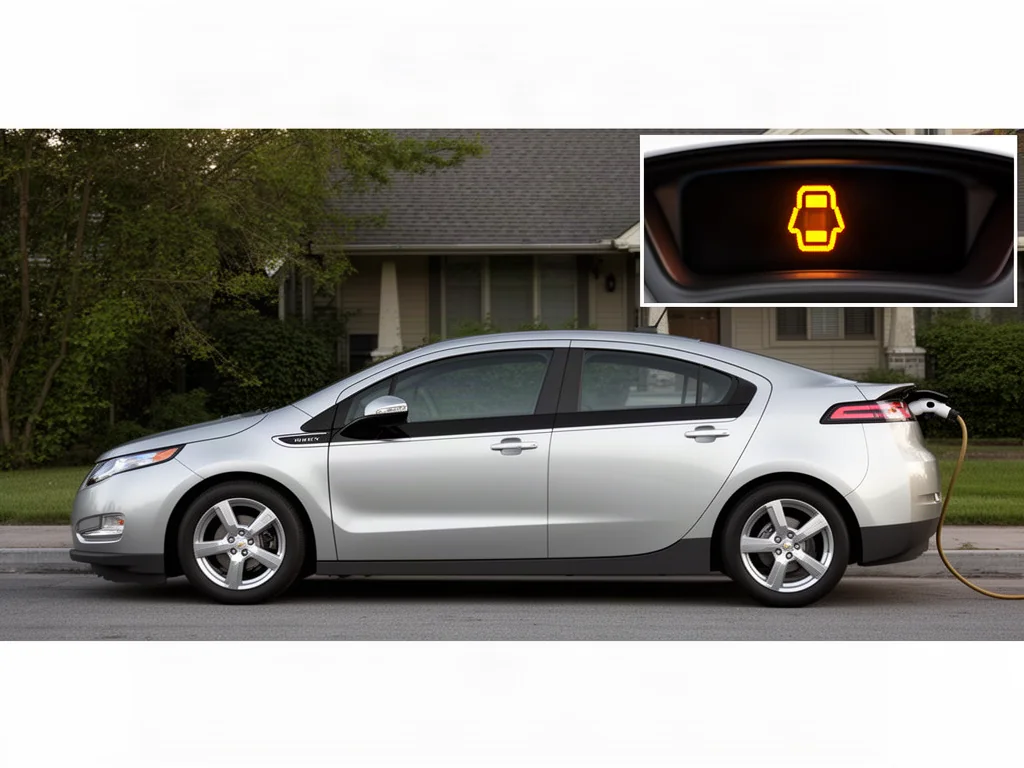
A Chevy Volt check engine light means the vehicle has detected a condition that needs diagnosis, not that a specific part has already failed. Because the Volt is a plug-in hybrid, the malfunction indicator lamp can relate to the gasoline engine, the EVAP system, hybrid control modules, or the 12-volt battery even while you are driving on electric power. Record whether the lamp is steady or flashing and note any accompanying messages before you interpret causes.
What the Volt’s Check Engine Light Can Tell You
The check engine light on a Chevy Volt is a malfunction indicator lamp. It tells you a control module has detected a condition that needs diagnosis, not which part has failed. Hybrid control modules, engine sensors, and emissions hardware can all set diagnostic trouble codes. Because the Volt remains an emissions-controlled vehicle even in electric operation, a silent gasoline engine does not rule out an engine or EVAP-related fault. Stored codes and freeze-frame data describe the moment of detection; the lamp itself does not.
Before treating any cause as likely, establish the model year, because Volt hardware and messaging vary across generations. Note whether the lamp is steady or flashing, and write down every accompanying dashboard message, including range, propulsion, or battery notices. A flashing lamp typically indicates a more urgent combustion-related concern than a steady lamp, but only vehicle-specific diagnosis can confirm that. Driving on electric power after the light appears does not clear the underlying detection. Capture these details first so later interpretation of codes and freeze-frame data stays grounded in what the car actually displayed.
Symptoms That Require Stopping or Prompt Service
If the Chevy Volt check engine light is flashing, or if you notice severe shaking, overheating, smoke, or a significant loss of propulsion, stop as soon as it is safe and arrange assistance. Those signs can accompany misfire, thermal distress, or a hybrid propulsion fault that electric driving will not automatically contain. Do not continue a trip merely because the car can still move on electric power. The owner's manual for your model year remains the first source for warning-specific instructions, including when to reduce load or request a tow.
A steady malfunction indicator lamp without obvious symptoms still requires timely diagnosis. The absence of shaking or smoke does not establish that continued driving is safe, because some emissions, EVAP, sensor, and 12-volt battery faults produce little driver feedback until they worsen or affect readiness. Consult the model-year owner's manual for any related messages about reduced propulsion, charging, or service. If the light stays on after a restart, treat it as unfinished diagnostic work rather than a nuisance that electric range can postpone until the next convenient stop.
How Fuel and Engine Maintenance Modes Fit In
The Volt can start the gasoline engine for maintenance even when the driver expects quiet electric operation. Fuel maintenance mode is intended to cycle stored gasoline so it does not sit unused for long periods. Engine maintenance mode is a separate request to run the engine for lubrication and operating condition rather than to consume a particular fuel quantity. Those purposes are different, and the exact prompts, duration, and enabling logic depend on model year. Do not assume a numeric interval or a fuel-level trigger that the owner's manual for that year does not state.
A maintenance-mode message by itself does not prove a malfunction and does not explain why a check engine light is on. The engine can run for fuel or engine maintenance while emissions monitors, sensors, and hybrid control modules continue their own checks. Record the exact wording, the model year, and whether the malfunction indicator lamp appeared before the engine started, while it was running, or after it shut down. That sequence helps a technician separate an expected maintenance start from a diagnostic trouble code that happened to coincide with engine operation.
EVAP Faults and Other Diagnostic Possibilities
The EVAP system contains fuel vapor from the tank and purges it into the engine under controlled conditions rather than venting it. A detected leak, stuck valve, or EVAP control fault can illuminate the malfunction indicator lamp and store diagnostic trouble codes. On Volt models that use a traditional fuel cap, a missing, loose, or poorly seated cap is one possible contribution to a leak detection. That possibility is not a confirmed diagnosis and is not a claim that the Volt has a frequent cap defect.
Other diagnostic categories include engine combustion problems, sensor faults, hybrid and engine control-system issues, and low-voltage electrical problems involving the 12-volt battery or its charging support. None of these is inherently more common than the others without vehicle-specific data. A lamp that appears soon after refueling, after an engine maintenance start, or after a cold startup is worth recording because it can steer a technician toward EVAP, combustion, or sensor monitors. Timing cannot prove the cause. Freeze-frame data from the moment of detection is stronger evidence than recalling when the light seemed to appear.
Safe Checks and Information to Gather
Write down the odometer reading, whether the lamp is steady or flashing, any drivability symptoms, the last refueling, and any recent 12-volt battery replacement or other service. Those notes help correlate freeze-frame data with what you actually experienced. If the Volt has a fuel cap, use only the fuel-door procedure in the model-year owner's manual and look to see that the cap is present and secured. Never force a locked or unfamiliar fuel door. A visual cap check is information gathering, not a repair, and it does not confirm or clear an EVAP fault.
If you can read diagnostic trouble codes with a scan tool, save stored and pending codes and any available freeze-frame data before clearing memory or disconnecting the 12-volt battery. Clearing codes or dropping the low-voltage battery can erase the evidence a technician needs, including the operating conditions at detection. Do not open high-voltage covers, probe orange cables, or attempt fuel-system pressure or leak tests. Those procedures belong in a shop equipped for hybrid high-voltage isolation and evaporative testing. Owner-level work stops at observation, documentation, and following the owner's manual.
What Professional Diagnosis Should Establish
Professional diagnosis should start by confirming each diagnostic trouble code against the Volt's model year and the module that reported it. Manufacturer-dependent codes can mean different things on different vehicles, so a generic definition is not enough. A basic code reader may not communicate with every hybrid control module, the engine controller, or the body and charging modules that can set related faults. A code is a diagnostic path. It is evidence of a detected condition, not proof that a part has failed and not authorization to replace a pump, sensor, or cap without testing.
Appropriate shop work can include EVAP leak testing matched to that model year, assessment of the 12-volt battery and its charging support, and review of freeze-frame data from the modules that set the codes. After a repair, the fault must be shown to be resolved under the conditions that originally set it. An extinguished malfunction indicator lamp or a cleared code is not enough, because monitors may not have run and the same detection can return. Confirmation means completed tests and, when applicable, follow-up monitoring, not a dark lamp after a reset.