Chevy Traverse and GMC Acadia 3.6 PCV Location and Replacement
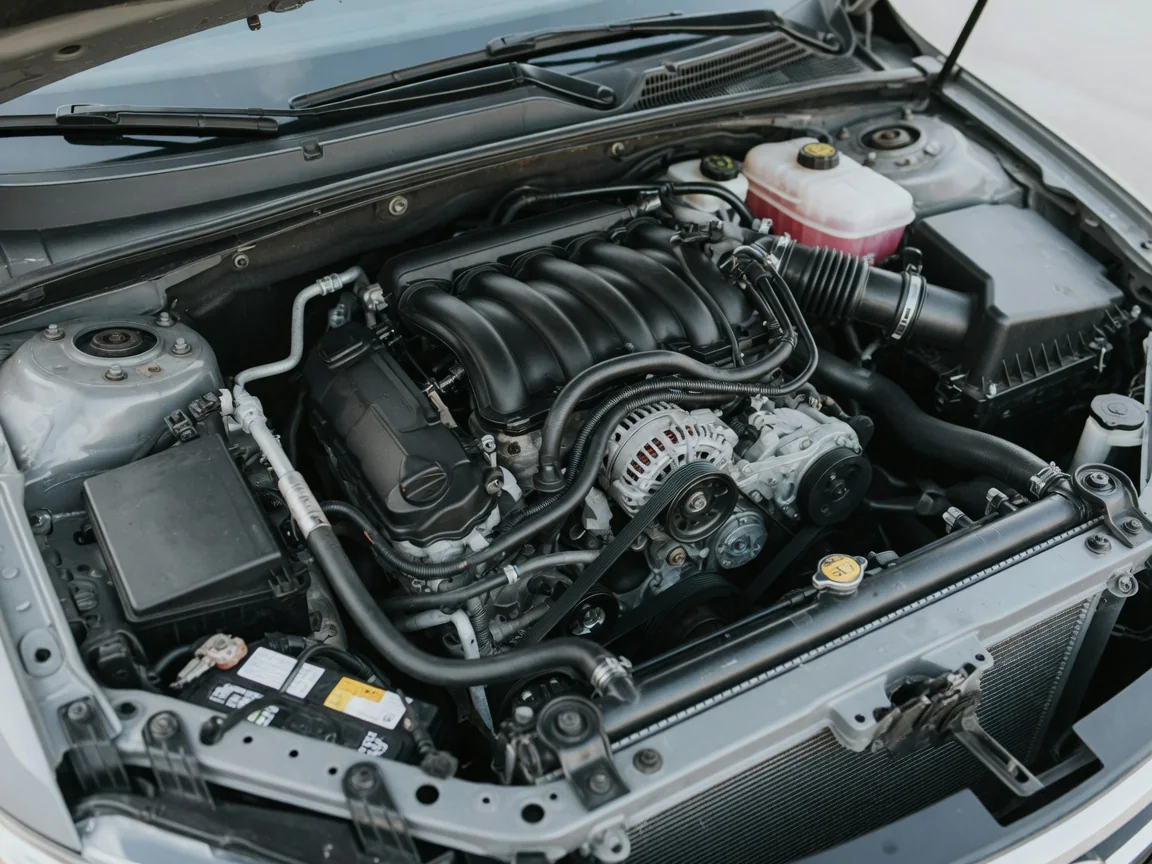
Owners of the Chevrolet Traverse and GMC Acadia with the 3.6-liter V6 may encounter crankcase ventilation issues that lead to oil consumption, rough idle, or visible residue. The PCV system on these vehicles is not always a simple threaded valve; it can be a metering orifice, integrated valve cover fitting, or hose assembly. Understanding the exact component layout for your model year prevents unnecessary parts replacement and focuses the repair on the real cause of symptoms.
Identify the PCV Components for Your Model Year
The first step is confirming your specific model year, engine code, and VIN-based service information. General online photos rarely distinguish between early and late 3.6-liter engines, which can have different valve cover designs and crankcase ventilation routing. Dealership parts catalogs or subscription repair databases use the VIN to identify whether your application uses a separate PCV valve, a fixed orifice in the valve cover, or a hose with an integrated restrictor. Ordering by engine displacement alone often results in a part that looks similar but does not fit your connectors or mounting bosses.
In many direct-injection 3.6 applications, the positive crankcase ventilation function is served by a calibrated passage inside the valve cover or intake manifold rather than a replaceable metal valve. That passage meters the flow of crankcase vapors into the intake while the fresh-air side of the system draws filtered air from the intake duct through a breather hose. There may also be an oil separator built into the valve cover or plumbed into the vapor outlet. Without confirming which elements your vehicle has, you cannot know whether replacement means unthreading a small valve, swapping a hose, or installing a complete valve cover assembly.
Locate the Crankcase Ventilation System on a 2008 Acadia
On a 2008 GMC Acadia with the 3.6 V6, the crankcase ventilation layout must be verified through a factory service diagram or equivalent VIN-specific reference. In general, the vapor outlet is found on one valve cover, often the rear or right-side cover depending on engine orientation, and connects via a formed rubber hose to the intake manifold plenum. The fresh-air side usually attaches from the air intake duct or resonator to the opposite valve cover. However, actual hose routing can cross over the engine, disappear under the intake plenum, or use quick-connect fittings that are easy to confuse with fuel or EVAP lines.
The item called a PCV valve on the 2008 Acadia is sometimes a removable plastic cartridge pressed into a rubber grommet in the valve cover, but other 3.6 versions have only a fixed metering passage and a replaceable hose that contains the restriction. If service information identifies a separate valve, its location will be shown relative to the throttle body, ignition coils, and coolant crossover. If no separate valve is listed, replacing the valve cover may be the only way to renew a blocked passage. Always inspect with the engine off and cool; a hot exhaust manifold and moving belts are nearby, and if the component is buried under the upper intake, professional access may be the safer and more practical choice.
Understand Symptoms Before Authorizing Replacement
Crankcase ventilation problems often produce symptoms that overlap with other engine faults: oil seepage at gaskets, increased oil consumption, rough or fluctuating idle, and sometimes a faint whistle or moan from vacuum leaks in the vent hoses. These observations justify a careful check of the PCV system but do not prove a faulty valve. A collapsed breather hose on the fresh-air side can cause exactly the same crankcase pressure buildup as a clogged vapor outlet, and cracked valve cover baffles can let liquid oil be drawn into the intake without any PCV blockage.
With the engine off and cool, look for cracked or disconnected hoses, oil-soaked boots, and external residue around the valve cover and vent fittings. Oil film alone is not proof of an internal blockage; age, heat cycles, and minor seepage create similar residue on a healthy engine. Because crankcase ventilation faults can mimic intake leaks, worn piston rings, or even a failing brake booster check valve, professional measurement of crankcase pressure and smoke testing of the vent and intake tract may be required before replacing parts. A scan tool can also reveal fuel trim shifts caused by unmetered air entering through a damaged PCV hose.
Plan the Correct Traverse PCV Repair
The correct repair for a Traverse depends on what the verified service information shows for that VIN: a press-in PCV valve, a hose with an integral orifice, a valve cover with a non-serviceable passage, or an entire separator assembly. Never assume interchangeability between Acadia and Traverse parts from the same model year without checking the catalog; different intake manifolds, emission packages, and even production dates can change the hose shape and valve calibration. Using a VIN-specific lookup prevents buying a part that threads in where your engine has a grommet, or vice versa.
Replacement usually involves removing an engine cover, possibly moving an air intake duct or coolant hose, and carefully releasing brittle plastic quick-connect fittings. The applicable service procedure may specify new O-rings or grommets, and older plastic becomes fragile enough to crack with ordinary force. Do not attempt to drill out a metering passage to increase flow or modify the system with an aftermarket catch can without understanding how it alters manifold vacuum and emissions behavior. Those are not routine replacements; they change system calibration and can mask other engine faults. If the procedure requires disturbing sealed engine components or working near fuel lines, stop at the level your tools and training support.
Confirm Repair Results and Know When to Stop Driving
After the repair, start the engine and listen for hissing or rough idle, then inspect the connections for signs of oil mist escaping. A proper result means secure fittings, no fresh residue, and the original complaint—such as oil smell at idle or intermittent stumble—is no longer present. However, if the vehicle was using oil before the repair, the PCV replacement may reduce consumption gradually as seals re-normalize to lower crankcase pressure, but it does not undo ring or valve guide wear. Record the oil level and monitor consumption according to the intervals in the owner's manual.
If symptoms persist, the fault may be in another branch of the ventilation system: a restricted fresh-air hose, a torn intake boot downstream of the PCV outlet, a failing oil separator, or an engine condition that overwhelms the vent path. Professional evaluation of crankcase flow and intake vacuum can isolate the cause. Pull over immediately if the oil-pressure warning illuminates, the engine runs severely rough with heavy smoke, or you see smoke coming from under the hood due to oil on hot components. Continuing to drive risks bearing damage or fire, so arrange a tow rather than limping the vehicle.