Identifying a Chevy Transmission Pressure Control Solenoid
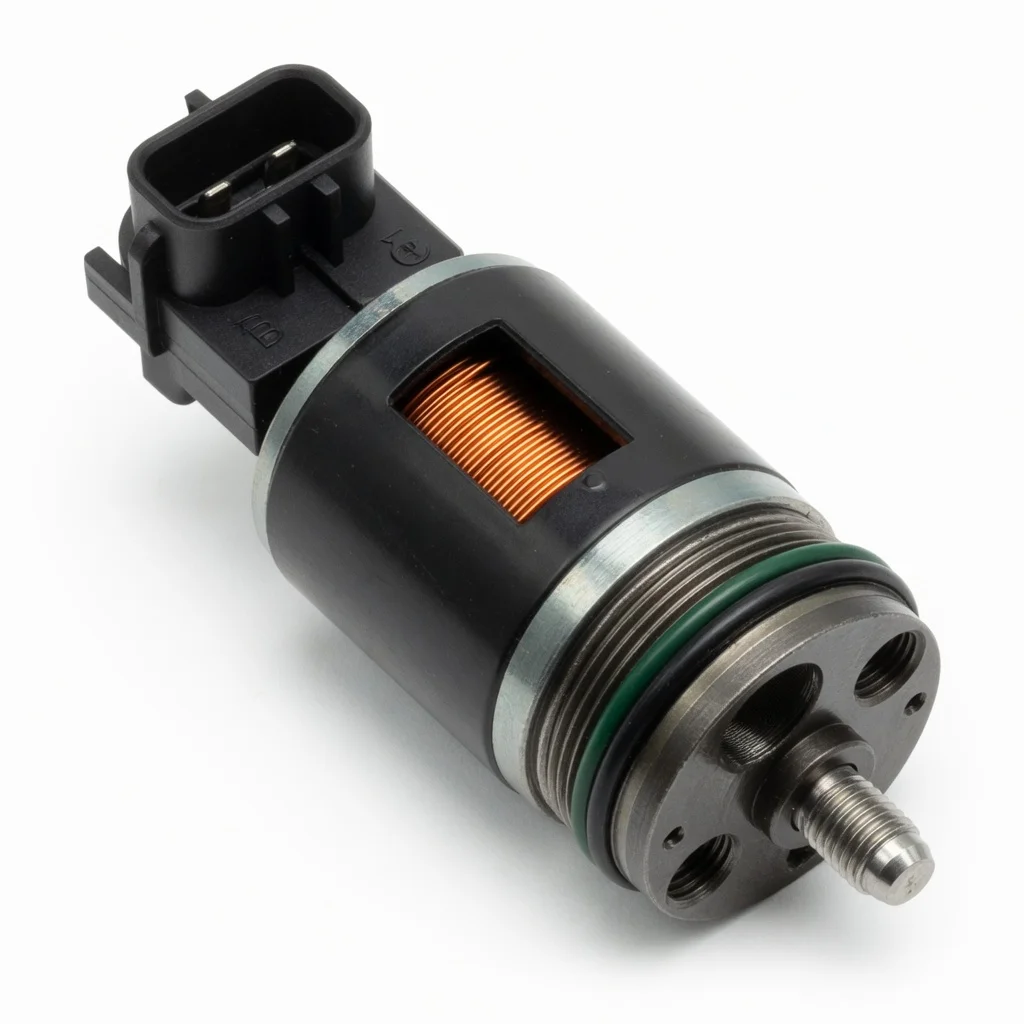
In many Chevrolet automatic transmissions, the pressure control solenoid sets line pressure, which affects how firmly every gear engages. To find the right part, you first need to know which transmission the vehicle has. Location, design and service method differ between older four-speed units and later six-, eight- and ten-speed designs. This guide covers how to identify the solenoid, how it works, and how to diagnose shift problems without assuming the solenoid is at fault.
Where the pressure control solenoid is and how to identify it
On older GM rear-wheel-drive four-speeds such as the 4L60-E family, the pressure control solenoid is mounted on the valve body inside the transmission pan. It is also called the force motor or electronic pressure control solenoid. It is a small cylindrical solenoid with an electrical connector, held in place by a retaining bracket or clip. You reach it by draining the fluid and removing the pan and filter. Front-wheel-drive units such as the 4T65-E place the valve body behind a side cover instead. Many newer Chevy transmissions build the pressure control solenoids into a control solenoid valve body assembly combined with the transmission control module. On those units there may be no separately serviced solenoid to identify.
To identify the correct part, confirm the transmission first. The service parts label, usually in the glove box or on a door jamb, lists the transmission RPO code. Compare that code with the model year, engine and drive type. Many transmissions also carry an identification tag or stamping on the case. With this information, a parts catalog or service manual can confirm the exact solenoid, its connector style, and whether it is sold separately. Matching by vehicle model alone can cause fitment errors, because one model may have used several different transmissions over its production run.
How the solenoid controls line pressure
The transmission or powertrain control module decides how much line pressure the transmission needs. It bases this on inputs such as throttle position, engine load, vehicle speed and fluid temperature, then varies the electric current sent to the pressure control solenoid. The solenoid turns that current into a regulated hydraulic signal acting on the pressure regulator valve, which raises or lowers main line pressure. Higher pressure clamps clutches and bands harder, giving firm, secure shifts under heavy load. Lower pressure gives smoother shifts in light driving.
On many older GM designs, the solenoid works the opposite way from what owners expect: low or no current produces maximum line pressure. This is a deliberate fail-safe. An open circuit or unplugged connector therefore usually causes harsh, firm engagements rather than slipping. In integrated designs, several pressure control solenoids may handle line pressure and individual clutches. The module also learns and adjusts shift timing over time, so shift feel depends on the solenoids, the hydraulics and the module's stored adaptive values together.
What changes the diagnosis
Transmission type is the biggest variable. Replacing a separate solenoid on a four-speed valve body is a very different job from replacing a unit where solenoids and control module form one assembly that may need programming afterward. Model year also matters, because connectors, solenoid designs and control strategies changed over time. The correct fluid specification also differs between generations. Wrong fluid can affect shift quality on its own, so confirm the specification for the exact transmission before topping off or servicing it.
Symptoms rarely point to a single part. Harsh shifts, soft or slipping shifts, delayed engagement into drive or reverse, and erratic shift behavior can all have other causes: • low or degraded fluid; • a clogged filter; • internal leaks or a worn pump; • a sticking pressure regulator valve; • damaged wiring or connector; • a module fault; • worn clutches; Diagnostic codes help narrow the list. On many GM vehicles, codes such as P0748 or the P0960 to P0963 group relate to the pressure control solenoid circuit or its performance. A circuit code means the module detected an electrical problem in that circuit. The fault may be in the wiring or connector rather than the solenoid itself.
Steps the owner can take
Start with the fluid. Check level and condition using the procedure for your transmission. Some Chevy units have a dipstick, while others are checked at a fill plug with the fluid at a specified temperature. Dark, burnt-smelling fluid or heavy debris on the pan magnet suggests wear beyond a solenoid problem. Next, read stored and pending codes with a scan tool and record them along with any freeze-frame data. Note when the symptom appears: cold or hot, light or heavy throttle, and which gear changes are affected.
If the scan tool shows transmission data, compare commanded and actual pressure control solenoid current while driving. A large mismatch points toward a circuit or solenoid issue. Inspect the external transmission connector and harness for fluid contamination, corrosion, chafing or loose pins. On some units, fluid leaking at the case connector is a known cause of electrical faults. If you measure solenoid or circuit resistance, judge the result only against the specification in the service information for your exact transmission. Review the service history too: a recent fluid change, earlier valve body work or a previous rebuild all change what is likely.
Repair options depend on what the diagnosis shows: • Separate solenoid: replacement is a moderate job once the pan is off, often combined with a fluid and filter service. • Wiring or connector fault: repairs may clear circuit codes without opening the transmission. • Integrated assembly, valve body problem or internal wear: usually needs a shop with programming equipment, or a transmission rebuild. After any repair, many GM modules need their adaptive values reset or a relearn drive before shift feel returns to normal.
Limitations and when to get professional help
General descriptions cannot replace vehicle-specific service information. Solenoid location, connector design, resistance specifications, fluid type, fill procedure and programming requirements all depend on the exact transmission. A single symptom or code does not confirm that the solenoid has failed. Replacing it without testing can leave the real cause in place and add cost.
See a qualified transmission technician if: • codes return after a repair; • the fluid shows heavy wear material; • the vehicle slips or the transmission overheats; • the unit uses an integrated control module that must be programmed; Driving with severe slipping or harsh engagement can cause further internal damage, so address these problems promptly. Bring the RPO code, recorded codes, symptom notes and service history to the appointment to help the technician narrow the diagnosis faster.