Chevy Transmission Fluid Change: Requirements and Procedure
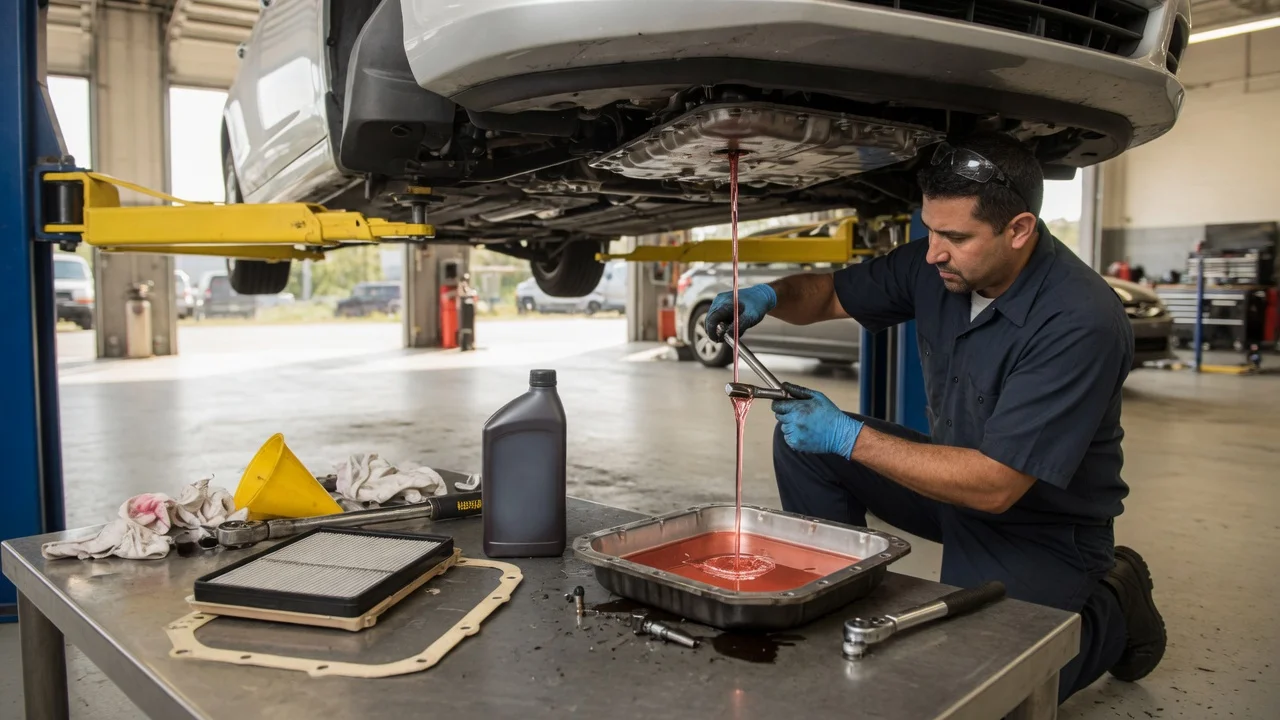
What a Chevrolet transmission fluid change involves
A Chevrolet transmission fluid change replaces used automatic, manual or other gearbox lubricant with the fluid GM specifies for that exact transmission, and it often includes a filter service when the pan is removed. There is no single Chevy fluid, capacity, mileage interval or fill method. The correct product and procedure are tied to model year, market, engine and the transmission family fitted to the vehicle, and they must be taken from the owner’s maintenance schedule and GM service information for that VIN.
This guide covers passenger cars and light trucks sold as Chevrolet with conventional automatics, plus the main exceptions that change the job: sealed units without a dipstick, 8-speed and 10-speed ultra-low-viscosity fills, heavy-duty Allison automatics, manuals, and continuously variable or dual-clutch gearboxes. It does not substitute a workshop manual. Torque values, fill temperatures, capacities and plug locations are omitted here because they are transmission-specific and were not verified against the applicable GM procedure for a named model.
Identify the transmission and the required fluid
Start with the owner’s manual fluid chart, the under-hood or fill-plug label if present, and the RPO or service-ID for the gearbox. Mixing Dexron families, using engine oil, gear oil or universal “multi-vehicle” ATF in place of a named GM spec, or filling a CVT or dual-clutch unit with conventional automatic fluid can damage clutches, bushings and hydraulic controls. If the book lists a Dexron grade, use a fluid that states that exact GM specification. If it lists an Allison, manual-gearbox, CVT or dual-clutch product, use that product only.
Common Chevrolet application Fluid family typically specified What to confirm before purchase; Many 6-speed automatics in cars and trucks of the mid-2000s through 2010s, including widely used 6L and 6T families DEXRON-VI automatic transmission fluid That the bottle states DEXRON-VI and that the manual has not superseded it for your year; Many 8-speed and 10-speed Hydra-Matic automatics in later cars, SUVs and light-duty trucks A Dexron ultra-low-viscosity fluid; some early 8-speed units used a different Dexron HP specification The exact Dexron name on the fill label or in GM service information; DEXRON-VI is not a substitute; Silverado HD and similar heavy-duty trucks that were built with an Allison automatic An Allison-approved automatic transmission fluid for that Allison model and year TES specification and whether a spin-on filter is part of the service; Manual gearboxes in Camaro, Colorado, Corvette and other models A manual transmission lubricant named in the owner’s manual; this may be a synchromesh fluid, a GL-4 gear oil or, on some units, a specified ATF Viscosity, API or GM spec, and that the fluid is safe for synchronizers; Vehicles equipped with a CVT or dual-clutch gearbox A dedicated CVT or dual-clutch fluid That the product is listed for that gearbox, not a conventional automatic fluid
Backward compatibility is limited. GM published DEXRON-VI as a replacement for earlier Dexron-III fills in many older automatics, but that does not authorize DEXRON-VI in 8-speed or 10-speed units that call for ultra-low-viscosity fluid, and it does not authorize ATF in a manual or CVT that lists something else. When two sources disagree, follow the service information for the transmission currently in the vehicle, including any supersession notes.
Interval, quantity and filter
Change mileage is in the Chevrolet maintenance schedule for that model year, often with a shorter interval for severe use: frequent towing, taxi or delivery service, mountain driving, extreme heat, short trips or heavy dust. Some owner literature describes the fill as long-life. That wording does not mean the fluid is exempt from inspection or from the severe-service replacement interval printed in the same book. Do not adopt a generic 30,000- or 50,000-mile rule for every Chevy.
Published dry-fill capacity is larger than the volume that comes out on a pan drain, because the torque converter, cooler and internal passages retain fluid. Buy enough of the specified fluid for a drain-and-fill plus a margin for a level set, and plan on more if you will repeat the drain to raise the exchange percentage. Replace the internal pan filter, pan gasket or reusable pan seal, and drain-plug sealing washer when the service procedure calls for them. Some Allison and other heavy-duty automatics use an external spin-on filter in addition to or instead of a pan filter. Sealed 8-speed and 10-speed units have their own filter and pan designs; use the parts listed for that transmission, not a universal kit.
Tools, parts and workspace
Owner’s manual and the GM service procedure for the transmission in the vehicle, including fluid spec, capacity notes, fill temperature and fastener torque; The specified fluid in sealed containers, plus the correct filter, gasket or seal, and a new crush washer if the drain or fill plug uses one; A level surface, wheel chocks, a jack and stands or a hoist rated for the vehicle; do not work under a vehicle supported only by a jack; Drain pan large enough for the expected drain volume, plus a funnel and a fluid pump or squeeze bottle for fill plugs that are not top-accessible; Sockets, Torx or hex bits as required for pan bolts and plugs; a torque wrench for pan bolts and plugs; A thermometer or scan tool that can read transmission fluid temperature on sealed units that set level by temperature; Safety glasses, gloves, and rags; ATF is slippery and stains paint; A scan tool if the procedure requires a shift-adaptive reset or a temperature-based fill on a late-model unit
Precautions that belong at the start
Work only when the vehicle is fully supported and the parking brake is set. Hot fluid can exceed scalding temperature; allow cooling if you will handle the pan, but follow the service procedure if the level check must be done hot. Confirm you are draining the transmission, not the engine, transfer case or coolant. On four-wheel-drive trucks the transfer case is a separate unit with its own fluid. Do not power-flush a high-mileage transmission that has never been serviced if the pan magnet is loaded with clutch material or metal; a sudden detergent exchange can dislodge debris into valves. That risk is a reason to choose a controlled drain-and-fill or to stop for diagnosis. If the fluid is opaque black, smells burnt, or the pan holds large flakes or colored clutch material, treat the job as diagnostic rather than routine maintenance. Continuing with a simple refill will not reverse internal damage. Hybrid and certain electrified Chevrolets may use a dedicated transaxle fluid and a different service path. Do not assume the automatic-transmission steps below apply.
Drain-and-fill procedure
The sequence below is the usual pan-drain or drain-plug service on a conventional Chevrolet automatic. Skip any step that the service information for your transmission does not use, and insert the temperature, gear-selector and overflow-plug steps that sealed units require. Tighten every fastener to the published torque; those numbers are not listed here because they vary by pan, plug and transmission and must be read from the current procedure.
Bring the vehicle to a level surface, set the parking brake, chock the wheels and support it on stands or a hoist if you need underbody access. Locate the transmission pan, drain plug if fitted, and fill path. On many late Chevys there is no engine-bay dipstick; fill and level are done at a case plug. Place the drain pan, then remove the drain plug or loosen the pan at the rear or low corner so fluid drains in a controlled stream. If there is no drain plug, loosen pan bolts gradually so the pan tips and you are not hit by a full pan of hot fluid. Allow the pan to empty. Remove the pan fully if you are replacing the filter. Note the color, smell and debris on the magnet. Fine gray paste on the magnet is common wear; chips, flakes or a burnt odor are a stop point for inspection. Replace the filter and its seal, clean the magnet and pan, and install a new gasket or the specified reusable seal. Do not use RTV in place of a gasket unless the GM procedure calls for a specific sealant at a named joint. Reinstall the pan and drain plug with a new washer if required, and tighten in the pattern and to the torque in the service information. Overtightening warps pans and causes seeps. Add the specified fluid through the dipstick tube or fill plug. Add less than the full dry capacity first, because a drain does not empty the converter. Set the level using the method required for that transmission: dipstick hot or cold marks where a dipstick exists, or the sealed-unit method in the next section. Cycle the selector through the gears with the brake applied so the valve body and passages fill, then recheck. Inspect for leaks at the pan, plugs and cooler lines. Take a short drive, then recheck level and leak-down on a level surface. If GM service information calls for a transmission adaptive reset or a garage-shift relearn after a fluid service, perform that step with a capable scan tool before judging shift quality.
Filter service when the pan comes off
On most Chevrolet automatics the filter is inside the pan and is only replaced when the pan is removed. Installing fluid without the filter is not a complete service if the maintenance item is “fluid and filter.” Seat the filter neck into the valve-body bore with the specified seal so the pump does not draw air. On transmissions with a spin-on filter, replace that cartridge at the interval in the schedule and tighten it to the procedure, not by feel against a dry gasket. After a pan-off service, expect a larger refill than a plug-only drain, and recheck level after the first heat cycle because gaskets can settle.
Sealed transmissions without a dipstick
Many Chevrolet 6-speed, 8-speed and 10-speed automatics are filled at the factory as sealed units. Level is set with the engine running, the selector in the position the procedure names (often Park), and the fluid inside a published temperature window, while fluid at the fill or overflow hole is allowed to drip to a thread-like stream. Filling cold with the engine off overfills or underfills these units. Underfill causes clutch slip and pump cavitation; overfill causes foaming, high line pressure and leaks through the vent. A scan tool or infrared reading of the pan is used only as the service information allows; guesswork at ambient temperature is not a substitute. If you cannot hold the vehicle level, read temperature and work the overflow plug safely, this is a professional-service boundary.
Flushing versus a simple drain and fill
A single pan drain exchanges only the fluid that is in the pan and a portion of the case. The converter and cooler keep the rest, so one drain does not equal a complete fluid replacement. Repeating a drain-and-fill after a short drive raises the fraction exchanged without forcing solvent through the valve body. Cooler-line exchange machines can replace a larger share when the shop uses the specified fluid and a controlled process. High-pressure flushes are a separate choice and are not described as a DIY method here. For a first service on a high-mileage gearbox with dark fluid, a staged drain-and-fill is the conservative path unless a technician has inspected the pan and recommended otherwise.
When professional service is the right next action
The transmission is sealed, level is temperature-controlled, and you do not have a scan tool and the overflow-plug procedure. The pan shows heavy metallic debris, the fluid is burnt, or the vehicle already slips, flares, delayed-engages or sets gearbox codes. The unit is an Allison automatic, a dual-clutch gearbox, a CVT, or a hybrid transaxle with a unique fill. Pan bolts are rounded, a fill plug is in a tight tunnel, or a cooler line must be disconnected to drain. You cannot identify the fluid specification from the manual or a fill label. Do not guess among Dexron grades.
Completion check
The fluid in the unit is the named GM, Allison, manual, CVT or dual-clutch product for that transmission, not a substitute grade. The level is set by the dipstick marks or by the hot, running overflow method in the service procedure, on level ground. Pan and plug fasteners are at specified torque, the filter is seated, and there is no wetness at the pan rail, plugs or cooler fittings after a drive and a recheck. Shifts into Reverse and Drive are prompt when cold and hot, and there is no new whine, flare or harsh garage shift. Remaining odd shift feel on a late-model unit may need the adaptive relearn in service information. Used fluid is stored for recycling. Do not dump ATF.
Gaps you still need to close from GM information
This article does not list a fluid capacity, drain-plug torque, pan-bolt torque, fill-temperature band or mileage interval for any named Chevrolet, because those figures change by transmission and year and were not verified here against the current GM workshop procedure. Before you buy fluid or loosen a pan, record the model year, engine, and transmission RPO, then copy the fluid name, quantity notes, torque figures and level-check temperature from that procedure and from the maintenance schedule. If those documents are missing or conflict, stop and have the vehicle identified at a dealer or independent shop that can read the build data rather than filling by rule of thumb.