Chevy Transfer Case Linkage Identification: How to Tell What Your Truck Has
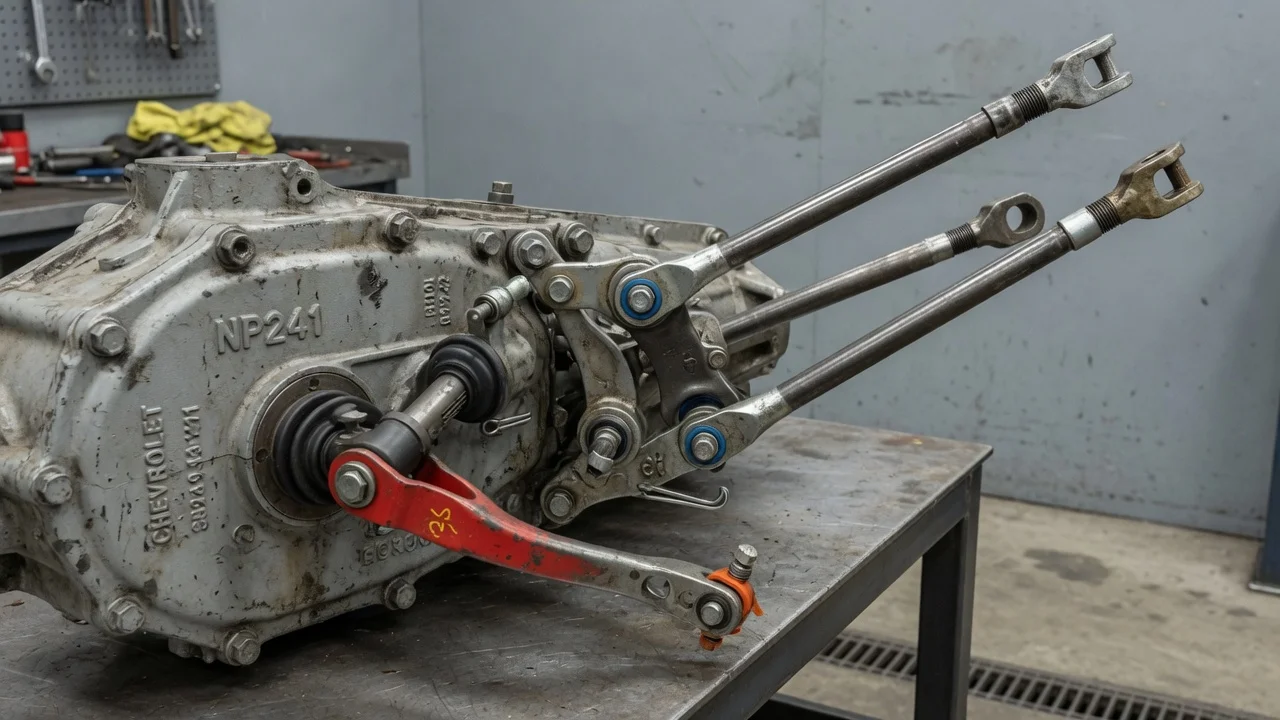
Identifying the transfer case linkage on a Chevy four-wheel-drive truck or SUV starts with the transfer case itself, not the shifter. The same body style may have been built with different cases, manual or electronic shifting, and different brackets, so a part that fits one truck may not fit another. This guide explains how to narrow down your vehicle configuration, what the linkage does, and when to rely on vehicle-specific service information.
The Short Answer
To identify a Chevy transfer case linkage, first confirm the transfer case model, then confirm how the driver selects four-wheel drive. The case model is usually stamped on a tag attached to the case housing, often on the rear half. On many GM vehicles, the Service Parts Identification label, commonly found inside the glove box, lists RPO codes that describe factory equipment, including the drivetrain. Together, the tag and the RPO codes tell you which case was installed at the factory.
Next, look at the cab. A floor-mounted lever means a mechanical linkage connects the shifter to the case. Buttons or a dial on the dash usually mean an electronically shifted case with an encoder motor and no shift rod at all. Linkage parts are matched to the case model, the shifter bracket and the cab or chassis configuration, so all three need to agree before you buy a rod, bushing kit or shifter assembly.
How the Shift Linkage Works
On a manually shifted Chevy transfer case, the lever in the cab pivots on a bracket and pushes or pulls a rod. That rod connects to a shift lever on the side of the transfer case, which moves internal shift forks to select ranges such as two-wheel drive, four-high, neutral and four-low. The exact positions and their order depend on the case, so the pattern on one truck should not be assumed for another.
The connections typically use pivot pins, plastic or nylon bushings, washers and retaining clips. Many setups include an adjustable swivel or clamp so the rod length can be set to match the detents inside the case. Because the shifter is often attached to the body while the transfer case is attached to the drivetrain, the linkage also has to tolerate some relative movement between the cab and the frame-mounted components.
Some trucks also have a switch on or near the transfer case that turns on the four-wheel-drive indicator or signals a front axle engagement system. If the linkage is misadjusted, the case may shift but the switch may not be triggered fully, which can affect the indicator or front axle engagement.
What Changes the Answer
Several factors change which linkage applies. Chevrolet trucks and SUVs have used a range of transfer cases over the years, including gear-driven and chain-driven designs with names such as NP205, NP208, NP241 and NP231, along with electronically shifted units. Each case has its own shift lever position and travel, so linkage parts are not interchangeable across them simply because the trucks look similar.
Vehicle size and platform matter as well. A half-ton, a heavy-duty truck and a compact model can use different cases and different shifter brackets even within the same production period. Transmission choice can also affect where the shifter bracket mounts and how the rod is routed. Previous repairs are another major variable: a transfer case swapped from another vehicle, an aftermarket shifter, a body lift or a suspension lift can all change the geometry, so the factory part may no longer be correct.
Finally, electronic shift systems change the question entirely. If your vehicle uses dash buttons or a selector dial, problems are more likely to involve the encoder motor, wiring, switches or control module than a mechanical rod, and diagnosis follows a different path.
What You Can Check Yourself
Start with identification. Clean the transfer case tag and record every number on it, then photograph the Service Parts Identification label. Note the model year, body style, engine and transmission. Check your service history or purchase records for any sign of a transfer case replacement, since a swapped case may not match the original RPO codes. When buying parts, match against the case tag first, then the vehicle details.
With the vehicle safely supported and the engine off, inspect the linkage from underneath. Move the shifter through its range while a helper watches the rod and the case lever. Look for worn or missing bushings, elongated holes, bent rods, loose clamp bolts and missing retaining clips. Excessive play at a pivot, a lever that does not reach a full detent, or a rod that binds against the exhaust, frame or a crossmember are common signs of trouble.
Also check the mounts. Worn engine, transmission or cab mounts can let components shift under load, which may make the linkage bind or allow the case to slip out of gear. Replacing worn bushings is often a straightforward repair, but adjusting rod length should follow the procedure for your exact case so each position engages fully.
Symptoms Worth Connecting to the Linkage
A loose or misadjusted linkage commonly shows up as a sloppy shifter, difficulty finding a range, a lever that will not move into four-low, a four-wheel-drive indicator that does not light, or a case that pops out of gear under load. These symptoms point toward the linkage but do not prove it. Worn internal shift forks, a stretched chain in chain-driven cases, low or incorrect fluid, or front axle engagement problems can produce similar complaints.
Operating conditions matter during the inspection. Some transfer cases shift more easily when the vehicle is rolling slowly or when the transmission is in neutral, depending on the design. Forcing a stiff lever while stationary can make a healthy linkage seem faulty, so follow the shifting procedure in your owner manual before concluding that something is broken.
Limitations and When to Get Help
This guide covers how to identify and inspect the linkage, not the exact specifications for any one vehicle. Rod lengths, adjustment procedures, shift patterns, fastener torque and fluid requirements vary by transfer case and vehicle configuration, and they should come from the manufacturer specifications or a service manual for your exact model. Do not assume a maintenance schedule or adjustment value from a different truck applies to yours.
Seek professional help if the case tag is missing or unreadable, if the vehicle has an unknown swap or lift, if the case will not stay in gear after the linkage is corrected, or if the system is electronically shifted and shows warning lights. A technician can confirm the case model, check internal condition and verify that the front axle actually engages. Bring your case tag numbers, RPO label and service history to make that inspection faster and more accurate.