Chevy TrailBlazer Transfer Case Shift Motor Identification
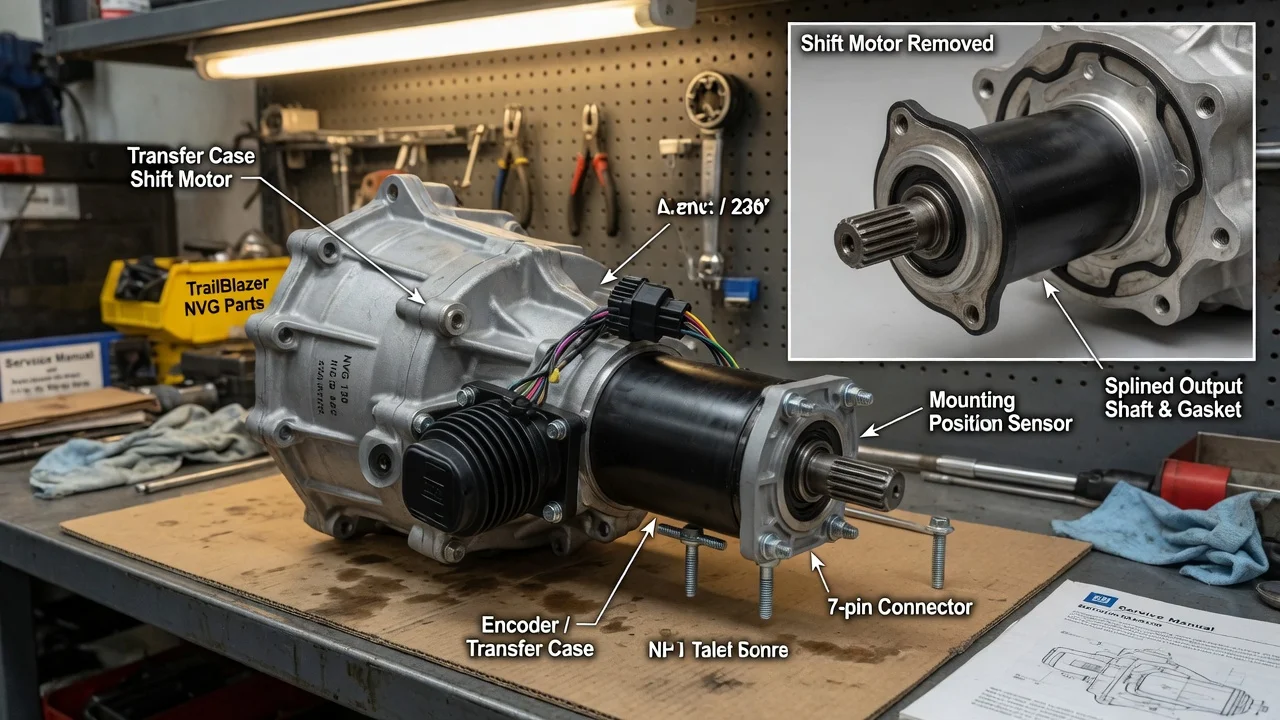
If your TrailBlazer won't change four-wheel-drive ranges, the transfer case shift motor is a common suspect. Ordering one by model year alone is risky, though. The correct part, often called the encoder motor, depends on which transfer case the truck was built with, and the TrailBlazer name has covered very different vehicles. This guide explains how to confirm what you have, how the motor works, and what to check before you spend money.
Which shift motor does your TrailBlazer use?
An electric transfer case shift motor is used on four-wheel-drive versions of the body-on-frame TrailBlazer sold in the United States from the 2002 through 2009 model years, including the 2005 model, when the transfer case is shifted electrically. Two-wheel-drive trucks have no transfer case, so they have no shift motor. The small crossover sold under the TrailBlazer name from 2021 uses a different all-wheel-drive design without this kind of transfer case motor. Parts and advice for the older truck do not carry over to it.
The reliable answer comes from the vehicle itself rather than from a year range. You can confirm the transfer case your truck was built with in three ways: the Service Parts Identification label, the identification tag on the transfer case, and the part number on the existing motor. A parts counter can also look up the correct motor from the full VIN. Platform relatives such as the GMC Envoy share much of the engineering, but don't assume a motor fits unless the part number or catalog lookup confirms it.
How the transfer case shift motor works
The shift motor is a small electric motor bolted to the transfer case. When you choose a drive mode with the dashboard selector, the transfer case control module sends power to the motor. The motor then turns a shift shaft inside the case to move between ranges, such as two-wheel drive high, four-wheel drive high and four-wheel drive low, depending on the system. An encoder built into the motor assembly reports the shaft position back to the module, so the module knows when the shift is complete.
Because of that feedback loop, a fault anywhere in the chain can look like a bad motor. The selector switch, the control module, the wiring and connector at the case, the motor brushes and the encoder all play a part. The module also requires certain conditions before some shifts. For example, a low range shift usually requires the vehicle to be stopped or nearly stopped with the transmission in neutral. If a shift never starts because those conditions weren't met, the motor has not failed.
What changes the answer
The biggest variable is the transfer case configuration. TrailBlazers of this generation were offered with different four-wheel-drive arrangements, and the selector buttons on the dash give a quick clue. Some trucks have an automatic four-wheel-drive mode in addition to the manual high and low ranges, while others offer only the manual ranges. Different transfer cases can use different motors and connectors, which is why two trucks from the same year may need different parts.
Production changes, replacement parts that supersede the original number, and earlier repairs also matter. A motor installed during previous service may not match the original build, so check both the service history and the part on the truck. Operating conditions affect diagnosis too. Road salt, water crossings and pressure washing tend to corrode the motor connector and the area where the motor seals to the case. Low battery voltage can also cause erratic shifting that goes away once the electrical system is healthy.
What the owner can do
Start with identification. Read the Service Parts Identification label, usually found in the glove box, and note the option codes. Find the tag on the transfer case and photograph it. Then look at the motor on the transfer case, carefully clean off any dirt, and record any part number printed or cast on the housing. Give a parts supplier the VIN along with this information so they can cross-check the lookup.
Before ordering, do a basic inspection. Check that the battery and charging system are in good shape. Watch the selector indicator lights when you try to shift, and note whether a Service 4WD message appears. With the ignition off, unplug the motor connector and look for green corrosion, bent pins or a damaged seal. Have the diagnostic trouble codes read with a scan tool that can read chassis and transfer case module codes, because a basic engine code reader may not show them.
If you replace the motor, keep the old one until you've confirmed the new part matches. Follow the service information for installation. This includes the position the transfer case should be in when the motor is removed and installed, and any procedure the module needs afterward. Then test every mode in a safe place, including a low range shift with the vehicle stopped as the system requires.
Limitations and next step
This guide cannot tell you which motor your truck needs, because that depends on its build data and repair history. It also cannot confirm that the motor is the failed part. Selector switches, control modules, wiring and internal transfer case problems can all cause similar symptoms, and some faults can only be separated with electrical measurements using a meter and wiring diagrams.
Use the manufacturer specifications and factory service procedure for torque values, connector details and any setup steps. Have a qualified technician diagnose the problem before you replace parts if the codes point to the control module or wiring, if the transfer case grinds or binds, or if the truck behaves unpredictably while driving. Getting the identification and diagnosis right first usually saves you from buying a motor that was never the problem.