Chevy Tahoe Transfer Case Shift Motor Identification: 2004 and 2007 Models
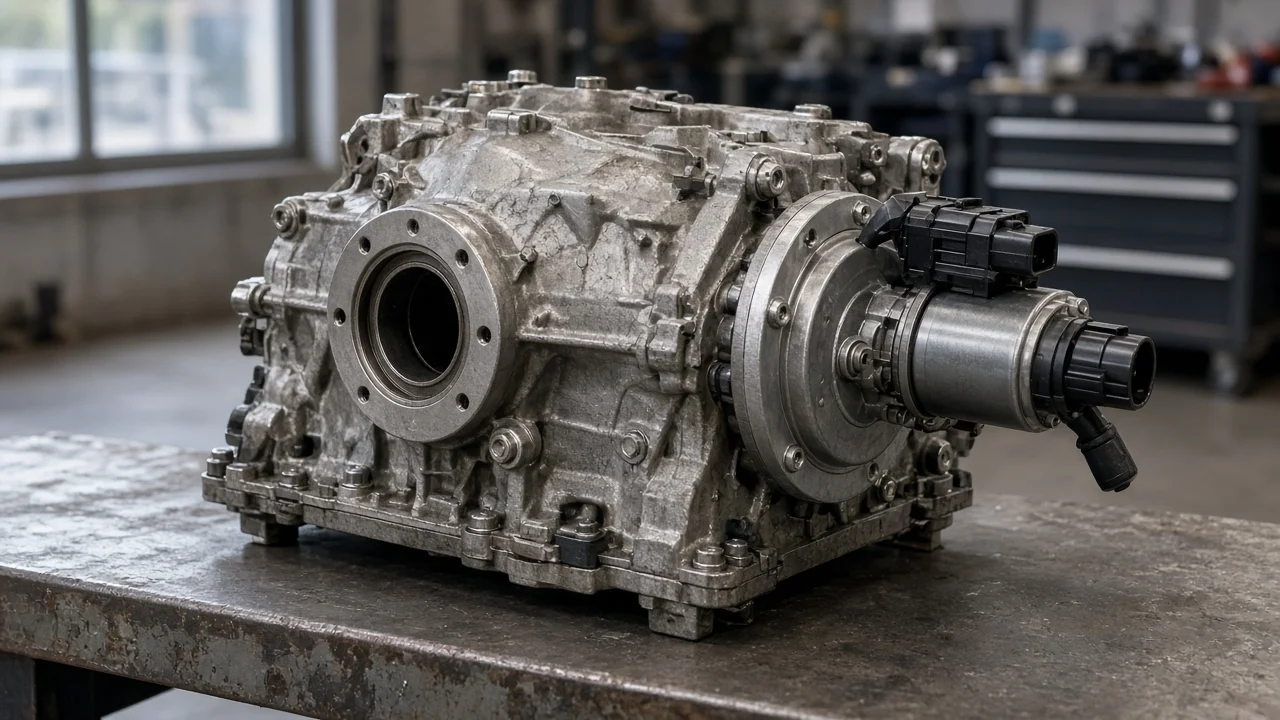
A failing shift motor can leave a four-wheel-drive Tahoe stuck in one range, flashing its 4WD indicators, or showing a Service 4WD message. Replacement parts are not interchangeable across every Tahoe, so the first job is identifying exactly which transfer case your truck has. This guide covers how to identify the shift motor for a 2004 Chevy Tahoe, how the 2007 model differs, and what to confirm before you order.
Which Shift Motor Fits Your Tahoe
There is no single shift motor for every 2004 Chevy Tahoe. The correct part depends on which transfer case the truck was built with, and that comes from the factory vehicle configuration rather than the model year alone. Four-wheel-drive Tahoes of this generation were offered with more than one electronically shifted transfer case. The most familiar is the AutoTrac unit, which has an AUTO 4WD position. Trucks without that feature use a different two-speed case. Two-wheel-drive Tahoes have no transfer case and therefore no shift motor.
The reliable way to identify the part is to match three things. First is the transfer case RPO code on the Service Parts Identification label. Second is the identification tag on the transfer case itself. Third is the part number cast or printed on the existing motor. When all three agree with the replacement listing, you have the right motor. If they do not agree, stop and resolve the conflict before buying.
How the Shift Motor Works
On an electronically shifted Tahoe, the dashboard selector does not move the transfer case directly. It sends a request to the transfer case control module. The module then powers the shift motor, which bolts to the transfer case and rotates an internal shift shaft to change between ranges such as 2HI, 4HI and 4LO, and AUTO on equipped trucks.
The motor assembly also contains a position encoder that reports where the shaft is. The module uses that signal to know when to stop the motor and whether the shift finished. That is why the part is often called an encoder motor. A worn motor, a faulty encoder, a corroded connector or a wiring fault can all produce similar symptoms. Flashing range lights or a failed shift do not, on their own, prove the motor is bad.
What Changes the Correct Part
The biggest factor is the transfer case model. An AutoTrac case and a non-AutoTrac two-speed case can look similar from underneath. However, their motors and control logic are not automatically interchangeable. A motor that bolts on and plugs in is not proof that it is the correct calibration or encoder type for your case. Mid-cycle supersessions, where the manufacturer replaced an older part number with a newer one, can also make catalogs list different numbers for trucks that seem identical.
The 2007 Chevy Tahoe is a different case entirely. That model year began a redesigned generation, so the transfer cases, shift motors, connectors and control modules differ from the 2004 truck. Do not assume a 2007 transfer case shift motor fits a 2004 Tahoe, or the reverse, even if both are listed under the same general description. Use the same identification steps on a 2007, but match parts against that truck's own RPO code and case tag.
Previous repairs matter too. If the service history shows a replaced transfer case, a used unit may have been installed from another vehicle. In that situation the case tag and current motor tell you more than the factory label, and both should be checked.
Step-by-Step Identification
Start inside the vehicle. The Service Parts Identification label on this generation is usually in the glove box. It lists three-character RPO codes, and one of them identifies the transfer case. Write down every code rather than guessing which one applies. A parts counter or dealer can decode the list from the VIN and confirm the transfer case option.
Next, inspect the transfer case under the truck with the engine off, the parking brake set and the wheels chocked. Look for a metal identification tag on the case housing. It typically shows the case model and an assembly number. Clean it gently if road grime covers it, without scraping off the stamping.
Then examine the shift motor at the rear of the case. Note any part number on the housing or label, the orientation of the electrical connector, and the bolt pattern. Photographs from several angles are useful when comparing replacements. Also check the connector for corrosion, bent terminals or a broken lock tab. Connector problems are a common cause of shifting complaints and cost far less to fix than a new motor.
Before You Replace the Motor
Have the transfer case control module scanned for stored trouble codes with a tool that can read that module, not just engine codes. Codes pointing to the motor circuit, the encoder or a specific shift failure narrow the diagnosis considerably. Note how the problem behaves under different operating conditions. A shift that fails only when cold or only after driving through water suggests a moisture or connection issue rather than a worn motor.
Check transfer case fluid level and condition during the same inspection. Low or contaminated fluid will not be fixed by a new motor and may point to internal wear. Follow the manufacturer specifications for fluid type and the maintenance schedule in your owner's manual or service information. Do not rely on a generic interval.
If you replace the motor yourself, follow the service procedure for your exact case. On many electronically shifted units, the position of the motor relative to the shift shaft matters during installation, and some procedures specify placing the case in a particular range first. Disconnect the battery if the procedure calls for it. Afterward, cycle through each selector position with the vehicle in the conditions the procedure requires, and confirm the indicators respond normally.
Limitations and When to Get Help
This guide explains how to identify the part and what to check. It cannot confirm which motor your particular Tahoe needs. That answer comes only from your truck's RPO codes, case tag and existing motor, ideally confirmed by a VIN lookup at a dealer or a reputable parts supplier. Aftermarket listings sometimes group several cases together, so a match by year and model alone is not enough.
Seek a professional if the tags are missing or unreadable, if the module stores communication or power codes, or if a new motor does not fix the shift. These situations may involve wiring, the control module, the selector switch or internal transfer case parts. Diagnosing them needs service information and test equipment. A shop can also confirm whether a replaced transfer case changed what the truck needs, so the next part you buy is the right one.