Chevy Spark Tire Pressure Light: Causes and How to Reset It
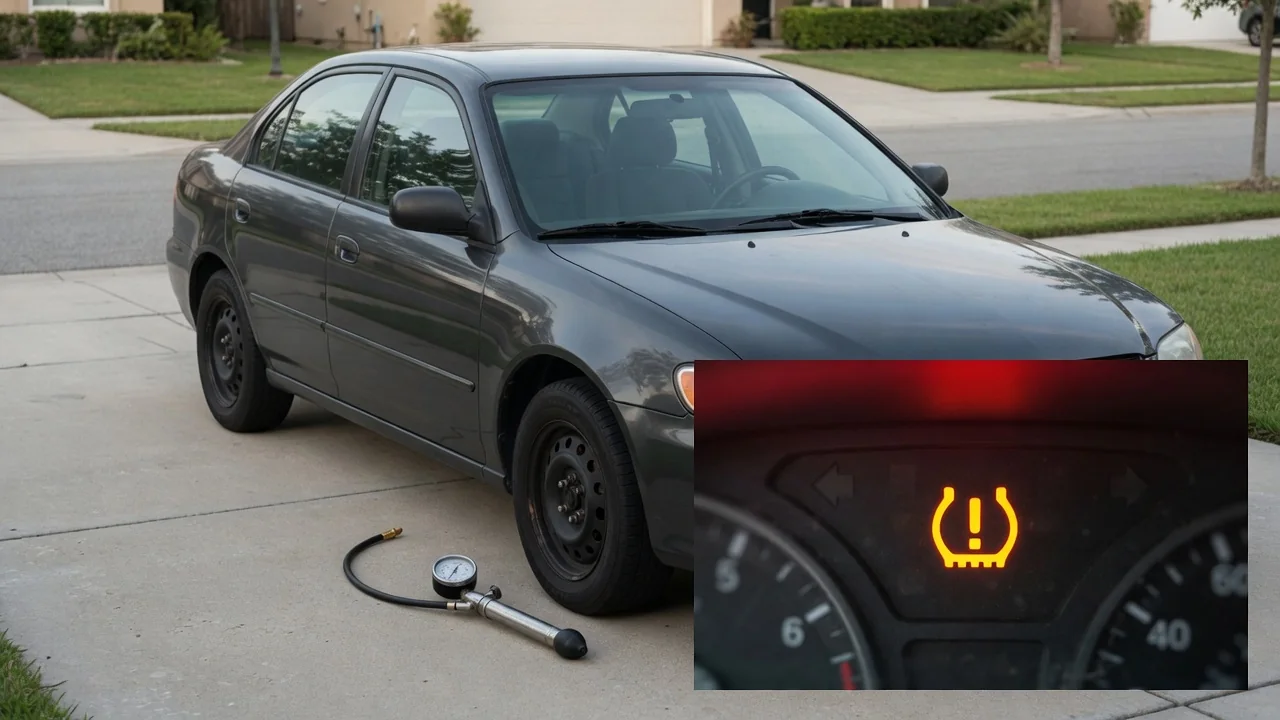
When a Chevy Spark tire pressure light comes on, the tire pressure monitoring system is reporting that a road tire is outside the expected range, or that the system needs attention. The warning is a prompt to measure cold tire pressure and inspect the tires, not a diagnosis of a failed TPMS sensor. Reset and sensor relearn steps follow correct inflation and the model-year owner's manual.
What the Spark Tire Pressure Light Is Telling You
The Chevy Spark tire pressure light is the instrument-cluster symbol for the tire pressure monitoring system. On many displays it looks like a tire cross-section with an exclamation point, but cluster graphics, telltale color, and accompanying messages can differ by model year and trim, so the owner's manual for that Spark is the reference for the exact icon. Its purpose is to alert the driver that the TPMS has detected a pressure concern or a system issue that deserves a check, not to name which wheel needs service.
Steady illumination and a flash that later stays on can mean different things, and those meanings are not interchangeable across every Spark. The model-year owner's manual is required to interpret whether a solid TPMS warning light is reporting low pressure, a system malfunction, or another documented condition, and whether a flashing then steady pattern points to a sensor or communication problem. The telltale by itself cannot identify a leaking tire, a failed TPMS sensor, or the correct repair; it is evidence to interpret after pressures and tire condition are checked.
Check Tire Pressure Before Trying a Reset
Before any reset, locate the driver-door tire placard, usually on the driver's door jamb, and read the recommended cold tire pressures for this Spark. Front and rear specifications can differ, so confirm both axle values rather than inflating all four tires to a single guessed number. Check each road tire with a reliable gauge when the tires are cold, using the owner's manual definition of cold tires, typically after the vehicle has been parked long enough that driving heat has not raised the readings.
Add or release air only to match the placard, not the maximum pressure molded on the tire sidewall, which is a tire limit rather than the vehicle's inflation target. Work in a safe location, keep the vehicle stable, and recap the valves after the gauge reading. If a tire looks flat, shows cuts, bulges, or cord, or the Spark develops pulling, vibration, or other abnormal handling, stop in a safe place and seek assistance instead of driving on to complete a TPMS reset.
Why the Warning Appears or Keeps Returning
Tire pressure falls as ambient temperature drops, so a cold morning after a warm fill can bring a previously acceptable tire below the threshold that turns on the TPMS warning light. That seasonal change is a common reason the Chevy Spark tire pressure light appears even when no puncture is present. If the same tire loses pressure again after a correct cold fill, repeated loss can suggest a slow tire leak at the tread, sidewall, bead, or valve, but the warning does not locate the leak.
When a gauge shows the placard cold tire pressure on every road tire and the light still stays on or returns immediately, a TPMS sensor fault or incomplete sensor registration may be relevant, but that conclusion needs vehicle-specific confirmation rather than assuming a part has failed. Recent tire rotation, wheel replacement, or sensor service is useful diagnostic context because those jobs can leave a sensor unseated, unprogrammed, or assigned to the wrong corner. Those events are not proof of a fault; they only help a technician decide what to test next.
How the Light May Clear After Pressure Correction
After the tires match the placard, verify the owner's manual reset procedure for the exact Spark model year before attempting any TPMS clear. Some systems update automatically once they see restored pressure, and some require a documented drive cycle, but there is no universal driving time, speed, or reset-button sequence that applies to every Spark. Follow only the steps printed for that vehicle. Correcting pressure must come first; a reset attempted on underinflated tires can leave the warning in place or hide the reason it came on.
Clearing the Chevy Spark tire pressure light does not establish that the tires are sound, only that the tire pressure monitoring system no longer sees the previous out-of-range condition or has accepted a commanded reset. If the telltale returns, measure cold pressures again rather than repeating the reset. Do not disconnect the battery or cycle the ignition as a substitute for an unresolved warning; those shortcuts can scramble other modules and still leave a slow leak or a sensor communication issue unaddressed.
When a TPMS Sensor Relearn Is Needed
A sensor relearn is the Spark's process for recognizing TPMS sensor identities and, when the system supports it, matching each sensor to a wheel position. Rotation, a replacement wheel, a new TPMS sensor, or work that disturbs valve-mounted electronics can make a relearn necessary, but only the model-year procedure confirms whether that Spark needs one after those jobs. Do not assume every generation uses the same method. Confirm in the owner's manual or service information whether an owner-accessible sequence exists or a scan tool is required.
If the documentation calls for a TPMS activation tool to wake each sensor at a specific corner, obtain that tool or have the relearn performed where the equipment is available before outlining or improvising steps. An incomplete relearn can leave the TPMS warning light on even with correct cold tire pressure. When the procedure cannot be completed, a sensor will not register, or the required tool is unavailable, take the Spark to a tire shop so the system can identify the sensors without guesswork.
What to Do When the Light Stays On
If the light stays on, start with the measured pressures and what the tires look like. Low readings that correct and hold point back to inflation or a temperature drop. Low readings that fall again point toward a leak that needs inspection. Correct pressures with a solid or flashing-then-steady TPMS warning light point toward sensor communication or registration, which is a shop diagnosis. Visible damage, a flat, or handling that feels wrong is not a wait-and-see condition; stop safely and get the tire evaluated.
Professional leak testing, TPMS sensor communication checks, and fault-code diagnosis become appropriate when pressure will not hold, the warning pattern matches a system malfunction in the manual, or a relearn fails. A stored code is evidence to interpret, not proof a sensor has failed, and manufacturer-dependent codes need confirmation on that Spark. Record the model year, cold pressure readings, whether the light was steady or flashed first, and any recent tire or sensor work. Until service is completed, check pressures manually; an unsafe tire needs immediate attention.