Chevy Spark Overheating Light: Meaning and What to Do
Direct answer
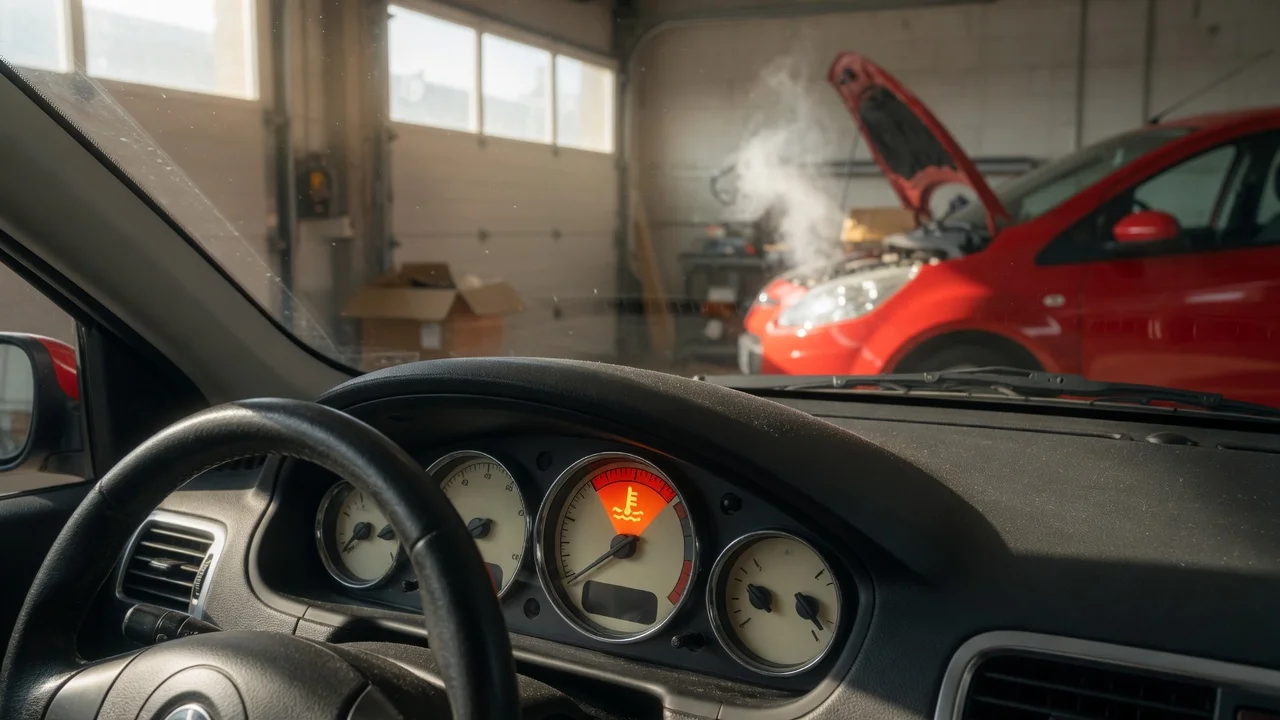
The Chevy Spark overheating light warns that the engine coolant temperature has entered an unsafe range and the cooling system is not removing enough heat. When the light illuminates, you should pull over as soon as safely possible, turn off the engine, and allow it to cool before opening the hood or checking coolant.
The earliest Spark models use a dedicated temperature indicator. On later vehicles, an engine coolant temperature gauge or the check engine light replaces a permanent red overheating lamp. The exact signal depends on the model year, engine, trim, and instrument cluster configuration. For your vehicle, follow the indicator described in the owner's manual rather than assuming every Spark displays the same warning.
What the warning light reflects
The warning light is driven by the engine coolant temperature sensor data reported through the vehicle's electrical system. When the temperature becomes too high, the cluster illuminates the warning or the coolant temperature gauge rises into the red zone. This is a signal that the engine is retaining heat faster than the cooling system can reject it.
The cooling system removes engine heat through a loop of coolant, a radiator, a water pump, and a thermostat. If one part of this loop stops functioning correctly, the temperature can climb. The system also relies on airflow through the radiator and sufficient coolant pressure to raise the boiling point.
What could cause the warning
An overheating warning alone does not identify the failed component. Common causes include low coolant, a stuck-closed thermostat, a failing water pump, a clogged radiator, a collapsed or leaking coolant hose, a failed radiator fan, or a cooling system pressure leak. The cause could also be internal, such as a head gasket fault allowing combustion gas into the coolant.
A diagnostic trouble code for coolant temperature or thermostat performance should not be treated as proof that a component needs replacement. Codes describe an observed condition and can result from wiring faults, sensor problems, low coolant, or another system failure.
Order of checks
Begin with the simplest checks that require no disassembly. Confirm whether the cooling fan operates when the temperature is high. Inspect the coolant level and visible hoses for wetness, dried residue, or staining. Check whether the engine temperature rises at idle but improves with airflow, which points toward a cooling fan or airflow problem.
If the level is low and no external leak is visible, do not simply refill and drive. A slow loss can indicate a small external leak or coolant entering the engine. Observe the exhaust for persistent white vapor while running and check for coolant contamination in the oil or oil contamination in the coolant. A combustion leak test may be required when internal leakage is suspected.
When the coolant is full, the fan runs, and the radiator receives airflow, the next checks are thermostat operation and water pump function. Confirm that the radiator hoses warm up once the thermostat should be open and that coolant is circulating. A thermostat that stays closed will produce overheating without opening the cooling path to the radiator.
A scan tool can retrieve the coolant temperature sensor reading and test data only under the operating conditions specified by the manufacturer. Compare the live reading with the actual temperature and the cluster display. A large mismatch supports a sensor or wiring fault rather than a cooling system failure.
Immediate steps
If the overheating light comes on while driving, reduce speed, avoid hard acceleration, and pull over. Leave the engine off long enough for it to cool before checking the reservoir. Never open a pressurized cooling system while the engine is hot, because escaping steam and coolant can cause severe burns.
A short drive may be possible after the vehicle has cooled if the coolant level is adequate and the temperature stays stable at part throttle, but continuing to drive with the warning light on risks expensive engine damage. When the cause is not obvious from a coolant and hose inspection, have the vehicle tested before relying on it.