Chevy Spark EV Range: 2014 to 2016 Model Years Explained
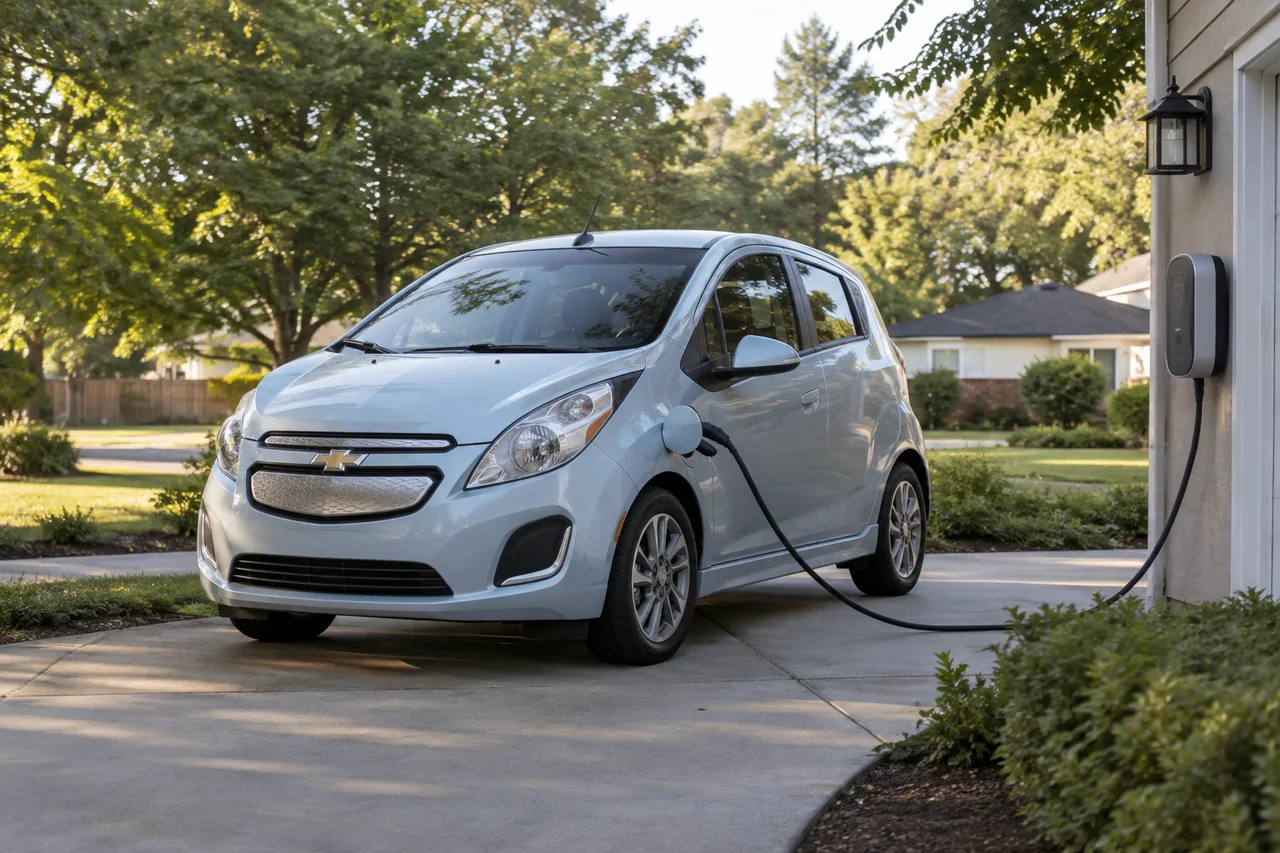
Owners considering a used Chevrolet Spark EV often ask how far it can go on a charge. The answer starts with the original EPA-rated range for each model year, but a real-world number must reflect battery health, driving conditions, and charging habits. The 2016 Chevrolet Spark EV was rated at 82 miles, while the 2014 and 2015 models were rated at 82 and 82 miles respectively. Those figures are useful references, not guarantees for a used car today.
2014 Chevrolet Spark EV: Understanding the Original Range Rating
The 2014 Chevrolet Spark EV received an original Environmental Protection Agency (EPA) range rating of 82 miles on a full charge. This figure came from standardized laboratory testing intended to represent a mix of city and highway driving in moderate temperatures. It is not a measure of what any specific used vehicle will achieve after years of service. The rating applies only to the battery-electric Spark EV, which was sold in limited markets; gasoline-powered Spark models have entirely different fuel economy and range parameters.
A used 2014 Spark EV may travel significantly less than 82 miles depending on its battery state of health and how it has been driven and stored. The EPA rating is best understood as a benchmark for comparing new electric vehicles. Factors such as cabin heating, high-speed highway travel, and aging battery cells can reduce actual driving range. Before purchasing, a buyer should assess the car's current usable battery capacity rather than relying on the original window sticker number.
2015 Chevrolet Spark EV: What Its Range Figure Means
The 2015 Chevrolet Spark EV also carried an original EPA-rated range of 82 miles. This consistency across early model years reflects the same battery pack and drivetrain design. The dashboard range estimator, however, does not display a fixed 82 miles. Instead, it calculates an estimated remaining range based on recent energy consumption and the current state of charge. If the previous owner drove efficiently in mild weather, the estimate may read higher; after aggressive driving or cold-weather use, it may read lower.
When a seller advertises a specific range for a 2015 Spark EV, the claim should include important context. A useful report records the starting charge percentage, the distance actually driven, the route type, outside temperature, and whether climate control was used. Without this information, a single number means little. For example, a car driven 70 miles on a full charge in city traffic at 70°F might still have 15 percent remaining, while the same car on a cold highway commute might show low battery much sooner.
2016 Chevrolet Spark EV: Planning Around Its Rated Range
For the 2016 model year, the Chevrolet Spark EV again earned an EPA-rated range of 82 miles. This rating is a useful planning number, but it is not a guaranteed trip distance. Sustained highway driving at speeds above 65 mph increases aerodynamic drag and energy use per mile, reducing range. Cabin heating draws significant power from the battery because there is no waste engine heat to tap. Cold temperatures also increase battery internal resistance, while hilly terrain and heavy payloads raise energy consumption further.
To plan a round trip in a 2016 Spark EV, start with the total mileage and subtract a comfortable reserve for detours, traffic delays, or weather changes. If the round trip is 70 miles and the car has an 82-mile rating, there is little margin without charging. Check for available public charging stations along the route or at the destination. A practical approach assumes usable range is lower than the EPA figure and avoids relying on reaching home with a nearly empty battery.
2016 Spark EV LT: Confirming Trim and Range Details
The 2016 Spark EV was offered in two trim levels: 1LT and 2LT. A used listing that states only “LT” is ambiguous because it does not identify which trim is for sale. The LT abbreviation alone does not establish a separate range rating; both trims share the same drivetrain and original 82-mile EPA range. Differences between trims involve comfort and convenience features, not battery capacity or motor output.
Vehicle records and a physical inspection can clarify what charging equipment is present. For example, the Spark EV came standard with a 120-volt portable charge cord, while a 240-volt charging station at home requires compatible connector and vehicle onboard charger. A listing that mentions “fast charge” should be verified through the vehicle’s charge port and service history. Do not assume trim wording confirms the presence of specific charging hardware.
Assessing the Battery and Usable Range of a Used Spark EV
Battery capacity in a used Spark EV declines gradually with calendar age, charge-discharge cycles, and exposure to high temperatures or prolonged storage at full charge. There is no fixed percentage of loss to assume; one car may retain most of its original range, while another shows noticeable reduction. A realistic assessment starts with a normal test drive. Record the displayed state of charge before and after driving a known distance, note the estimated energy consumption if the car provides it, and log the route, temperature, and climate control use.
A short drive around the block cannot reveal battery health. A full-charge dashboard estimate is also unreliable because it reflects recent driving efficiency, not total capacity. A seller’s screenshot of the range display is easy to manipulate and still lacks context. For a confident evaluation, especially if the range seems unusually low or warning messages appear, seek professional EV battery diagnostics. A qualified technician can read battery management data without opening the high-voltage system.
Deciding Whether a Spark EV Fits Your Daily Driving
Before buying a Spark EV, calculate your actual daily mileage requirement, including commuting, school runs, errands, and unexpected detours. Add a practical charge reserve of at least 20 to 30 percent so you are not forced to drive to empty. If your daily need is 50 miles and the car’s real-world range is 60 miles in your conditions, it may be suitable, but with little flexibility. Charging at home overnight on a 240-volt outlet is the most reliable way to start each day with a full battery.
Confirm that you have dependable charging access at home, work, or regular destinations. The vehicle’s onboard charger limits how quickly it can accept AC power; public DC fast charging was optional on some Spark EV models and requires the correct connector. Ask the seller about charging operation, battery service records, any warning messages, and whether an independent inspection has been done. A test charge session can reveal problems that a short drive might miss.