Chevy Silverado Transfer Case Linkage Identification
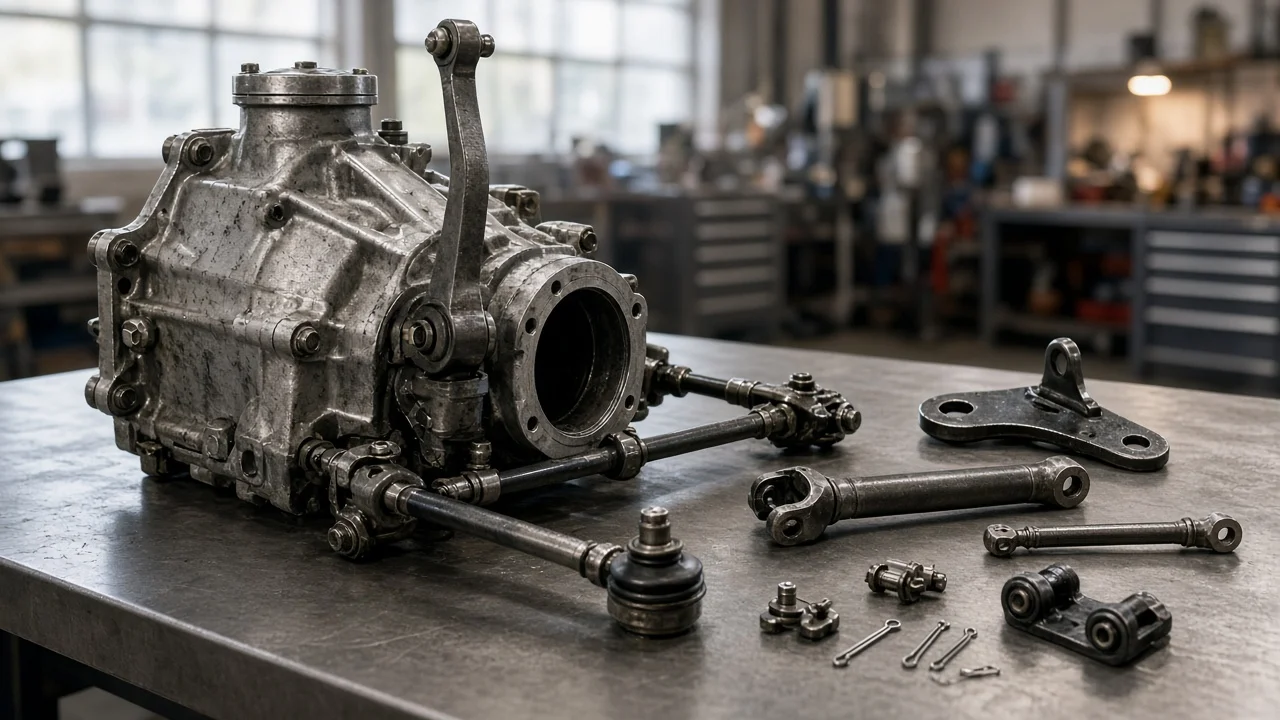
Identifying the transfer case linkage on a Chevy Silverado starts with a simpler question: does your truck have one at all? Many Silverados select four-wheel drive with a dash switch and an electric motor, while others use a floor lever connected to the transfer case by a rod. Knowing which setup you have, and which transfer case it serves, keeps you from ordering the wrong parts or chasing a problem that is somewhere else.
The short answer
A Silverado has a mechanical transfer case linkage only if four-wheel drive is selected with a floor-mounted lever. If your truck uses buttons or a rotary switch on the dash, the transfer case is shifted electrically by a motor mounted on the case, and there is no shift rod to replace. For lever-shift trucks, identify the linkage in three steps: confirm the shifter type in the cab, identify the transfer case model from the tag on the case or from the Service Parts Identification label, then match parts to the full vehicle configuration rather than to the model year alone.
This matters for owners looking up a 2001 or 2004 Silverado transfer case linkage. Both years belong to the generation that ran from the 1999 model year into the 2007 Classic, and that generation was built with both lever-shift and electronic-shift setups depending on the model, options and drivetrain. Two trucks from the same year can therefore need completely different parts, or one may need no linkage at all.
How the shift linkage works
On a lever-shift truck, the shifter in the cab pivots on a bracket mounted below the floor. A linkage rod runs from the bottom of that lever to the range selector arm on the side of the transfer case. When you move the lever, the rod rotates the selector arm, which moves the internal shift mechanism between ranges such as two-wheel high, four-wheel high, neutral and four-wheel low. The exact order of positions varies, so read the pattern on the shifter knob or boot rather than assuming one.
Each end of the rod is held by a bushing or grommet and a retaining clip, and many setups include an adjustment point, such as a threaded swivel or slotted connection, so the lever positions line up with the detents inside the case. Most linkage problems come from these small parts: worn bushings create slop, a missing clip lets the rod slip off, and a bent rod or bracket prevents the case from reaching a full range position.
Moving the transfer case into four-wheel drive is only part of the job. Depending on the truck, front axle engagement may rely on a separate actuator or switch. A lever that moves smoothly and clicks into position does not by itself prove that the front wheels are being driven.
What changes the answer
Several details change which linkage fits and how it should be adjusted. Light-duty and heavy-duty trucks can use different transfer cases, and the transfer case model determines the selector arm design. The transmission matters too, because the shifter bracket and rod length depend on how the drivetrain is packaged under the floor. Cab and bed length usually do not change the linkage itself, but they are part of how parts catalogs separate applications, so keep them handy.
Modifications are the biggest source of confusion. Converting an electronic-shift Silverado to a manual lever is a known swap, and a truck that has had one may carry parts that do not match its original build label. Suspension lifts and body lifts change the distance between the cab floor and the transfer case, which can make a stock rod bind or fall short unless a correction bracket or adjusted linkage was installed. Service history therefore matters: if the transfer case, transmission or shifter has ever been replaced, the factory label may no longer describe what is actually on the truck.
Operating conditions also affect what you find. Trucks used off-road, on salted roads or in deep water tend to show corroded clips, seized pivots and dried-out bushings, even when the linkage design itself is unchanged.
How to identify the parts on your truck
Start in the cab. A floor lever beside the transmission shifter means you have mechanical linkage; dash controls mean you do not. Next, check the Service Parts Identification label, usually found in the glove box. It lists three-character option codes, and one of them describes the transfer case. A dealer parts counter or a GM parts catalog can decode it from your VIN, which is more reliable than guessing from the truck’s trim or appearance.
Then confirm what is installed. With the truck parked on level ground, the engine off, the wheels chocked and the vehicle supported on stands if you need to get underneath, clean the area around the transfer case. Look for the identification tag on the case housing, which typically shows the model number and an assembly number. Photograph the shifter bracket, both ends of the rod, the selector arm and any adjustment hardware. Note whether the rod is straight or bent to a specific shape and how it attaches at each end. These details let a parts counter match the correct assembly even when the label and the hardware disagree.
During the inspection, move the lever through every position and watch the selector arm. Excessive free play, a lever that will not reach low range, a case that pops out of a range, or a shift pattern that no longer lines up with the indicator all point toward worn bushings, a loose clip or an adjustment problem. Replacing bushings and clips is often enough; a complete rod and bracket is needed mainly when parts are bent, broken or missing.
When the problem is not the linkage
If the selector arm on the case moves through its full travel but the truck still does not change range, the linkage is probably doing its job and the problem is inside the transfer case or in front axle engagement. Grinding, binding when the lever is moved with the truck stationary, or clunks under load deserve a closer look before you buy linkage parts. Low or contaminated transfer case fluid can also make shifting feel stiff. Check the fluid type and level against the manufacturer specifications for your exact case, and follow the maintenance schedule for your vehicle rather than a general interval.
Limitations and next step
This guide explains how to identify the linkage and what affects fitment, but it cannot replace the exact data for your truck. Part numbers for Silverado transfer case linkage vary with the transfer case model, drivetrain and production details, and a previous owner’s modifications can override the factory build. Before ordering, give the VIN, the option codes from the glove box label and the transfer case tag information to a parts supplier, and compare the new part with your photos or the removed original.
See a qualified technician if the case jumps out of gear, makes internal noise, will not engage even though the selector arm moves fully, or if the truck has a lift or drivetrain swap that changes the linkage geometry. A professional inspection can separate a simple bushing replacement from internal transfer case or front axle repairs and set up the adjustment so every position engages fully.