Chevy Silverado Shift Lock Release: Find the Instructions for Your Model Year
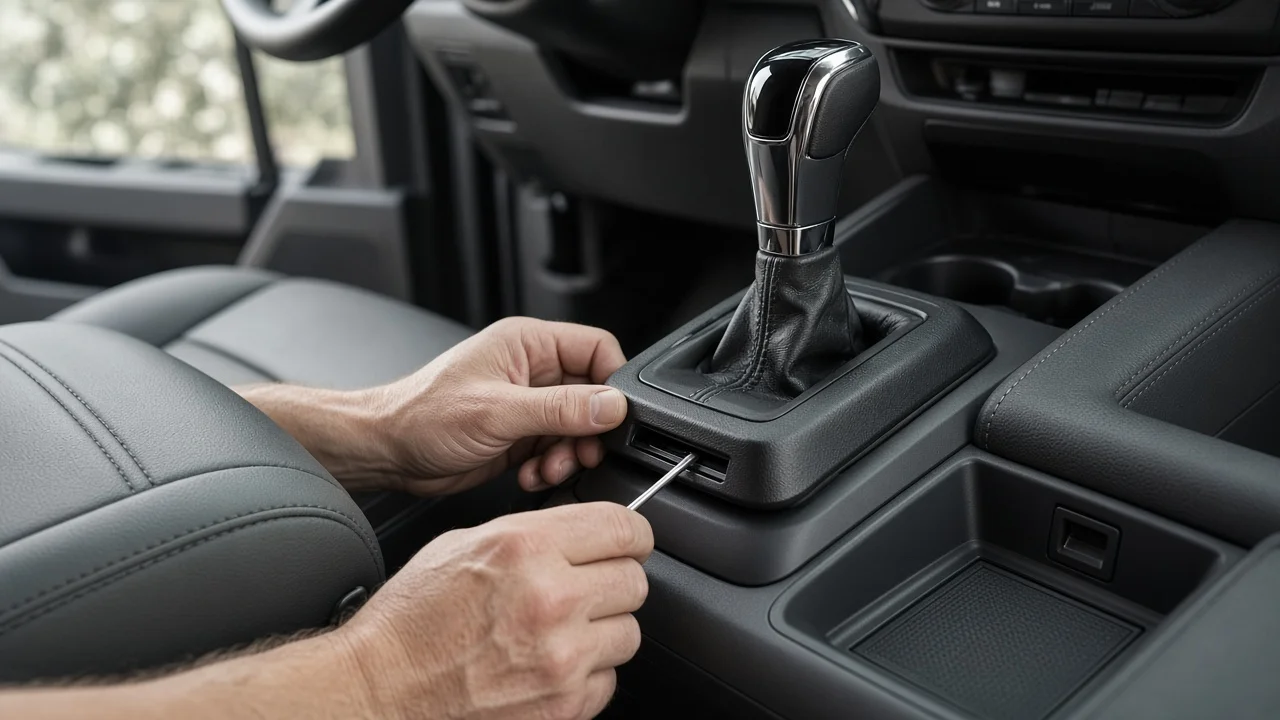
If your Chevy Silverado won't shift out of Park even with your foot on the brake, the shift lock is usually doing its job with bad information or no power. How you release it depends on the generation, the shifter design and whether the truck has a column lever or an electronic shifter. This guide explains how to identify your setup, what the release actually does and what to check before assuming a part has failed.
The short answer for your Silverado
No single shift lock release procedure covers every Silverado. The authoritative instructions are in the owner's manual for your exact model year, usually in the section on shifting out of Park or on shift lock control. Mechanical column shifters rely on an interlock that responds to brake pedal input and ignition position. When that circuit loses power or never receives the brake signal, the lever stays locked in Park. Some setups allow a manual override after trim is removed. On others, the intended fix is restoring battery voltage or the brake signal. Electronic shifters on some later trucks have no conventional mechanical release, and their manuals describe how the system behaves when voltage is low.
Before you try anything, park on level ground, set the parking brake firmly and block the wheels. Once the shift lock is bypassed, the transmission can leave Park, and a truck that rolls unexpectedly is a far bigger problem than a stuck lever.
How the shift interlock works
The system is usually called the brake transmission shift interlock. An electrically controlled actuator physically blocks the shifter from leaving Park until the ignition is on and the brake pedal is pressed. On column-shift Silverados, this mechanism sits inside the steering column. On trucks with a key ignition, a related interlock also keeps the key from coming out unless the shifter is in Park.
The brake signal comes from a stop lamp switch on older trucks and from a brake pedal position sensor on many newer ones. Fused circuits power both the signal and the actuator. If any link in that chain fails, the lever stays locked even though the transmission itself is healthy. That chain includes the battery, fuses, switch or sensor adjustment, wiring and the actuator. This is why a stuck shifter is so often an electrical complaint rather than a transmission failure.
What changes the answer for your truck
Start by confirming the generation and shifter type. Silverado generations broadly run from 1999 to 2006 (plus the 2007 Classic), 2007 to 2013, 2014 to 2018, and 2019 onward. A 2022 refresh brought an electronic shifter to some trims, while others kept a column lever. Light-duty 1500 trucks and heavy-duty 2500HD and 3500HD models can differ, and keyed ignition versus push-button start changes how ignition position feeds into the interlock. The model year, trim and VIN on your registration or door jamb label let you match the correct manual and procedure.
Transmission type matters less to the lock itself. It matters a great deal when the symptom isn't really the interlock. If the lever moves freely but the truck won't engage gear, or the gear indicator doesn't match the lever position, you are looking at shift cable or linkage adjustment, a range sensor or an internal transmission issue, each with its own diagnostic path. Replacement switches, sensors, actuators and shifter assemblies also vary in fitment by year, cab, drivetrain and options, so confirm parts by VIN rather than by appearance.
What the owner can do right now
Two quick checks narrow things down. First, see whether the brake lights work, either with a helper behind the truck or by watching the reflection on a wall or garage door. If they stay dark, suspect the brake signal path: a fuse, the switch or sensor, or wiring. That is a lead, not a confirmed failed part. Second, look for signs of low voltage, such as a dim cluster, slow cranking, clicking or flickering displays. If the battery is weak, charging it or jump starting it according to the manual may be the whole fix.
If the brake lights work and voltage is good but the lever won't move, check whether your manual describes a manual override for your truck. If it does, follow it exactly, including which trim to remove and what tool to use. Don't force or pry the lever, because that can break internal pieces and turn a simple fault into a column or shifter replacement. On newer trucks, scan for diagnostic codes related to the brake pedal position sensor or the shifter. A basic engine code reader may not see body or shifter modules, so a scan tool that reads them gives more useful results.
Think about recent service history as well. Brake work, pedal assembly repairs, or aftermarket accessories tapped into the brake light circuit, such as trailer wiring or auxiliary lighting, can disturb the signal the interlock depends on. Note anything like that, along with when the problem first appeared and whether it is constant or intermittent. That information shortens diagnosis considerably.
Limitations and when to get help
This guide cannot replace the exact procedure for your truck. Whether an override exists, where it is and how to reach it all vary between generations and shifter designs. On column-shift trucks, the steering column also houses airbag-related wiring, so leave unfamiliar connectors alone and stop if the manual's steps don't match what you see.
An override is a way to move the truck, not a repair. Driving with a defeated interlock removes a safety feature, so treat it as temporary. Repair options range from replacing a fuse or adjusting a switch to replacing a sensor, actuator or shifter assembly, and a dealer or a qualified transmission or electrical shop can confirm the cause with proper tests. Get professional help right away if the truck moves while in Park, the lever travels without engaging a gear, or the dash shows transmission or shifter warnings.