Chevy Silverado Fuel Filter (2003–2006): Location and Replacement
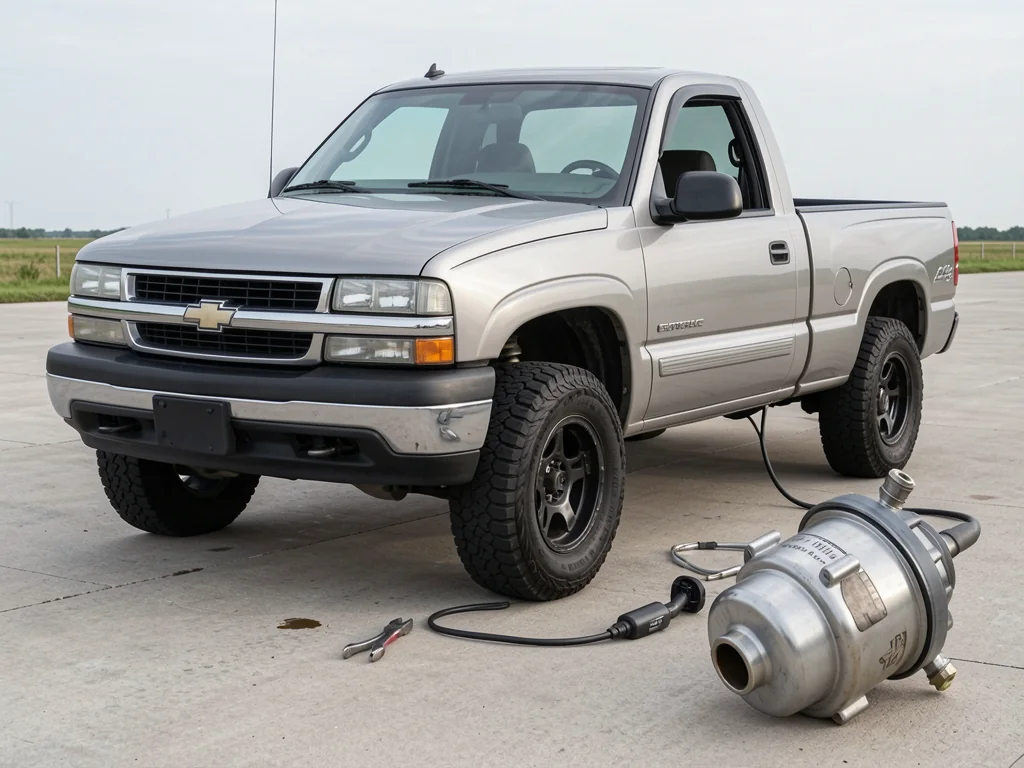
Owners looking for a 2003 Chevy Silverado fuel filter, or the matching 2006 Chevrolet Silverado fuel filter, first need to know which engine and fuel system their truck actually uses. Model year is only a starting point. Gasoline trucks and diesels do not share the same filter hardware, and some layouts hide the element in an in-tank fuel module rather than a frame-mounted fuel filter. Confirm the truck before treating any canister as the service part.
Identify the Silverado’s Engine and Fuel-System Configuration
A 2003 Chevy Silverado fuel filter and a fuel filter 2006 Chevy Silverado are not interchangeable parts across every truck of those years, because GMT800-era pickups were sold with more than one gasoline fuel system and with diesel power. The truck series, engine family, and fuel type change whether the serviceable element sits on the frame, under the hood, or inside the tank. VIN-based vehicle details and the door-jamb RPO list are the practical way to identify the installed engine rather than assuming every Silverado of those years uses the same filter.
Engine identification is not a guess from hood badges or a quick look at a fuel line. Service information written for that VIN, year, series, and engine is what establishes whether the filter is externally serviceable or integrated into an in-tank fuel module. Until that confirmation exists, it is unsafe to describe a housing as the replacement part or to plan a procedure around a frame-mounted fuel filter. Gasoline fuel system layouts and diesel fuel filter assemblies follow different documentation, so the same model year can still require two different service paths.
Locate the Fuel Filter on a 2003 Silverado
On a 2003 Chevy Silverado, location of the fuel filter depends on the confirmed engine and fuel type, not on a shared chassis picture. When vehicle-specific information shows an external frame-mounted fuel filter on a gasoline truck, the documented position is along the frame rail in the fuel line run between the tank and the engine, typically on the driver side toward the rear. From a safe standing position beside the truck, that housing often appears as a metal canister with fuel line fittings at both ends, clipped or bracketed to the frame.
A 2003 diesel configuration uses a different diesel fuel filter assembly, documented under the hood rather than as that frame canister. Identification details come from the engine's service information, which names the assembly, its mounting area, and the water-separating function that gasoline filters do not share. An unfamiliar canister, damper, or fuel-system component should not be treated as the filter solely by appearance, because similar metal housings can be something else entirely. If the 2003 truck's paperwork does not list an external filter, do not invent one from a neighboring year.
Find the Fuel Filter Arrangement on a 2006 Silverado
The fuel filter on a 2006 Chevy Silverado is not guaranteed to match the 2003 layout. A 2006 Chevrolet Silverado fuel filter may be a separately serviceable element, an integrated tank-module filter, or a diesel filter assembly, depending on the engine and fuel type confirmed for that truck. Location guidance only applies after that configuration is known. Promising a frame-mounted fuel filter on every 2006 truck is inaccurate, because some gasoline systems moved filtration into the in-tank fuel module and no longer place a replaceable canister on the frame.
An integrated filter arrangement means the element lives with the pump and sender inside the tank, so service access is through the fuel module rather than a frame bracket. Finding no obvious canister along the frame does not justify replacing the entire fuel module; module replacement is a separate decision based on confirmed faults, not on a missing external housing. Diesel filter service still requires the procedure written for the installed engine and assembly, including any water-drain features unique to that diesel fuel filter assembly.
Confirm the Service Requirements Before Replacement
Coverage for 2004 and 2005 trucks should stay tied to verified vehicle-specific information rather than copying a 2003 Chevy Silverado fuel filter layout or a 2006 Chevrolet Silverado fuel filter layout by inference. Those in-between years can share some chassis traits while still changing filter packaging. Confirm the correct replacement filter and required seals from parts documentation that matches the exact year, series, engine, and fuel type. Fuel line fittings and seal kits are not interchangeable across gasoline and diesel assemblies, and a visually similar canister can still use a different thread, clip, or gasket.
Replacement timing belongs to the applicable maintenance schedule for that engine and fuel system, not a universal interval applied to every Silverado. If the owner's booklet or service information lists a filter service item, follow that document; if it does not list an external filter, do not invent a mileage number. Corrosion on lines, damaged fittings, an uncertain service history, and difficult access under the truck are all reasons to arrange professional service instead of forcing a first attempt. Those conditions raise leak risk even when the intended part is correctly identified.
Understand What Safe Fuel Filter Replacement Involves
Safe replacement, when the configuration actually has a serviceable filter, follows stages rather than improvised steps. Confirm the assembly against the truck's service information, make the fuel system safe according to that procedure, replace only the serviceable element and the specified seals, then verify operation. Residual pressure, flammable gasoline or diesel fuel, and access beneath the truck make opening fuel lines unsuitable for casual trial and error. Fuel pressure testing belongs in diagnosis, not as a shortcut for deciding which housing to crack open.
Depressurizing the system, disconnecting fuel line fittings, draining or removing the tank, and lifting the truck with improvised supports require the published procedure, correct tools, and a stable work setup. Those jobs are not suitable for informal trial. Any required diesel priming and post-service leak checks must follow the exact service procedure for the installed diesel fuel filter assembly. Owners who lack the equipment or experience should have a shop complete the replacement rather than leaving air in the lines or fuel at a fitting.
Know When Symptoms Require Fuel-System Testing
Hard starting, hesitation, stalling, or reduced power can come from ignition, air intake, electrical, or fuel-delivery problems, so those symptoms do not prove the filter is restricted on a 2003 or 2006 Chevy Silverado. Safe observations help a technician later: note whether the problem appears hot or cold, after a fill-up, under load, or at idle, and whether a warning light is present. Recent refueling, fuel quality concerns, and the last documented filter or pump service belong in that history. None of those notes require opening the fuel system.
Professional fuel pressure testing, delivery checks, and electrical testing of the pump circuit are the right next step before authorizing a filter or module replacement. A restricted filter is only one possible finding, and swapping parts without those results can leave the original fault in place. Do not start or drive a truck with a suspected fuel leak. Visible fuel, wet fittings, or a persistent strong fuel odor call for professional assistance and a safe parking location away from ignition sources until the source is identified.