Chevy Silverado and Vortec EGR Valves: Location, Symptoms and Replacement
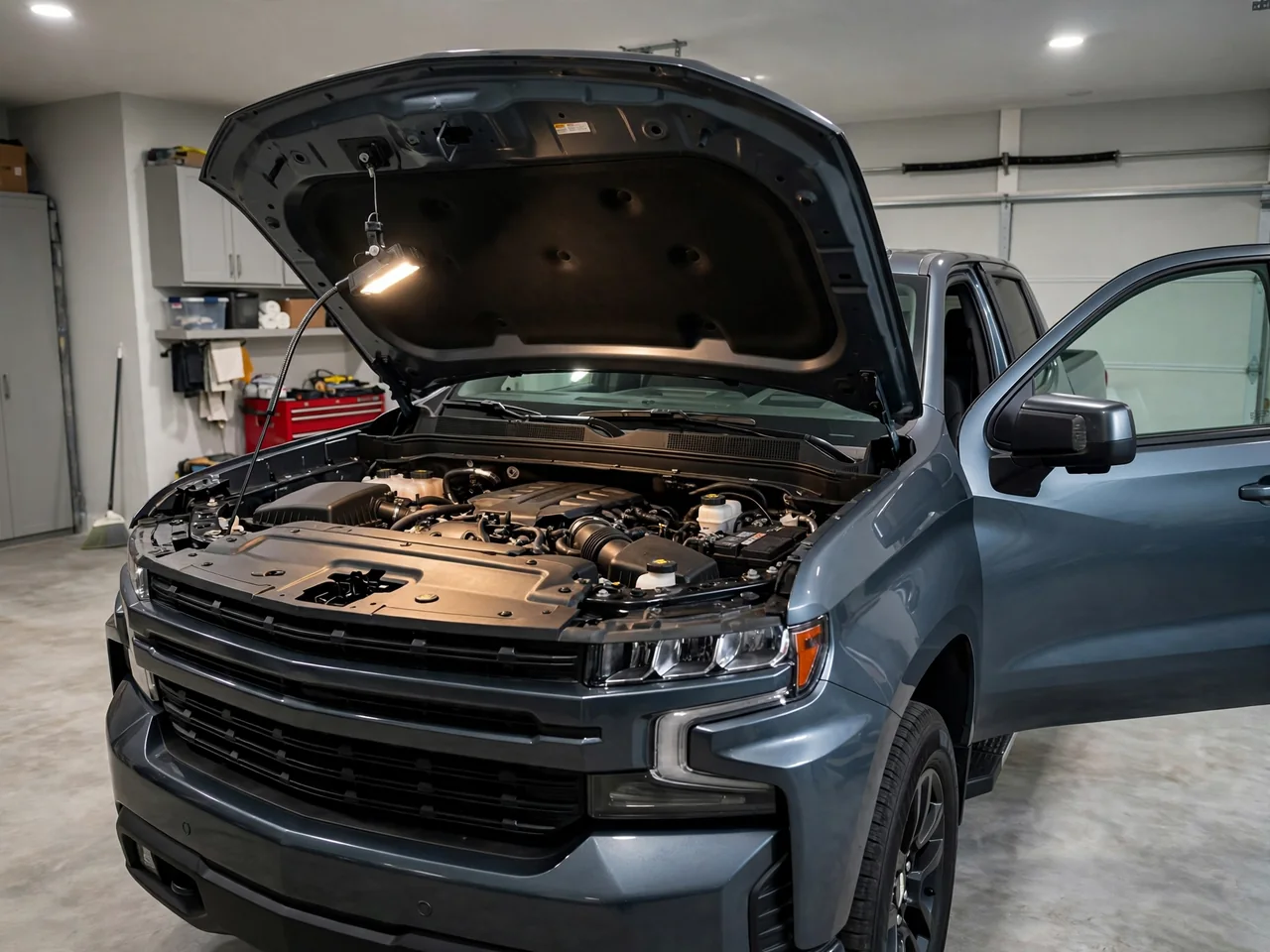
A Chevy Silverado EGR valve question usually starts with location, symptoms, or a replacement part. Exhaust gas recirculation equipment still varies by year, engine identification, and the emissions configuration on the underhood emissions label. Some Chevrolet engines use an external valve; others manage recirculation differently. Confirming that hardware first keeps later advice from being applied to a truck that never used a discrete Chevy EGR valve.
Identify the Chevy EGR System Before Looking for a Valve
Exhaust gas recirculation lowers peak combustion temperature by metering exhaust into the intake charge so the engine stays within its emissions design. When a Chevy EGR valve is fitted as an external assembly, that valve is the metering device: it opens under commanded conditions and closes so the mixture is not diluted at idle or during high-load enrichment. Not every Chevrolet engine uses that hardware. Internal passages or electronically managed strategies can achieve similar control without a bolt-on valve, so a Chevy EGR valve is an equipment question, not a family name.
A Vortec badge or the Chevrolet EGR valve name therefore does not prove an external valve exists on that engine. Establish the model year, engine identification from the VIN or underhood tagging, and the emissions configuration before asking for a location or a part. The underhood emissions label lists certified equipment for that vehicle, and vehicle-specific service information shows whether an external valve, its connector, and associated EGR passages are part of the build. Use the label and the service information together so later location and replacement notes match the hardware in the bay.
Confirm EGR Equipment on a Silverado, Including 2000 and 2001 Models
An EGR valve for Chevy Silverado work starts with the truck, not a catalog heading. Year, engine, and emissions configuration decide whether that valve is even fitted, and those details also decide which diagram applies. Owners of a 2000 Chevy Silverado or a 2001 Chevy Silverado still need that verification before anyone states that an EGR valve is present or names its location. Silverados of those years were built with more than one powertrain and emissions package, so the same model year can hide different hardware.
When requesting a component diagram or a replacement part, provide the VIN if possible, the model year, engine RPO or VIN-confirmed displacement, and what the emissions label lists for exhaust gas recirculation. Those details let a parts lookup distinguish connector style, mounting, and the specified replacement gasket. If a valve is missing from a spot where an online photo suggested one should sit, recheck the equipment specification before assuming the part was removed. Some Chevrolet EGR valve layouts never used an external unit in that location on that Silverado.
Locate the EGR Valve on a 4.3 Vortec
A 4.3 Vortec EGR valve location cannot be stated from the engine family name alone. The 4.3 appeared in Silverados, S-series trucks, vans, and other Chevrolet applications, and the emissions equipment followed the vehicle, not just the displacement. Confirm the model year and the specific vehicle application before treating any photo as verified. The application's service diagram is what identifies the mounting area and the nearby landmarks that distinguish the valve from adjacent intake or emissions hardware.
Once that diagram is in hand, match the valve body, the EGR valve connector, and the path into the EGR passages, rather than grabbing the nearest similar-sized sensor on the engine. The labeled connections on that page are the identification landmarks; a vacuum fitting, idle-air motor, or pressure sensor can sit close enough to fool a quick glance. Limit owner observations to an engine-off, cooled engine bay: the labeled mounting, the connector, and obvious obstruction only. If accessories or heat shields block a clear view, have the location confirmed professionally rather than forcing access.
Identify the EGR Valve and Connections on a 5.7 Vortec
A 5.7 Vortec EGR valve needs the same application check. Verify the exact 5.7 Vortec vehicle and the emissions equipment before describing the assembly. Truck, van, and SUV 5.7 Vortec engines did not share one emissions layout, and some calibrations used different recirculation hardware. Once vehicle-specific service information confirms an external valve on that 5.7 Vortec, use that source for the mounting location, the valve's appearance, and how the electrical connector and passage interfaces are arranged.
Safe visual checks, with the engine off and cool, include looking for a damaged EGR valve connector, a loose harness, cracked insulation, or soot or residue that suggests leakage at the base. Those observations are clues, not proof the valve has failed. An EGR flow concern can originate in the valve, the control circuit that commands it, or restricted EGR passages that never let exhaust move even when the valve opens. EGR flow testing, when specified for that Chevrolet application, is how a technician separates a stuck valve from a wiring, solenoid, or passage problem.
Assess Suspected EGR Symptoms on a Chevy 5.3
Chevy 5.3 EGR valve symptoms can include drivability changes, yet the first step is confirming whether that particular 5.3 uses an external EGR valve. Many 5.3 Vortec applications manage emissions with other hardware, so attributing a complaint to an EGR valve on a 5.3 Vortec is premature until the emissions label confirms the valve exists. When an external valve is confirmed, a malfunction can contribute to rough idle, stalling, hesitation, or a check engine light. Those same complaints also come from vacuum leaks, ignition faults, fuel delivery, and sensor problems, so they are not diagnostic on their own.
Record when it appears: cold or fully warm, at idle or under load, during deceleration, or after a long highway run. Note whether the check engine light is steady or flashing, and capture stored codes without treating a manufacturer-dependent EGR code as proof the valve has failed. Those codes are evidence to interpret against that Chevrolet's service information; testing may be needed to distinguish flow, control, wiring, and unrelated drivability faults. Severe stalling, major power loss, or a flashing check engine light is a reason to stop safely and seek assistance rather than keep driving.
Plan EGR Valve Replacement After Confirming the Fault
A 5.3 EGR valve replacement request still requires two checks: the truck must actually use an external valve, and testing must support replacing it. Displacement alone does not establish either point. Vehicle identification, the emissions configuration, the EGR valve connector style, and the specified replacement gasket are what guide part selection. Catalog photos of an EGR valve for Chevy applications miss pintle design and electrical interface differences that only the application data capture. A 5.3 label, a Vortec name, or a Silverado body style is not enough to choose the assembly.
Once the fault is confirmed, the repair scope is verified diagnosis, assessment of the valve and the EGR passages it feeds, and installation with the specified sealing materials following that application's service procedures. Heat-damaged connections, seized fasteners, obstructed access, or an uncertain diagnosis are reasons to use professional service instead of forcing the job. After installation, inspect the joint for leaks, confirm normal idle and part-throttle behavior, and see whether related codes return under the specified drive cycle. Clearing a warning light by itself does not confirm the repair.