Chevy Silverado 4WD Actuator Symptoms: What to Check First
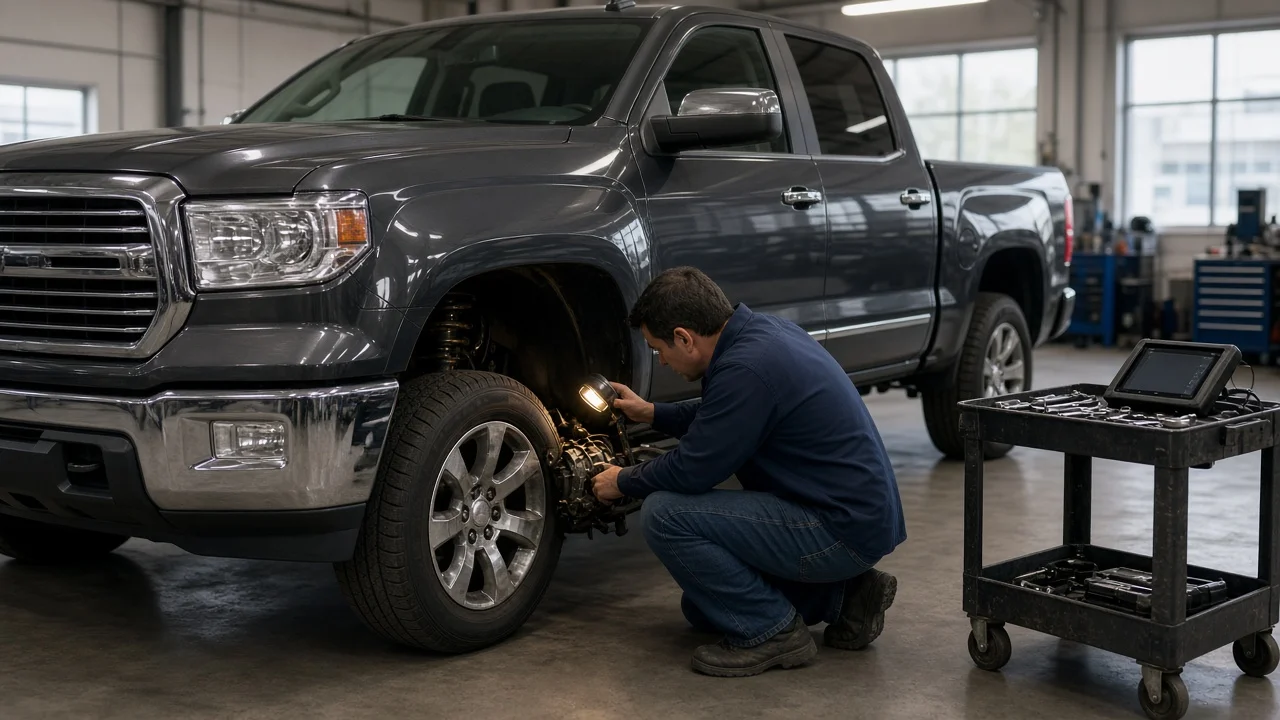
When a Chevy Silverado won't shift into or out of four-wheel drive, the front axle actuator is often blamed first. It may be the cause, but the same complaints can come from the transfer case encoder motor, the selector switch, wiring or a control module. This guide covers how to recognize a failing 4WD actuator, how to separate it from nearby faults, and what to record before buying parts. Components and procedures vary by model year and vehicle configuration, so confirm the details in the service information for your truck.
Establish the symptoms
Owners commonly report a few signs. The 4WD indicator may flash or never settle on the selected mode, or a Service 4WD message may appear. The front wheels may not pull when 4WD is selected. There may be a buzzing, clicking or grinding sound near the front differential during a shift. The truck may also stay in four-wheel drive after 2WD is selected, which usually shows up as binding, tire scrub or a hopping feel in tight turns on dry pavement. Some trucks only misbehave in cold weather, after a pressure wash, or after driving through deep water, slush or snow.
Write down the details before anyone starts testing. Record the model year, cab and drivetrain, and whether the selector is a dial or push buttons. Note whether both 4HI and 4LO are affected, whether the dash indicator changes, and where any noise seems to come from. Also note the operating conditions when the fault appears, such as temperature, moisture, vehicle speed and whether the truck was moving or parked. Recent work matters too: front-end or axle repairs, differential service, battery replacement, a lift kit or a change in tire size can all be relevant. If a scan tool is available, capture any stored codes before they are cleared.
Distinguish plausible causes
On many Silverados, the front axle is disconnected in two-wheel drive, and an electrically operated actuator at the front differential engages it when 4WD is selected. If the transfer case appears to shift but the front wheels still don't drive, suspicion falls on this actuator or the shift mechanism it moves. The case for the actuator gets stronger if you hear clicking or buzzing at the front differential with no engagement, or if engagement works when the truck is warm but fails in the cold. Moisture or corrosion in the actuator connector can produce the same pattern, so a weather-related fault doesn't prove the actuator itself has failed.
The transfer case encoder motor shifts the transfer case between ranges. If the indicator flashes and neither 4HI nor 4LO engages, or if 4LO is unavailable along with 4HI, the encoder motor or its position sensing becomes more likely than the front actuator. A faulty selector switch, a blown fuse, damaged wiring, corroded connectors or a control module fault can produce nearly identical dash behavior. This is why stored codes and module data are more useful than the symptom alone.
Mechanical problems can also mimic an actuator fault. These include a worn shift fork, a damaged engagement collar, or front differential fluid that is low or contaminated. Mismatched tire sizes can make engagement harsh or cause binding. A loud clunk or grinding on engagement, especially if it started after axle work or an impact, points more toward a mechanical issue than an electrical one.
Checks in a useful order
Start with observations that need no tools. Confirm you are following the shift procedure in the owner's manual, since low-range shifts usually require specific conditions, such as a particular gear position and the truck stopped or moving slowly. Check the 4WD-related fuses listed for your truck. Look along the harness to the front actuator and the transfer case for chafing, melted insulation near the exhaust, loose connectors or corrosion. With the truck parked safely on level ground and the parking brake set, have a helper select each mode while you listen near the front differential and the transfer case for any sign of a shift attempt.
The next steps need equipment and specifications. A scan tool that can read the transfer case or 4WD module, not just engine codes, can show stored codes, switch inputs and motor position data, and on some trucks it can command the actuator. Checking power and ground at the actuator connector needs a meter and the wiring diagram for your configuration. Inspecting front differential fluid, raising the truck to see whether the front driveshaft turns, or removing the actuator requires proper lifting and support. Internal axle or transfer case work is best left to a qualified technician who has the manufacturer specifications.
Interpret the findings
Codes that point to the actuator circuit identify an electrical fault in that circuit, but not necessarily a bad actuator. Wiring, connector and power checks should come before replacement. If the actuator receives the correct command, power and ground but doesn't move, or moves without engaging the axle, the actuator or the internal shift parts become the likely cause. Removing the actuator and inspecting its plunger and the shift mechanism can help tell the two apart. If no power reaches the actuator, look upstream at the fuse, the wiring, the selector switch or the module.
If the transfer case position data never changes when a new mode is selected, the encoder motor or its circuit deserves attention before the front axle does. If every electrical check passes and the front wheels still don't drive, a mechanical inspection is needed. Intermittent faults need extra care. A single passing test doesn't rule out a part that fails only when cold or wet. Try to recreate the conditions you recorded, then clear codes and retest after any repair to confirm the fault is actually gone.
Urgency and next action
Stop driving and arrange an inspection if any of these occur: • The truck stays locked in four-wheel drive on dry pavement and binds or hops in turns. • There is loud grinding or repeated clunking from the front axle or transfer case. • A new vibration appears. • Fluid is leaking from the differential or transfer case. • The front wheels seem only partly engaged. Don't count on four-wheel drive for towing, steep grades or snow until engagement is confirmed. Because condition and cause vary, there is no reliable distance or time a truck can safely be driven with an unresolved 4WD fault.
Give the shop the information that shortens diagnosis: • The VIN, model year and vehicle configuration; • Any stored codes, with freeze-frame data if available; • Your log of when the symptoms occur and the operating conditions; • Recent repairs and relevant service history, including differential and transfer case fluid service; • Which checks have already been done and their results; This helps the technician confirm the cause before replacing the actuator or any related part.