Diagnose Chevy Malibu engine code P1101
What P1101 means on a Chevy Malibu
P1101 is a manufacturer-specific code. Its meaning depends on the carmaker, so a generic code chart may not match your car. On GM vehicles, including many Chevrolet Malibu engines, P1101 is generally defined as an intake airflow system performance fault. This means the engine computer (PCM) has found that the measured intake airflow does not agree with the airflow it expects from other sensor readings.
In practice, the PCM compares the mass airflow (MAF) sensor reading with an estimate based on the manifold absolute pressure (MAP) sensor, throttle position and engine speed. If the two values disagree by more than an allowed amount for long enough, the code is stored and the check engine light comes on.
Two points matter before any diagnosis. First, the definition and the sensors involved can differ by model year, engine and PCM software. Confirm the description for your exact Malibu with a scan tool that reads GM-specific codes, or with GM service information for that year and engine. Second, P1101 shows that a mismatch exists. It does not tell you which part caused it. Replacing the MAF sensor on the code alone is a common and avoidable expense.
Common causes of the airflow mismatch
Anything that makes the MAF reading and the calculated airflow disagree can set P1101. The usual causes fall into a few groups:
Unmetered air: a split or loose intake duct between the MAF sensor and the throttle body, a loose clamp, a disconnected or cracked PCV or vacuum hose, or an intake manifold leak. Air that enters after the MAF sensor is never measured. MAF sensor contamination or failure: dirt, oil film or debris on the sensing element can skew its reading. Oiled aftermarket air filters are a known source of contamination. Intake restriction: a heavily clogged air filter, a blocked inlet or a collapsed duct. MAP sensor or its vacuum supply: a faulty MAP sensor, or a cracked or disconnected vacuum line feeding it, distorts the expected-airflow calculation. Throttle body deposits: carbon buildup can change airflow at small throttle openings compared with what the PCM expects. Wiring and connectors: corroded, loose or damaged connections at the MAF, MAP or throttle position sensors. PCM software: on some vehicles, a calibration update addresses false or nuisance airflow codes. Whether one exists for your Malibu requires checking GM service bulletins for that model year and engine.
Checks to make, in a sensible order
1) Record every stored code and its freeze-frame data before clearing anything. Codes that appear with P1101, such as other MAF, MAP, throttle position, lean-condition or misfire codes, often point to the root cause faster than P1101 alone. 2) Inspect the air intake path from the filter box to the throttle body. Look for cracks, especially in folds of the rubber duct, and check for loose clamps and an unseated filter housing. 3) Check the air filter for heavy restriction and for oil residue if an aftermarket filter is fitted. 4) With the engine running, listen for hissing and inspect vacuum and PCV hoses, including the MAP sensor line where one is used. 5) Check the MAF, MAP and throttle position sensor connectors for corrosion, bent pins and secure locking. 6) Inspect the MAF sensing element. If it is visibly dirty, clean it only with a cleaner made for MAF sensors, and never touch the element. 7) Look into the throttle body for carbon buildup. Follow the procedure for your model before cleaning, because some electronic throttle bodies need care and may require a relearn. 8) Clear the code and drive under normal conditions to see whether it returns. If it comes back quickly, note the driving conditions when it set.
What you find | What it suggests; Cracked duct or loose clamp after the MAF sensor | Unmetered air is the likely cause; repair it and recheck before replacing sensors; Oil film or debris on the MAF element | Contamination may be skewing the reading; clean the element, address the source, and recheck; Cracked or disconnected MAP vacuum line | The expected-airflow calculation is distorted; repair the line and recheck; P1101 alongside a lean or misfire code | A vacuum leak or airflow fault affecting fuel mixture is more likely; investigate before driving hard; No visible fault and the code returns | Live data comparison and possibly smoke testing are needed, usually by a technician
When to stop driving or get professional diagnosis
P1101 on its own often has mild symptoms such as hesitation, rough idle or poorer fuel economy, and some cars show no symptoms at all. The situation is more serious if any of the following occur:
The check engine light flashes. This usually indicates active misfire that can damage the catalytic converter, so reduce load and stop driving as soon as it is safe. A reduced engine power message appears or the throttle response becomes limited. This can affect your ability to merge or accelerate safely. The engine stalls, surges or idles very roughly. You smell fuel or notice anything abnormal in the engine bay.
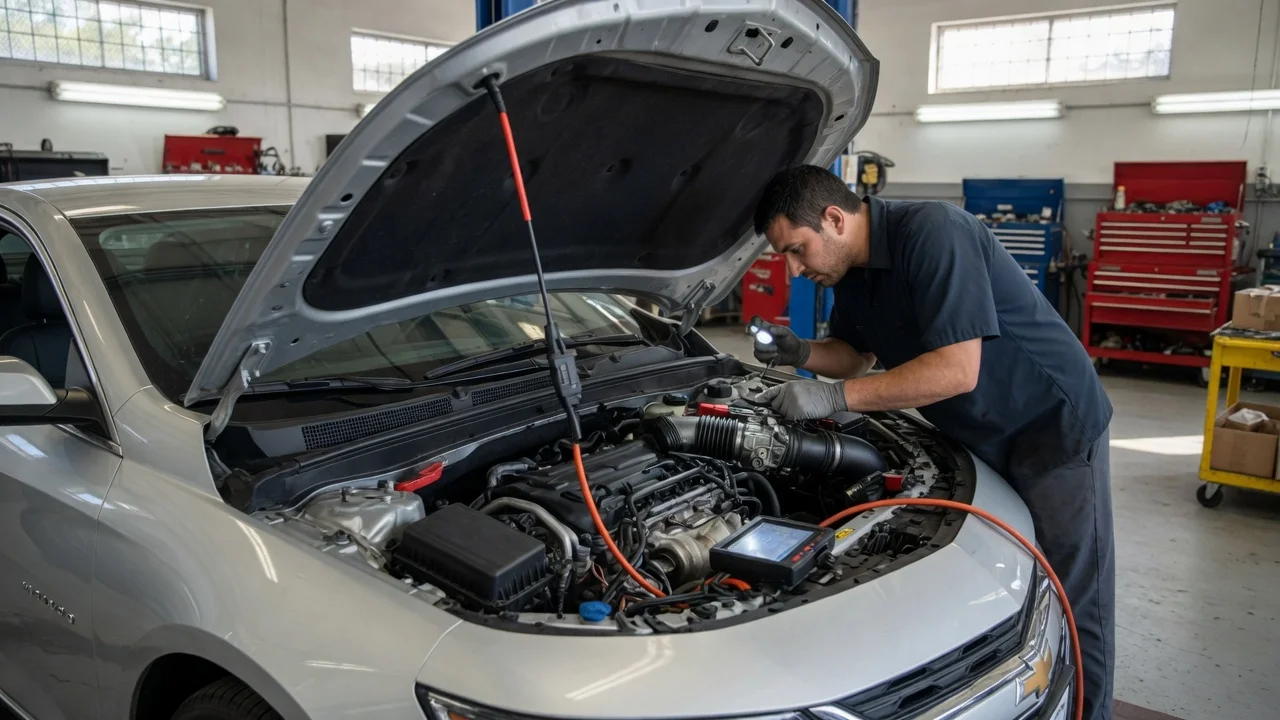
Book professional diagnosis if the basic checks find nothing and the code keeps returning. A technician can compare live MAF, MAP and throttle readings against GM's specifications for your engine, smoke-test the intake for hidden leaks, and check for applicable service bulletins or software updates. That data-based comparison separates a failing sensor from a leak or restriction, which visual inspection alone often cannot do.
Limits of this guide
This guide does not provide sensor specifications, expected live-data values, model-year coverage lists or bulletin numbers for the Malibu, because those figures were not available for this article. They vary by engine and year. Rely on GM service information for your specific vehicle for exact values and procedures.