Chevy Equinox EV Range by Model Year, Trim, and Driving Conditions
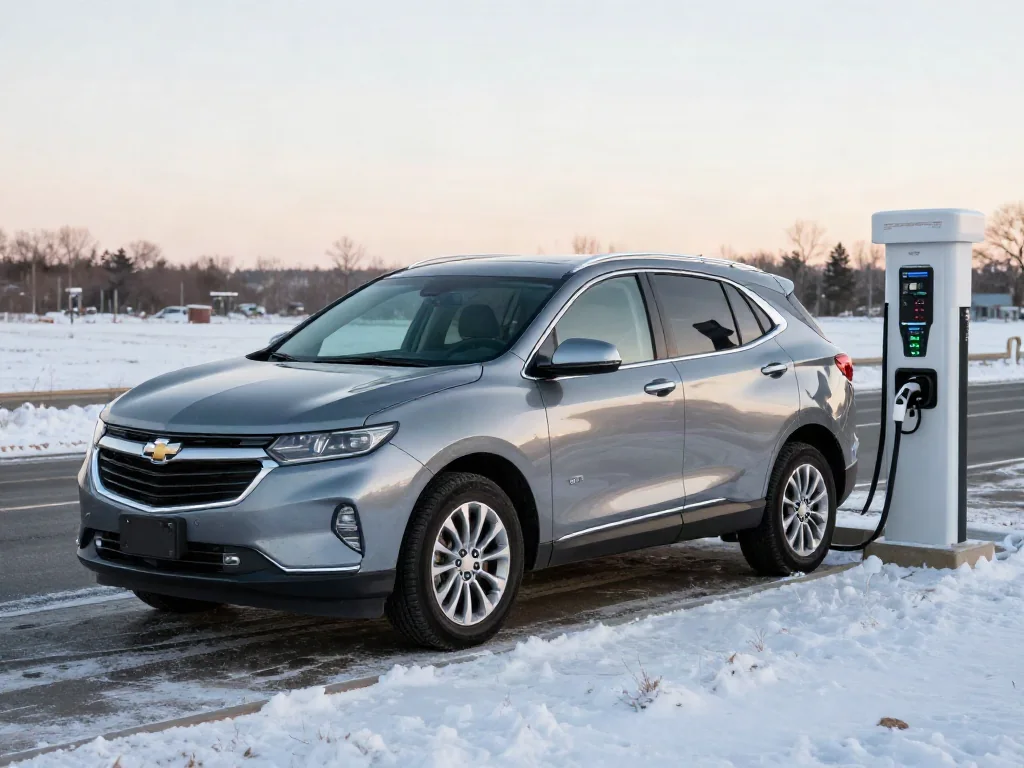
The Chevrolet Equinox EV range depends on model year, trim, drivetrain, and driving conditions, not on one advertised distance for every example. Shoppers comparing a 2024 Equinox EV, a 2025 Chevy Equinox EV, or a 2026 Chevrolet Equinox EV should match the EPA-rated range to that configuration, then treat real-world range and winter range as trip-specific outcomes.
Find the Range Rating for Your Equinox EV
The applicable range of a Chevy Equinox EV is tied to model year and configuration. A maximum figure for one Equinox EV does not automatically describe an LT, 2LT, RS, front-wheel drive, or all-wheel drive example from another year. EPA-rated range is a standardized full-charge estimate produced under a common test procedure so vehicles can be compared. It cannot guarantee mileage on an individual trip, because speed, weather, load, and climate settings change energy use.
Identify model year, trim, and drivetrain on the window sticker, build sheet, or owner's documentation, and note any equipment those papers tie to the rating. The cluster's estimated remaining range then tracks state of charge and recent operating conditions. A high remaining-range number after gentle driving can shrink once highway energy consumption, cabin heating, or a heavier load appears, so treat the dashboard as a live estimate rather than a fixed specification.
Range Ratings for 2024, 2025, and 2026 Models
A 2024 Chevrolet Equinox EV, a 2025 Chevrolet Equinox EV, and a 2026 Chevrolet Equinox EV can carry different EPA-rated range values, so the EV Equinox range is year-specific. Verify each year independently instead of copying a 2024 Chevy Equinox EV range onto the Chevy Equinox EV 2025 range or a 2026 Chevy Equinox EV range. Where Chevrolet publishes a manufacturer estimate rather than a completed EPA-rated range, keep that distinction visible so a preview is not treated as the official rating.
Locate the rating on the fuel-economy label, window sticker, or Chevrolet documents for that model year, then confirm the drivetrain and equipment listed beside the figure. Without that year-and-configuration match, the numeric 2024 Equinox EV range, 2025 Equinox EV range, or 2026 Equinox EV range cannot be established for the vehicle in question. Do not borrow a neighboring trim's figure or carry a 2024 rating forward as if it describes a later Chevrolet Equinox EV.
LT and 2LT Range by Vehicle Configuration
Confirm whether documents for that Chevrolet Equinox EV use LT or 2LT naming for the model year before assigning any range figure. Equinox EV LT range for a 2025 Chevrolet Equinox EV LT and a 2026 Chevrolet Equinox EV LT still must be read with the drivetrain identified, because front-wheel drive and all-wheel drive LT examples can carry different EPA-rated range values. A 2LT badge likewise names a trim family, not a single locked mileage number.
An LT or 2LT badge alone does not establish the rating, because two vehicles sharing that name can differ in drivetrain and other listed equipment. Wheel size and option packages matter for Equinox EV 2LT range only when the vehicle's label ties those items to the published figure. If the 2025 Chevrolet Equinox EV LT range or 2026 Chevrolet Equinox EV LT range is not printed beside that exact drivetrain, the LT range cannot be established from the badge.
RS Range for the Applicable Model Year
Documented Equinox EV RS range has to be read as a 2024 Chevrolet Equinox EV RS range or a 2025 Chevrolet Equinox EV RS range attached to a specific drivetrain and equipment list. Confirm those details on the window sticker, build sheet, or Chevrolet rating documents rather than from cladding or interior trim. An RS appearance package can look the same on vehicles that do not share the same EPA-rated range, so styling is not evidence of a particular mileage rating.
Keep each model year's Chevy Equinox EV RS range distinct so a 2024 figure is not applied to a 2025 RS, and so a later unspecified RS is not assigned either year's number. When looking up an RS vehicle, match front-wheel drive or all-wheel drive, then read only the rating printed for that combination. If the documents for a given RS Equinox EV do not list a completed EPA-rated range for that configuration, the Chevy Equinox EV RS range cannot be established from the trim name.
AWD Range and Drivetrain Identification
All-wheel drive ratings for the Equinox EV are meaningful only when the model year and configuration are labeled with that Equinox EV AWD range, including the Chevy Equinox EV AWD range printed for the vehicle in hand. Confirm AWD from the window sticker, build record, owner's manual, or vehicle settings rather than from cladding or stance. Appearance can overlap with front-wheel drive Equinox EV models, so a visual guess is a weak way to pick the EPA-rated range.
Whenever a front-wheel drive rating appears, it should stay labeled as FWD so it cannot be mistaken for an Equinox EV range AWD figure. Drivetrain identification only selects the relevant rating; it does not freeze trip mileage. Highway speed, weather, cargo, and state of charge still change how far an AWD Equinox EV travels before the next charging stop. Use the labeled AWD rating for comparison, then watch estimated remaining range as conditions change.
What Real-World Range Tests Can Tell You
Measured results from an Equinox EV range test are useful only when the test vehicle, route, temperature, speed, and charge window are known. Equinox EV real-world range, including Chevy Equinox EV real world range on mixed or highway routes, is not a typical result that can be assumed from the EPA-rated range. Distance actually driven to a recorded state of charge is not the same as a full-charge estimate extrapolated from energy use or a partial discharge.
If a report scales a short run up to a hypothetical empty-to-full number, treat that as a projection, not as miles completed. Highway energy consumption rises with speed, and elevation, wind, tires, and cabin climate settings also change what a result means. Owners can log ordinary-trip mileage and energy use, then estimate useful range while keeping a charging reserve rather than planning to empty the battery. Pair those notes with estimated remaining range and planned charging stops so the next trip still has a buffer.
Winter Range and Cold-Weather Trip Planning
Equinox EV winter range shrinks when the battery is cold, cabin heating draws extra energy, roads are wet or snow-covered, and repeated short trips never let the pack warm. Those effects stack, so a cold commute can use more energy per mile than a longer run after the battery has been working. A universal winter percentage loss is not a reliable planning number, because temperature, wind, speed, and soak time all change the outcome. Any measured winter result only describes the conditions behind that drive.
Where the Equinox EV supports scheduled cabin conditioning and battery preconditioning while plugged in, use those functions according to the vehicle's instructions so warmup draws grid power instead of stored charge. Plan charging stops with a reserve, then reassess the remaining route from current energy consumption, estimated remaining range, and charger availability rather than from a warm-weather EPA-rated range alone. If consumption rises in wind or snow, add a stop earlier instead of stretching toward a low state of charge.