Chevy Equinox Check Engine Light: Causes and Diagnostic Next Steps
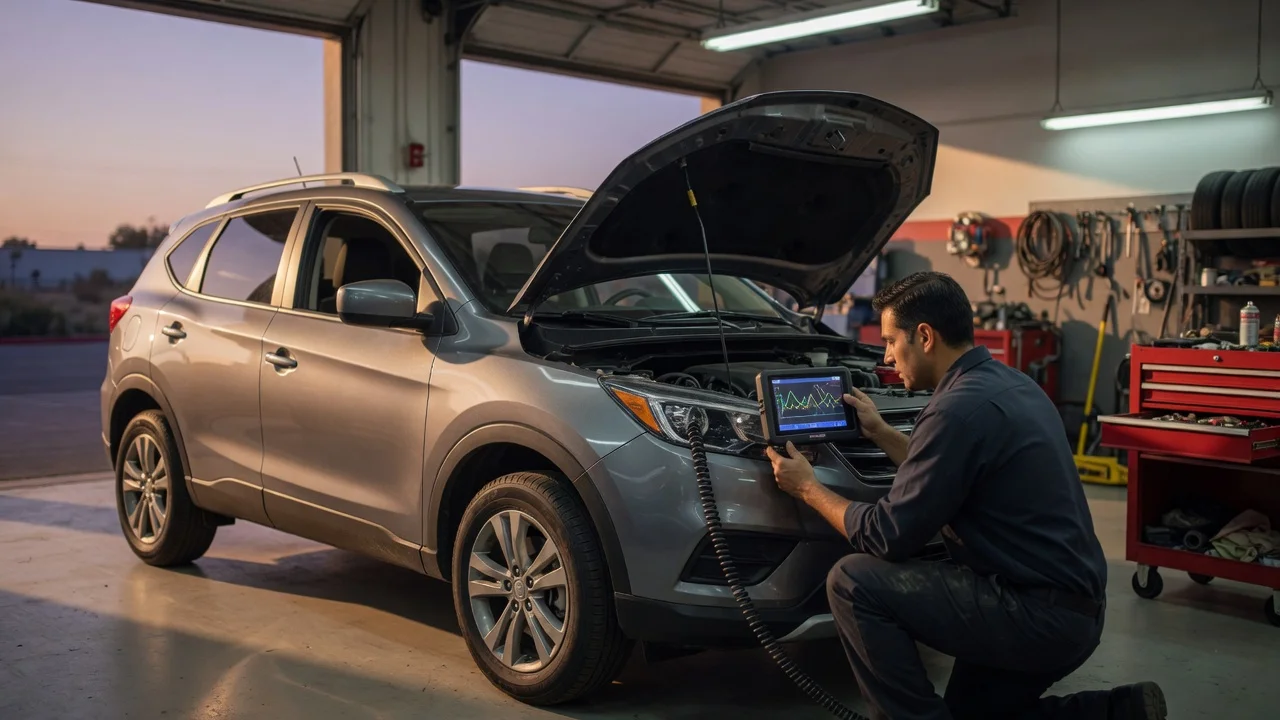
What the check engine light means in a Chevy Equinox
The check engine light is the Equinox powertrain control module’s way of reporting that it has detected an emissions-related or engine-management fault. The light may appear as a steady amber warning or as a flashing light. A steady light generally means the vehicle can usually still be driven carefully while the cause is diagnosed. A flashing light is treated as a stronger warning because it can indicate an engine misfire that may damage the catalytic converter or other components; Chevrolet owner materials describe this as a condition that should be addressed promptly.
The light is not a direct diagnosis of a failed part. It is evidence that a diagnostic trouble code has been stored. The code identifies the circuit, system or condition the computer observed, but a technician still needs to confirm the underlying cause before replacing anything.
Start with the most common observable causes
On many vehicles, including the Equinox, the most common and least expensive explanation is a loose, damaged or improperly seated fuel cap. The cap helps maintain pressure and prevent fuel vapor from escaping. If the cap was recently removed, check that it is tightened until it clicks and that the seal is clean and undamaged. If the light does not go out after several normal drive cycles, the cap is only one possibility and the vehicle should be checked further.
Sensor and emissions problems are also frequent causes. An oxygen sensor may report an air-fuel mixture outside the expected range, or a mass airflow sensor signal may be outside its normal limits. A catalytic converter efficiency code can appear when the converter is not cleaning exhaust gases as expected, but the cause can also be an upstream sensor, an exhaust leak or a misfire that was not addressed.
Ignition and fuel-related faults can appear as misfire codes, often with noticeable rough idle, hesitation or reduced power. A single-cylinder misfire code points toward that cylinder, while common causes include a worn spark plug, an ignition coil, a fuel injector or a compression problem. A code is not enough to prove which of those parts has failed.
What to check next when the light is steady
Check that the fuel cap is present, tight and not cracked; tighten it until it clicks and listen for the correct engagement. Note whether the light is steady or flashing, because this changes the urgency and the diagnostic approach. Watch for rough idle, stumbling, reduced acceleration, unusual exhaust odor or new noises that may help identify the failing system. Do not clear the code and assume the problem is fixed if the light returns or the same code sets again.
A code reader can retrieve the stored trouble code, but the code only narrows the search. For example, an oxygen sensor code does not automatically prove the sensor is bad. Wiring, connections, exhaust leaks and fuel mixture faults can produce a similar signal. A useful next step is to record the code and any freeze-frame data, then inspect the most accessible related items such as the cap, connectors and visible wiring before replacing parts.
When to stop driving or seek professional diagnosis
Stop or limit driving if the light is flashing, especially if the engine is shaking, losing power or overheating. Have the vehicle inspected if the light remains on after the fuel cap has been checked and driven through several complete warm-up and cool-down cycles. Seek professional help if the same code returns after a repair, or if the vehicle fails an emissions inspection because of the light. Do not continue driving with an unresolved misfire, since unburned fuel entering the catalytic converter can create additional damage.
Diagnostic work that requires live data, fuel pressure measurement, compression testing or access to protected emissions components is generally best handled with a scan tool and the applicable service information. Model year, engine and trim can affect component locations, specifications and diagnostic procedures, so owner-facing guidance should be qualified if the exact Equinox configuration is unknown.
A practical sequence for an owner
Confirm whether the warning is steady or flashing and note any change in driveability. Check the fuel cap and its seal without assuming this is the only cause. If available, read and record the diagnostic trouble code without erasing it. Inspect basic owner-accessible items such as the air filter housing, visible vacuum lines and obvious wiring damage if you can do so safely with the engine off. If the light remains, or if there is any rough running, overheating or flashing symptom, stop and arrange a professional diagnosis.
The useful takeaway is to treat the Equinox check engine light as a starting point rather than a complete answer. A stored code helps identify the area the computer was monitoring, but the actual fix depends on confirming the mechanical, electrical or emissions condition behind that code. For many owners, the practical next step is a quick fuel-cap check followed by a code scan and professional inspection if the warning persists or returns.