Chevy Equinox Brake Vacuum Pump: Finding the Correct Part for 2018–2020
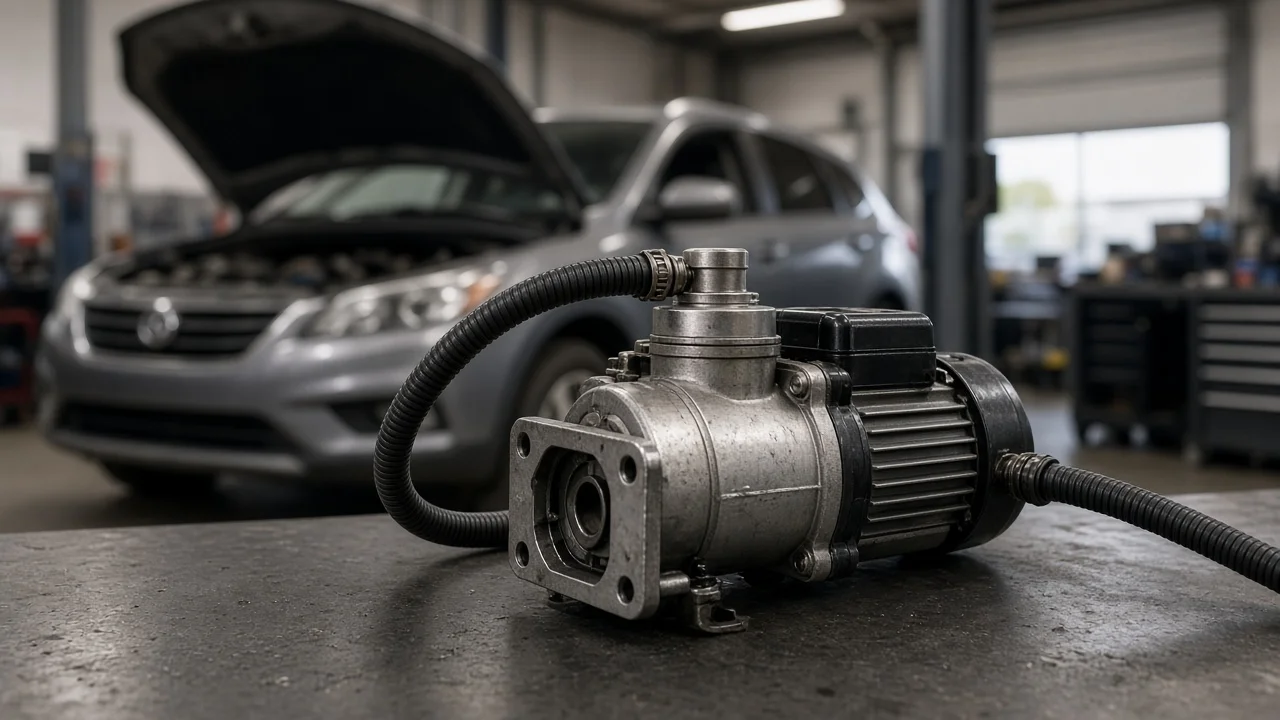
If your 2018, 2019 or 2020 Chevy Equinox has a hard brake pedal or a brake-related warning, the brake vacuum pump is one of the parts worth checking. Replacing it is simple in principle, but ordering the right pump is harder than it looks. This generation was sold with more than one engine, and the vacuum supply depends on that configuration. This guide explains how to identify the correct part, how to confirm the pump is actually at fault, and when to stop driving and hand the job to a shop.
Which vacuum pump fits a 2018–2020 Equinox
No single brake vacuum pump fits every 2018–2020 Equinox. The third-generation Equinox was offered with a 1.5-liter turbocharged gasoline engine, a 2.0-liter turbocharged gasoline engine and, for part of this range, a 1.6-liter turbodiesel. Turbocharged and diesel engines often produce little usable intake manifold vacuum, so the brake booster needs a dedicated vacuum source. The design, mounting and connections of that source are tied to the engine. The reliable way to get the correct part is to match it to your VIN and engine code, then compare the part number on the old pump with the replacement before installing it.
In practice, engine matters more than model year. A 2019 and a 2020 Equinox with the same engine are more likely to share a pump than two 2018 models with different engines. Revisions can still happen within a generation, though, so treat a year-and-engine catalog match as a starting point rather than final proof of vehicle fitment.
What the brake vacuum pump does
The brake booster is the large round canister between the brake pedal and the master cylinder. Vacuum sits on one side of a diaphragm and atmospheric pressure on the other, and that pressure difference multiplies the force from your foot. A conventional gasoline engine can draw this vacuum from its intake manifold. A turbocharged engine spends much of its time with little or no manifold vacuum, and a diesel has almost none. The vacuum pump makes up the difference.
Depending on the design, the pump may be driven mechanically by the engine, commonly from a camshaft, or it may be an electric unit switched on by the vehicle's control modules based on a booster vacuum sensor. Mechanical pumps are usually lubricated by engine oil, so oil seepage at the pump body or its hose is a common complaint. When vacuum is lost, the hydraulic brakes still work, but the pedal becomes hard. Unless you push much harder, stopping distances increase.
Configurations that change the part you need
The engine is the main variable. The 1.5-liter, 2.0-liter and 1.6-liter diesel each use their own vacuum supply arrangement, and a pump for one engine is not interchangeable with another, even if photos look similar. To confirm your engine, check the Service Parts Identification label, usually in the glovebox, for the engine RPO code: LYX for the 1.5-liter, LTG for the 2.0-liter and LH7 for the diesel. You can also have a parts counter decode the VIN.
Beyond the engine, the correct part also depends on whether the vehicle uses a mechanical pump, an electric pump or a combination, as well as the hose and check valve layout and any production revisions tied to build date. Check too whether gaskets, O-rings or seals come with the pump or must be ordered separately. Aftermarket listings sometimes cover several engines loosely, so compare connector shape, mounting points and part number interchange. If a previous owner already replaced the pump, the part on the car may not carry the original equipment number. Verify against the VIN rather than copying what is installed.
Also confirm that the pump is really the fault. A cracked or collapsed vacuum hose, a failed check valve, a leaking booster diaphragm or a faulty vacuum sensor can all produce the same hard pedal. Replacing the pump will not fix any of them.
What to check before ordering a pump
Start with the symptoms and when they appear. A vacuum supply problem usually shows up as a firm, high-effort pedal, sometimes with a brake warning message or a stored diagnostic code. Note whether it happens only after a cold start, after a long drive or during repeated stops at idle. With the engine cool, look for oil wetness around the pump, cracked or loose hoses and disconnected fittings. On an electric pump, one that never runs or never shuts off is a useful clue.
A basic booster check needs no tools. With the engine off, press the pedal several times to use up stored vacuum. Then hold steady pressure on the pedal and start the engine. When assist is working, the pedal normally sinks slightly as vacuum builds. If it stays hard, the vacuum supply or the booster is suspect. A scan tool that reads codes and booster vacuum sensor data can narrow the cause further before you buy parts.
Keep related service in perspective. A vacuum pump does not wear brake pads or brake rotors, and it does not affect brake fluid level. A soft or sinking pedal, rather than a hard one, points to the hydraulic side: brake fluid, a caliper or the master cylinder. If the wheels come off anyway, it is a sensible time to measure friction material and rotor thickness against the wear limits in the service information. Those are separate jobs with separate parts, though.
Limitations and when to get professional help
This guide cannot confirm the exact part number for a specific vehicle. Only a VIN-based catalog lookup and GM service information can do that. Removal steps, torque values and any required relearn or calibration must come from the vehicle-specific procedure. This matters especially for a mechanically driven pump, which can involve engine drive components. A dealer can also check whether any open recalls or service bulletins apply to your VIN.
Loss of brake assist is a safety issue. If the pedal suddenly turns hard, a brake warning appears or stopping takes noticeably more effort, stop using the vehicle for normal driving and have it inspected. Towing is safer than driving it in traffic. If you are not comfortable diagnosing the engine or brake system, a professional shop can confirm the fault, source the correct pump and verify braking performance after the repair.