Chevy Equinox and GMC Terrain Timing Chain Problems and Replacement Cost
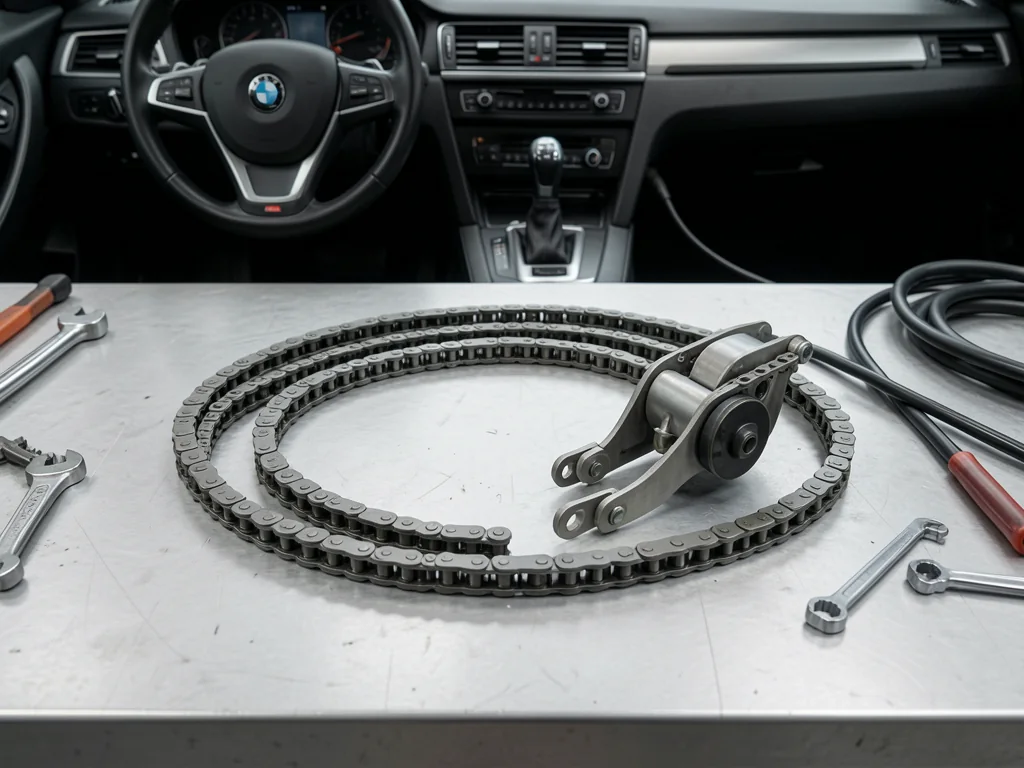
Chevrolet Equinox and GMC Terrain crossovers that use the 2.4L engine time the camshafts with a chain rather than a belt. Owners of 2010-2017 Chevrolet Equinox and matching GMC Terrain models should treat that chain as the timing drive, not a scheduled belt. The chain, tensioner, and guides can wear, especially when lubrication is poor, and replacement is a substantial job. Confirming the engine, reading the symptoms, and budgeting the kit and labor keep the repair on the correct parts.
Confirm the Timing Chain and Identify the Engine
On the 2.4L four-cylinder used in many 2010 through 2017 Chevrolet Equinox and GMC Terrain models, a timing chain, not a belt, drives camshaft timing. Owners looking for a Chevy Equinox timing belt or timing belt replacement are usually seeing the accessory belt at the front of the engine, which turns the alternator and similar components. That belt is not the internal timing drive and does not tell you how the camshafts stay synchronized with the crankshaft.
Correct parts and service information still depend on the model year, VIN, and engine identification on the vehicle. A 2010 through 2017 Chevy Equinox and a matching GMC Terrain can share the 2.4L chain layout without sharing every gasket, fastener, or service bulletin. Other Equinox and Terrain engines, including later four-cylinders and any V6, may use different timing hardware. Use the 2.4L discussion here only after the engine code confirms that application; the VIN is the reliable way to order a chain for a 2010 Chevy Equinox or any later year in that range.
Understand 2010–2017 2.4L Timing Chain Concerns
Wear in the 2010-2017 2.4L timing chain, timing chain guides, and timing chain tensioner can develop as miles accumulate. Plastic guides can crack or wear through, a tensioner can lose its ability to keep slack out of the chain, and the chain itself can elongate. Those mechanisms are possible, not inevitable. A 2010, 2011, or 2012 Chevy Equinox, and later years in the same family, do not share a published failure rate or a mileage at which the chain is due.
Oil level and oil pressure matter because the tensioner and chain depend on lubrication. Low oil, oil that has gone too long between changes, or weak oil pressure can leave the chain poorly damped and the guides poorly supplied. Oil consumption on some 2.4L engines makes the oil-level history part of the investigation, but consumption alone does not prove chain damage. If the chain jumps or stretches far enough to lose correct camshaft timing, valves and pistons can collide and cause serious engine damage. The extent of that damage requires inspection.
Recognize Warning Signs and Know When to Stop Driving
A startup rattle that lasts a few seconds, persistent engine noise, rough running, hard starting, and a check-engine light are the warning signs most often tied to Equinox and Terrain chain wear. Those symptoms have several other causes, including accessory-belt noise, valvetrain issues, and ignition or fuel faults, so they cannot establish a timing chain failure by themselves. Safe first observations are simple: note whether the rattle happens only at cold start or continues after the engine is warm, record any warning lights, and check oil level with the vehicle parked on level ground according to the owner's manual.
An oil-pressure warning, a sudden loud mechanical noise, or a severe change in how the engine runs is a reason to shut down safely and arrange a tow rather than keep driving or attempt repeated restarts. Professional diagnosis may include lubrication checks, oil-pressure testing, and an assessment of camshaft timing relative to the crankshaft, sometimes described as crankshaft correlation. A stored fault code is evidence to interpret, not proof that the chain, tensioner, or guides have failed. Manufacturer-dependent codes need the vehicle-specific definition for that Equinox or Terrain before anyone treats them as a timing-system diagnosis.
What a Timing Chain Replacement Should Address
A Chevy Equinox timing chain replacement on a confirmed 2.4L should follow diagnosis of a timing-system fault and a look at why the chain, guides, or tensioner failed, whether the vehicle is a 2011 Chevrolet Equinox, a 2013 or 2015, a 2016 or 2017, or another year in the 2010-2017 range. The same sequence applies to GMC Terrain timing chain replacement, including a 2013 GMC Terrain, once that engine is verified. A shop typically inspects the chain system, replaces the components the inspection supports, and evaluates lubrication or related damage rather than swapping parts from noise alone.
When camshaft timing has slipped, the repair scope should include a check for bent valves, piston contact, and other internal engine damage before the engine is closed up. After the chain work, the shop should verify that the engine starts, idles, and holds correct camshaft timing under the diagnostic tests used for that vehicle. Procedures, fasteners, and even some chain-related parts can differ across 2010-2017 Equinox years, so a 2012 Chevy Equinox timing chain replacement is not automatically identical to a 2014 job even on the same 2.4L. Model name alone does not set fitment for a Terrain either.
Check Timing Chain Kit Contents and Fitment
Aftermarket and dealer catalogs often sell a Chevy Equinox timing chain replacement kit that may include a chain, timing chain guides, and a timing chain tensioner, though package contents vary by brand. Sprockets, front-cover seals, gaskets, fasteners, and fluids are often separate line items depending on the verified 2.4L procedure. Fitment has to be confirmed with the VIN, engine identification, and current parts information; a kit that fits one Equinox is not automatically correct for every year in the 2010-2017 range.
Some 2.4L engines also use a balance-shaft drive that can share the front of the engine with the timing chain. Balance-shaft work belongs on the estimate only when inspection finds a problem there; it may not be included in a timing chain kit. Ask the shop to document the parts brand, every component in the kit versus every component billed separately, and the parts-and-labor warranty terms. That paperwork is especially useful on a Chevy Equinox 2.4 timing chain replacement, where cover gaskets and fasteners often decide whether the job is a complete front-end reseal or a chain-only repair.
Budget for Replacement and Read the Repair Estimate
For a confirmed 2.4L chain-system repair on a Chevrolet Equinox or GMC Terrain, timing chain replacement cost for a straightforward job covering the chain, guides, tensioner, related gaskets, and fluids commonly lands in a broad four-figure range at typical U.S. independent shops, with dealer rates often higher. A 2017 Equinox and a Terrain should be estimated from that same engine and scope. Replacement labor is a large share because the front cover must come off; kit contents, local rates, diagnostic charges, fluids, and taxes then move the total.
Internal engine damage and extra lubrication-system repairs sit outside a straightforward chain replacement budget and need a revised estimate before that work proceeds. A useful estimate states the diagnosis, itemizes parts and labor, names what the kit includes, explains how additional work found after teardown will be authorized, and lists warranty coverage on both parts and replacement labor. If timing has already slipped, ask whether a valve or compression check is part of the quoted job. Until that inspection is priced, the four-figure range describes only a chain-system replacement on an otherwise intact 2.4L.