Chevy Cruze Wastegate Actuator: Identification by Year and Engine
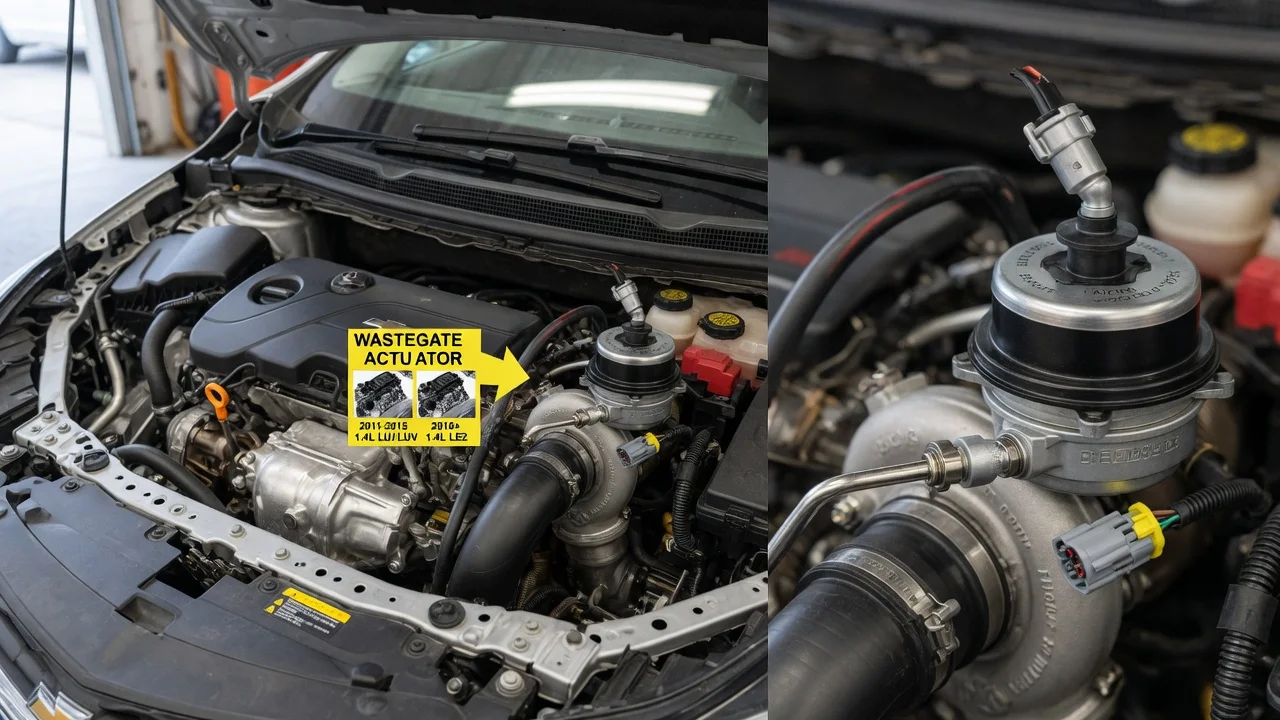
A wastegate actuator exists only on turbocharged Chevrolet Cruze engines, and the design differs between the first-generation and second-generation cars. Whether you own a 2014, 2016 or 2017 model, the part that fits depends on the exact engine configuration, not the model year alone. This guide explains which Cruze versions use a wastegate actuator, how the pneumatic and electric designs work, what symptoms can and cannot tell you, and how to confirm the correct part before spending money.
Which Cruze Years and Engines Have a Wastegate Actuator
First-generation Cruze sedans sold in the United States for the 2011 through 2015 model years, plus the carryover 2016 Cruze Limited, were offered with either a naturally aspirated 1.8-liter engine or the 1.4-liter Ecotec turbo. Only the 1.4-liter turbo has a wastegate. On these engines, commonly identified by the RPO codes LUJ or LUV, the actuator is a pneumatic canister mounted on the turbocharger and connected to the wastegate valve by a rod. A 2014 Cruze with the 1.8-liter engine has no wastegate actuator at all, while a 2014 car with the 1.4-liter turbo does. Trim level is not a dependable shortcut, so confirm the engine itself.
The redesigned second-generation Cruze, sold for the 2016 through 2019 model years, uses a 1.4-liter turbo engine known as LE2 on gasoline models. Its turbocharger uses an electrically operated wastegate actuator commanded by the engine control module, which is a different part and calls for a different diagnostic approach than the earlier pneumatic unit. A gasoline 2017 Cruze therefore uses the electric type. The 2014 to 2015 2.0-liter diesel and the 2017 to 2019 1.6-liter diesel use their own turbocharger control arrangements, so gasoline wastegate parts and advice do not carry over to them.
How the Wastegate Actuator Controls Boost
A turbocharger is driven by exhaust gas. The wastegate is a small valve that lets some exhaust bypass the turbine wheel, which limits turbine speed and therefore boost pressure. The actuator is what opens and closes that valve. On the first-generation 1.4-liter turbo, a spring inside the actuator holds the wastegate closed, and pressure delivered through a hose acts on a diaphragm to open it. The engine control module regulates that pressure through a turbocharger wastegate solenoid, so the actuator itself has no wiring. Problems can originate in the actuator, the solenoid, the hoses or the linkage.
On the second-generation LE2 engine, an electric motor in the actuator moves the wastegate linkage, and the engine control module monitors its position. This allows the module to position the valve more precisely across operating conditions, but it also means faults can be electrical, mechanical or related to calibration. In both designs the actuator only carries out commands. Low or erratic boost is just as often caused by intake or charge air leaks, exhaust restrictions or sensor errors as by the actuator.
What Changes the Answer for Your Car
Model year alone can mislead. The 2016 model year includes both the older Cruze Limited and the new-generation Cruze, so a 2016 Cruze wastegate actuator may be either the pneumatic or the electric type depending on which body you have. A first-generation car may also have the 1.8-liter engine with no turbocharger. Regional differences matter as well: the Cruze was built for many markets, and engines and parts sold elsewhere may not match United States versions.
Service history changes the picture too. A turbocharger that has already been replaced may carry a different part number, and earlier repairs to hoses, the charge air cooler or the crankcase ventilation system can affect how the boost system behaves. Some actuators are supplied by the manufacturer only as part of the turbocharger assembly, while aftermarket suppliers may sell an actuator separately. Whether a standalone actuator is appropriate depends on the specific turbocharger and on the manufacturer specifications for setting it up.
Symptom conditions also matter. A rattle from the turbo area at startup or on deceleration, reduced power under load, or a check engine light with underboost or overboost codes are commonly reported on turbocharged Cruze models. Those reports describe what owners noticed; they are not proof that the actuator failed. A verified failure means the actuator was tested and found not to move, not to hold pressure, not to reach its commanded position, or to have a worn or loose linkage.
What Owners Can Check Before Buying Parts
Start by identifying the engine. The service parts identification label, usually found in the glove box or the trunk area, lists RPO codes such as LUJ, LUV or LE2, and the eighth character of the VIN also identifies the engine. Give the full VIN to the parts supplier instead of ordering by year and trim, because that is the most dependable way to match the correct actuator or turbocharger assembly.
Next, read the diagnostic codes with a scan tool, including stored and pending codes, and note when the symptoms appear: cold start, full throttle, highway cruising or after warm-up. Related codes can include P0299 for underboost, P0234 for overboost and wastegate control circuit codes. A scan tool that displays desired versus actual boost, or commanded versus actual wastegate position on the electric design, gives far more useful information than a code alone.
A basic visual inspection is reasonable for most owners with the engine cold. Look for cracked or disconnected hoses on the pneumatic system, a damaged connector on the electric actuator, oily or split charge pipes, and obvious play in the wastegate linkage. Avoid adjusting the actuator rod or forcing the linkage, since rod length and preload are set to manufacturer specifications and incorrect adjustment can cause overboost or underboost.
Limitations and When to Get Professional Help
This guide cannot confirm which part fits a particular car or whether your actuator has actually failed. Engine variants, production changes and previously installed replacement parts vary, and the reliable references are the VIN, the parts label and the factory service information for that vehicle. Before paying for repairs, also ask a dealer to check by VIN whether any recall, service bulletin or extended warranty coverage applies.
Seek professional help if the check engine light flashes, the engine enters reduced power mode, you suspect overboost, or the diagnosis requires boost pressure testing, actuator calibration or turbocharger removal. A technician with a capable scan tool can command the wastegate, compare actual and desired values, and separate an actuator fault from leaks, sensor problems or wiring issues before any parts are replaced.