Chevy and GMC V8 Rough Idle: Silverado, Yukon, Denali and Vortec Diagnosis
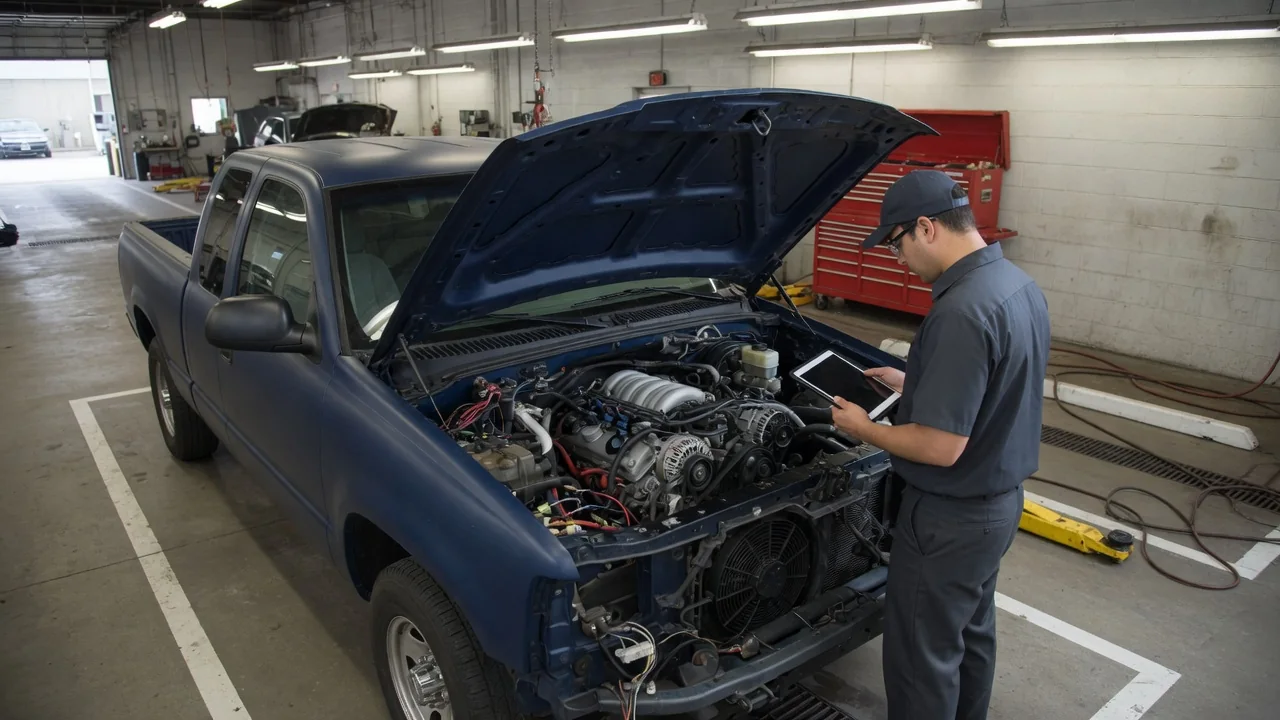
Pickup and SUV owners who notice a truck rough idle on a Chevrolet Silverado, GMC Yukon, or Denali often share the same gasoline V8 family: 5.7 Vortec, 6.0, and 6.2. The complaint can appear with or without a check-engine light, at cold-start idle or after warmup, and it may include stalling or idle vibration. Notes on when the engine shakes, hunts, or dies steer diagnosis toward ignition, fuel delivery, unmetered air, mechanical condition, or engine mounts.
Document the Silverado or GM Truck’s Rough-Idle Pattern
A Silverado rough idle, or the same complaint on a Yukon or other GM truck, starts with facts rather than parts. Record the model year, exact engine, mileage, recent repairs, and whether the shake began suddenly or developed gradually. Describe whether engine speed fluctuates, the exhaust sounds uneven, or idle vibration occurs while engine speed appears steady. Note whether symptoms show at startup, after warming up, with air conditioning operating, or during ordinary stops. None of those observations names a failed part by itself.
Those notes keep ignition condition, air metering, fuel delivery, mechanical condition, and engine mounts from collapsing into parts replacement. A hunting idle points toward mixture or unmetered air, while a steady tachometer with a harsh shake can be a misfire, a mount, or an accessory load. Air-conditioning engagement can load a weak idle that looks acceptable with the climate system off. Each path needs different measurements of spark, fuel pressure, vacuum, mechanical health, and mounts. Replacing a sensor because the truck shakes does not confirm that sensor caused it.
Investigate a 5.7 or 6.0 Vortec Rough Idle Without Codes
A 6.0 Vortec rough idle no codes, or a 5.7 Vortec rough idle no codes, is not proof the control module found nothing. An unlit check-engine light does not mean pending trouble codes are absent, and some faults never meet lamp thresholds. Before interpreting scan data, identify the engine and fuel-system configuration, because throttle-body, injector, and idle-air hardware differ across these Vortec trucks. A technician then reviews misfire counters, fuel trims, and the conditions when those values were captured, treating each reading as a clue rather than proof of a failed part.
When the initial scan is inconclusive, checks still look for intake leaks that admit unmetered air, ignition faults, fuel-delivery problems, and mechanical irregularities. Climbing idle fuel trims can support a leak downstream of the mass-airflow sensor, but they do not prove a gasket failed until a leak test locates the path. Misfire counters on one cylinder can justify coil, plug, injector, and compression comparison, yet a zero count does not rule out a light misfire. Fuel pressure and injector contribution belong in the same visit, because a weak pump can shake an engine without setting a code.
Capture the Conditions Behind a Cold 6.0 Rough Idle
A Chevy 6.0 rough idle when cold is a different complaint from a shake that never leaves. Record ambient temperature, how long the vehicle sat, how long the stumble lasts, and whether the engine settles as it warms. Startup speed changes alone do not establish a fault; a brief high idle after a cold soak is ordinary enrichment on many gasoline V8s. Repeated stumbling, pronounced shaking, or stalling during cold-start idle needs investigation; those events can point to mixture, spark, or mechanical problems that appear only before closed-loop control.
Coolant-temperature plausibility, intake sealing, ignition condition, and fuel delivery need evaluation during the actual cold-start event, not after the engine has cleaned up in the shop lot. A sensor that reports a warm engine when the block is cold can command the wrong idle air and fuel. Unmetered air from a leaking gasket can be more obvious when manifold vacuum is high. Weak spark or delayed fuel pressure shows the same way. If the symptom disappears before the vehicle reaches the shop, arrange a cold-soak inspection so the technician can watch the first start.
Treat 5.7 Vortec Rough Idle and Stalling as a Safety Concern
Treat 5.7 Vortec rough idle and stalling as more than an annoyance, because a truck that dies in traffic is a safety problem. Document whether stalling occurs immediately after startup, while stopping, or after warmup, using existing observations rather than tests that recreate a stall. Rough idle and stalling can share a cause, such as a vacuum leak, fuel-delivery drop, or ignition failure, but the combination does not identify a failed component. A stall at a stop and a stall on first fire after sitting overnight still point toward different load and temperature conditions.
Professional evaluation should follow vehicle-specific procedures for fuel pressure, intake leaks, idle-air control where equipped, ignition operation, and mechanical condition. Idle-air hardware on older Vortec trucks is not identical to later electronic throttle systems, so copying a test from another year can mislead. Fuel pressure that looks acceptable at key-on can still collapse at idle, which is why running pressure belongs in the stall investigation. If stalling repeats, a check-engine light flashes, shaking becomes severe, raw fuel is smelled, or oil-pressure warnings appear, stop safely and arrange assistance.
Identify the Exact 6.2 Engine in a Denali or Yukon
A 6.2 Denali rough idle, a Yukon 6.2 rough idle, or a GM 6.2 rough idle on another truck is not one engine family by nickname. Denali is a trim designation, so obtain the model, year, and engine identification before applying diagnostic information. Displacement alone cannot establish fuel-system design, cylinder-deactivation equipment, or applicable test procedures; a 6.2 in one year may idle, deactivate cylinders, and meter air very differently from another. VIN, underhood labels, and scan-tool identification keep a technician from using the wrong misfire strategy or commanding unsupported tests.
Once the exact 6.2 is identified, cylinder-specific misfire evidence can guide ignition, injector, and compression testing without assuming a particular failure. A misfire counter on one cylinder is a map, not a conviction; coils, plugs, injectors, and mechanical condition still need comparison. Idle vibration with stable idle speed is a separate complaint: the tachometer can sit still while engine mounts or an accessory load shake the cabin. When engine data does not explain a Yukon or Denali shake, inspect mounts and accessory loads, because a broken mount can feel like a misfire with every cylinder contributing.
Use Vehicle-Specific Tests and Verify the Repair
A 2017 Camaro SS rough idle is a passenger-car complaint that still needs its own engine identification and diagnostic procedures; it is not a shortcut for truck work even when displacement looks familiar. Year, model, and calibration change idle strategy and code-setting criteria on GM trucks and SUVs as well. Any manufacturer-dependent trouble-code meaning must be verified for the exact vehicle before it is interpreted. A code that implies a misfire on one Silverado calibration may not describe the same monitor or failure threshold on a Yukon 6.2 or a 5.7 Vortec.
Owners should ask the shop to reproduce the truck rough idle, show supporting measurements, name the diagnosed cause, and explain why any proposed part replacement is required. A printed code list is not a diagnosis, and a coil or injector should not be replaced only because it is common on these V8s. Repair confirmation must occur under the original conditions, including a cold start when the complaint was cold-start idle or stalling after a long sit. Cleared codes and a smooth idle in a warm bay do not prove the fault is gone.