Chevrolet Traverse Torque Converter Shudder Diagnosis
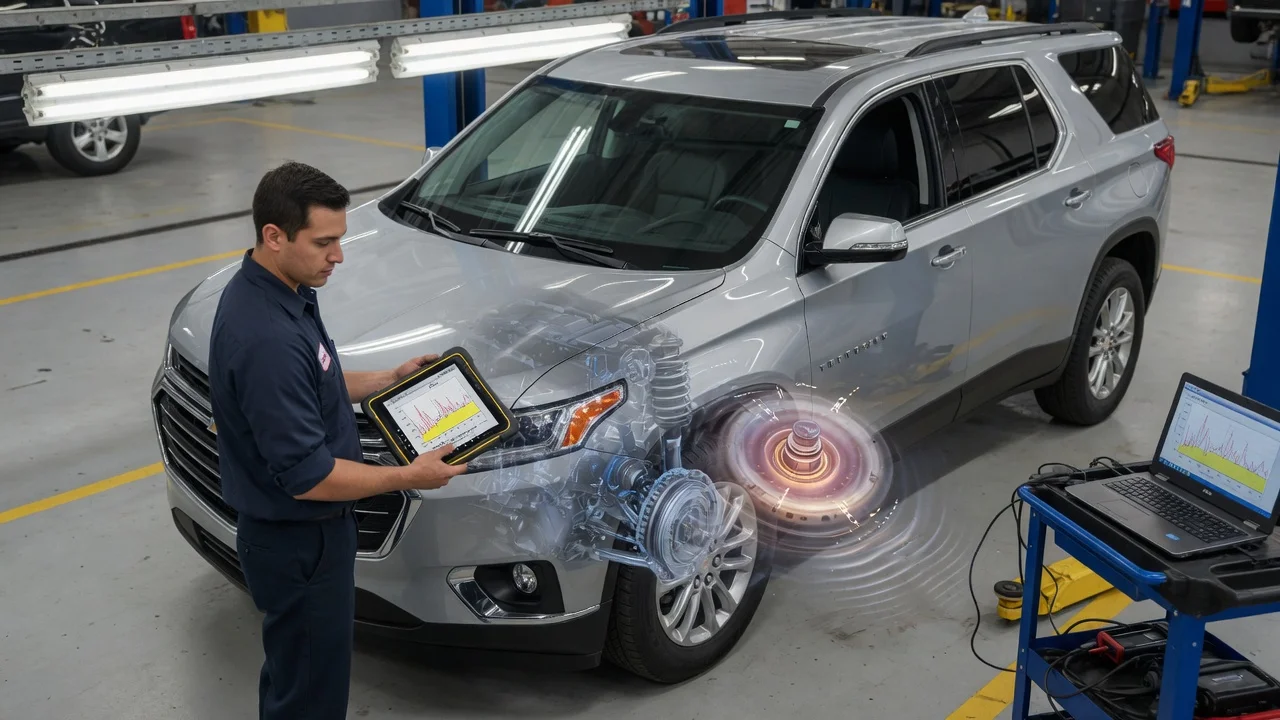
A shudder that feels like rolling over rumble strips at a steady cruise is a common drivability complaint on the Chevrolet Traverse, and the torque converter clutch is often the first suspect. It is not the only possible cause. Engine misfires, worn mounts, axle problems and tire faults can feel very similar. This guide covers how to describe the symptom, separate the likely causes, run checks in a sensible order and decide on a next step without replacing parts on a guess.
Establish the symptoms
Start by identifying the transmission, because fluid specification, service procedures and diagnostic paths differ between units. First-generation Traverse models (2009 to 2017) use a six-speed automatic, second-generation models (2018 to 2023) use a nine-speed automatic, and the current generation uses an eight-speed automatic. Confirm the exact transmission type from the service parts label, usually inside the glovebox or center console, or have a dealer decode it from the VIN. Note whether the vehicle is front-wheel drive or all-wheel drive, since AWD adds driveline components that can vibrate.
Next, write down exactly when the shudder happens. Useful details include road speed, whether you are holding a light, steady throttle or accelerating, whether the engine is cold or fully warm, and whether it appears on hills, while towing or on flat ground. Note whether you feel it through the seat, the floor or the steering wheel, and whether it comes with a check engine light, a noise or a change in shift behavior. Finally, list recent changes: a transmission fluid service, new tires, a battery disconnection, a software update or repairs to the engine or suspension. A symptom that began right after one of these events is an important clue.
Distinguish plausible causes
Torque converter clutch shudder typically appears at moderate, steady speeds under light throttle, when the converter clutch is applying or holding a controlled slip. It often changes or disappears if you press the accelerator a little more, ease off completely or lightly touch the brake pedal, because those actions can cause the clutch to release. Degraded fluid, the wrong fluid or a low fluid level can cause the same feel, since converter clutch behavior depends on the friction properties of the fluid. A worn converter clutch, a sticking control valve or an apply solenoid problem are other possibilities within the transmission.
An engine misfire is the most common look-alike. It tends to feel like a stumble or rhythmic jerk under load, often gets worse uphill or with more throttle, and may set a stored or pending misfire code or flash the check engine light. Worn engine or transmission mounts usually show up as vibration at idle in gear, a clunk when shifting into drive or reverse, or movement on acceleration. Worn front axle joints tend to shudder when accelerating from a stop rather than at cruise. Tire and wheel problems vary with road speed regardless of throttle position and are often felt in the steering wheel. A vibration that only occurs while braking points to the brakes, not the converter.
Checks in a useful order
Begin with observations any owner can make safely. Note any warning lights and read stored and pending diagnostic codes with a basic OBD-II scanner. Look under the vehicle for transmission fluid leaks, inspect tires for uneven wear, bulges or damage, and confirm the service history for transmission fluid changes and the fluid used. On a road test in light traffic, note whether the shudder stops when you slightly increase or decrease throttle at the problem speed. Only if it is safe to do so, a very light touch of the brake pedal that turns on the brake lights without slowing the vehicle can show whether the shudder ends when the converter clutch releases.
Several checks require tools, specifications or a qualified technician. Many of these transmissions have no conventional dipstick, and the level check requires the vehicle level, the fluid at a specified temperature and a defined procedure, so an incorrect check can lead to under- or overfilling. A capable scan tool can display converter clutch command status, slip speed, engine and turbine speeds, transmission fluid temperature and per-cylinder misfire counters during a road test. A dealer can also check for service bulletins and transmission calibration updates that apply to the specific VIN. Mount, axle and wheel bearing inspection is best done on a lift.
Interpret the findings
If live data shows the converter clutch commanded on and slip speed oscillating at the same moment the shudder is felt, the evidence points toward the converter clutch or its fluid. That still does not confirm a failed converter. Repair options usually start with correcting fluid level, verifying the correct fluid specification and following any applicable service bulletin, which may call for a specific fluid exchange or a software update. Converter replacement is generally considered when the shudder persists after those steps or when other evidence, such as debris in the fluid, indicates internal wear. Confirm parts fitment for the exact transmission before ordering anything.
Codes such as P0741 or P0742 indicate a converter clutch performance or control problem, not a specific failed part; wiring, a solenoid, the valve body or the converter itself must still be separated by testing. Rising misfire counts on one or more cylinders shift attention to ignition, fuel or engine mechanical causes, and a misfire must be resolved before transmission conclusions can be trusted. If the vibration continues with the converter clutch released and changes only with road speed, focus on tires, wheels, axles and the AWD driveline. Mount problems are usually confirmed by visual inspection and by watching engine movement while a helper shifts between gears.
Urgency and next action
Stop driving and arrange inspection or towing if the check engine light is flashing, the transmission slips or flares between gears, the vehicle hesitates to move in drive or reverse, a transmission temperature warning appears, you smell burning fluid or see a significant leak. A flashing light usually indicates a severe misfire that can damage the catalytic converter. A mild shudder with no warnings still deserves prompt diagnosis, because continued slipping can contaminate the fluid and widen the repair. No one can reliably predict how much further a shuddering transmission will last.
When you book the repair, bring the VIN, model year, engine and drivetrain, the transmission identified from the parts label, current mileage, the full service history including fluid changes, any stored or pending codes with freeze frame data if available, and your notes on the speed, throttle and temperature conditions that trigger the shudder. Ask the shop to explain which test results support their recommendation and whether bulletins or software updates apply before agreeing to replace a torque converter or transmission.