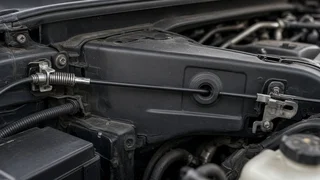
Chevrolet, GM and Saturn hood release cable replacement

A hood release cable that pulls without unlatching the panel turns routine maintenance into an emergency. On Chevrolet, GM, and Saturn models ranging from a 1978 Camaro through early 2000s Blazers, Silverados, Ions, and Vues, the release system uses a mechanical cable routed from the cabin lever to the front latch. Replacement becomes necessary when stretching, corrosion, or a broken inner wire prevents the latch from releasing. Understanding how the cable, latch, hinge alignment, and lever interact helps owners diagnose the problem and choose the correct vehicle-specific service part.
Essential answer
The essential answer is that Chevrolet, GM, and Saturn hood release cable replacement restores a mechanical connection between the cabin-mounted release lever and the hood latch. When the cable stretches, separates, or binds inside its housing, pulling the handle may produce slack, excessive resistance, or no latch movement. The replacement part must match the vehicle fitment because routing length, end fittings, and sheath retention differ across body styles. A cable that operates with excessive friction can simulate a failed latch or misaligned hood, so evaluation should include the entire release path.
Using the correct replacement cable matters because an incorrect length or wrong end fitting can leave the hood stuck closed or unable to secure safely. In some cases the inner wire remains intact but the outer sheath slips from its mounting clip, reducing cable travel at the latch. Replacing the cable restores the required pull distance and latch actuation. For vehicles such as a 2000 Chevy Silverado, 2000 or 2001 Blazer, 2003 Saturn Ion, and later Saturn Vue examples, confirming the specific year and trim compatibility is an essential first step before ordering a service replacement.