Chevrolet Diesel Glow Plug Selection: How to Choose the Right Set
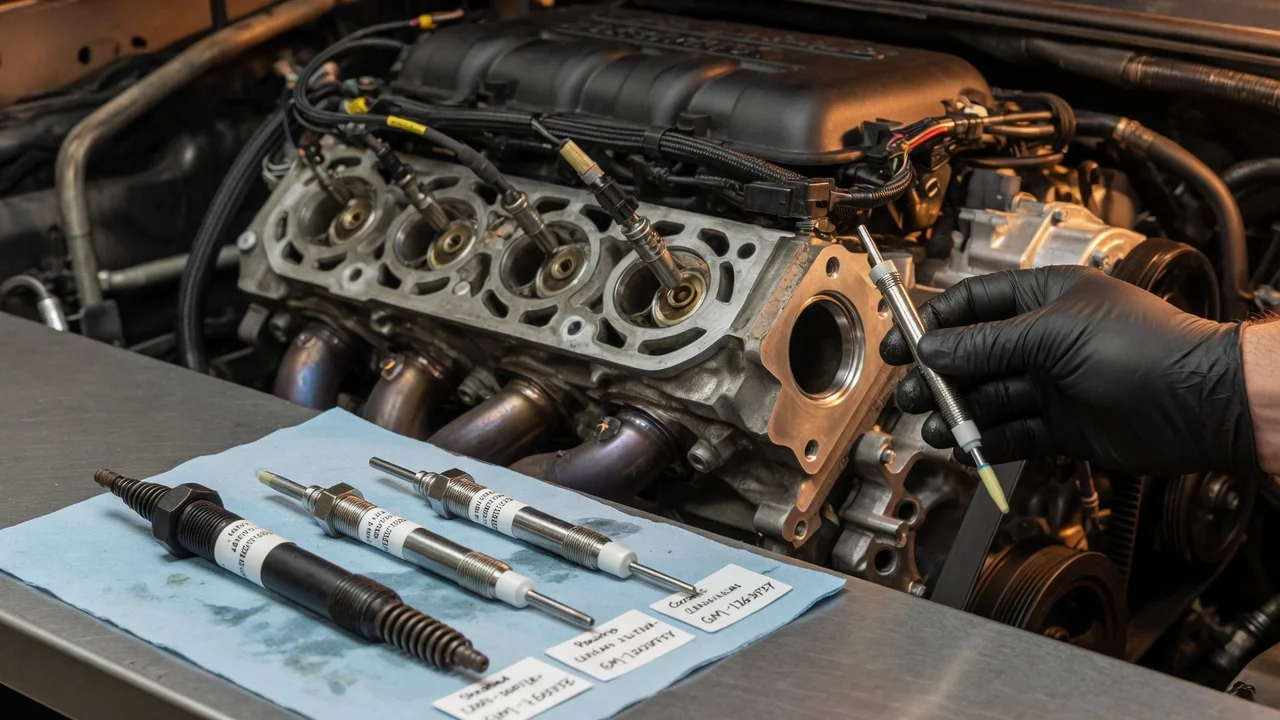
Choosing glow plugs for a Chevy diesel starts with the engine, not the package. Chevrolet has used several diesel designs in Silverado pickups, Colorado trucks and Express vans, and each one pairs its plugs with a specific control strategy. This guide explains how to confirm what your truck needs and which specifications deserve attention. It also covers when a hard cold start is really a fuel delivery problem that new plugs will not solve.
Define the job the glow plugs must do
A glow plug heats the combustion chamber so the air compressed by the piston gets hot enough to ignite injected diesel fuel during a cold start. Newer engines also keep the plugs energized for a period after the engine fires. This post-glow phase steadies idle and reduces white smoke and emissions while the cylinders warm. How much this matters depends on how you use the truck. A truck that starts outdoors through northern winters, tows early in the morning or sits for days between drives relies on healthy plugs far more than one parked in a warm garage in a mild climate. The garaged truck may start acceptably with a failed plug, but it can still log faults and smoke.
Before buying anything, confirm the plugs are actually at fault. Typical signs are extended cranking when cold, white smoke that clears as the engine warms, a rough first minute, a glow plug warning lamp, or stored codes in the generic P0380 and P0670 to P0684 range covering glow plug and controller circuits. Weak batteries and slow cranking produce similar complaints. So do fuel problems such as a restricted fuel filter, air entering the supply side, a weak lift fuel pump or low rail fuel pressure. A scan tool that shows desired versus actual rail pressure while cranking separates these causes quickly.
Check compatibility with your engine
Identify the exact engine from the RPO code on the Service Parts Identification label, usually found in the glovebox, and from the engine code in the eighth digit of the VIN. Engine configuration sets the quantity. The 6.6-liter Duramax V8 and the older 6.2 and 6.5-liter V8 diesels use eight plugs, the 3.0-liter inline-six uses six, and the 2.8-liter four-cylinder in the Colorado uses four. Plug designs changed across Duramax generations from the LB7 through the L5P, so a listing that simply says it fits a Duramax is not enough. Match the generation and model year, ideally by GM part number.
Within the right engine family, the details that decide suitability are thread size and pitch, overall length and reach into the chamber, tip diameter, terminal style and rated voltage. Heat-up behavior must also suit the glow plug control module. A plug that heats faster or draws more current than the controller expects can overheat and swell or crack its tip. A plug that heats too slowly leaves the cylinders cold. Newer modules monitor current on each circuit, so a plug with the wrong electrical characteristics may set codes even if it threads in perfectly.
Features that affect the choice
The most meaningful difference is the heating element. Conventional metal-sheathed plugs are durable and inexpensive. Ceramic elements reach temperature faster and tolerate higher and longer post-glow operation. Ceramic is only a benefit on engines and controllers designed for it, and installing a different element type than the original specification invites controller faults or premature failure. Keep one brand and design across the whole set so every cylinder heats evenly.
Treat marketing labels with caution. Phrases such as instant start, extended life or performance glow plug carry little weight without supporting specifications. Useful evidence includes the following: a direct cross-reference to the original GM part number, a published voltage and element type, a fitment statement naming your engine and model year, and a manufacturer with an established record making diesel ignition components. Warranty length and whether the seller accepts returns on opened parts also matter. An OE-supplied plug often costs more. That premium mainly buys confidence that the plug's electrical behavior matches what the controller was calibrated for.
Limitations and ownership costs
New glow plugs restore cold-start heat and nothing more. They will not correct a clogged fuel filter, a failing high-pressure fuel pump, a leaking or sticking injector, gelled fuel, a failed controller or a corroded harness. Some Duramax scan tools display injector balance rates, which show how much each cylinder's fueling is being corrected. Their role is loosely similar to fuel trim on a gasoline engine, and abnormal values point to injector concerns rather than plugs. Winter-blend fuel and anti-gel additives can help prevent waxing in severe cold. No additive, however, is a proven repair for a worn plug, a damaged injector or a weak pump.
Installation is where ownership costs grow. Plugs that have been in an aluminum head for years can seize, and forcing them can snap the shank. A broken tip may require a specialized extraction kit or even cylinder head removal. Working on a warm rather than hot engine, using penetrating oil and turning slowly reduces that risk. New plugs should be tightened only to the published torque. Some V8 positions have tight access, so labor can exceed the parts price. Inspect the connectors and harness while you are there. If the controller has been confirmed faulty, replace it, because a bad module can quickly ruin new plugs.
Glow plug replacement does not require opening the high-pressure fuel system. If diagnosis leads there, remember that common-rail systems operate at extremely high pressure and can hold pressure after shutdown. Follow the service procedure for that engine and never loosen fuel lines while it runs. Do any leak check visually and with eye protection. Never feel for a leak by hand, because a pinhole spray can inject fuel through skin.
Build a practical shortlist
Use a short checklist instead of a ranking. First, confirm the RPO engine code and model year. Second, verify that each candidate cross-references to the GM part number or carries a fitment statement for that exact engine. Third, check that voltage, element type and terminal style match the original design and the controller. Fourth, buy a full set that matches the number of cylinders. Fifth, confirm the diagnosis with a resistance check or stored code, a battery test and current fuel filter service. Sixth, plan the job with the correct sockets, the torque specification and extra time for stubborn plugs. Finally, compare warranty and return terms.
If two options meet every point, price and availability can decide. If a lower-cost plug lacks clear fitment data or element specifications, the OE-equivalent part is the safer choice. The cost of a broken plug or a controller fault far outweighs the savings on the set.