Checking Timing Belt Tension: What a Gauge Does and When You Need One
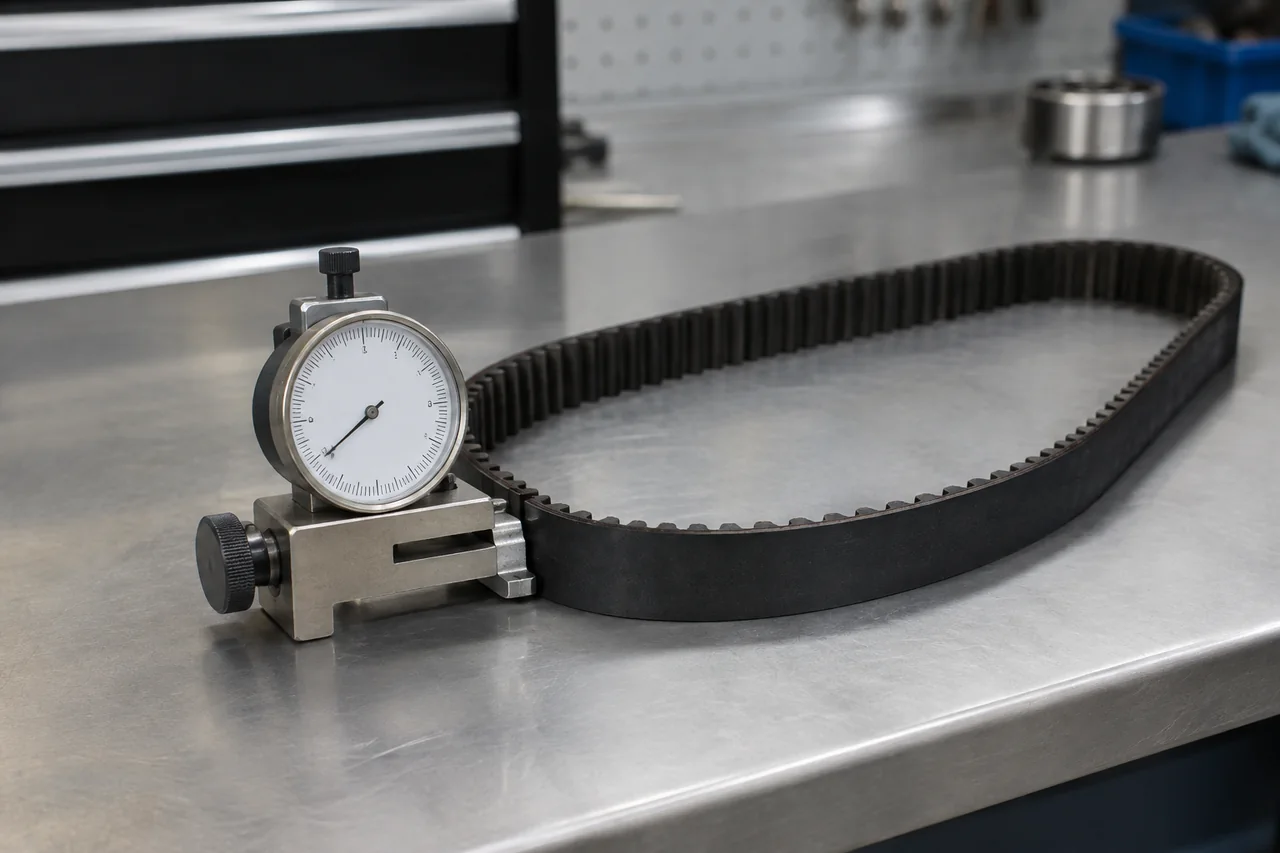
A timing belt tension gauge is a dedicated instrument used to check whether belt tension matches the engine's specified value after installation or during service. Some engines require a timing belt tension gauge tool; others use an automatic belt tensioner and a tensioner indicator instead. The manufacturer service procedure decides which method applies. A reading is only meaningful when it follows the prescribed span, units, and conditions.
What a Timing Belt Tension Gauge Measures
A timing belt tension gauge measures how tightly the belt is loaded so that the result can be compared with the tension specification for that engine and the prescribed measurement method. Mechanical instruments typically apply a known load to a defined belt span and report deflection or force. Sonic tension measurement instead reads the vibration frequency of a free span after a light tap. Either approach is useful only when the technician uses the method named in the service information, not a generic substitute.
A number from a gauge is incomplete without its units, the belt span that was tested, and the temperature, engine position, and other conditions required by the procedure. Frequency, force, and deflection are not interchangeable, and a span that is shorter or longer than specified will change the result. Tension measurement also cannot prove that valve timing is correct or that every pulley, guide, and tensioner in the drive is serviceable. Those checks remain separate, even when the tension reading falls inside the published range.
When the Service Procedure Calls for a Gauge
Whether a separate timing belt tensioner gauge is required is decided by the engine-specific manufacturer service procedure, not by the presence of a belt alone. Some engines use an automatic belt tensioner that maintains load through a spring, hydraulic damper, or similar mechanism after it is set. Even then, installation often includes prescribed positioning, locking, or preload steps, followed by a verification check. Skipping those steps because the tensioner is labeled automatic can leave the belt outside the intended operating range.
A tensioner indicator or painted reference mark is usable only in the way the applicable tensioner procedure describes. Some designs ask the technician to confirm that a pointer sits in a window after a specified running or positioning sequence; others treat the mark as a setup aid rather than a final proof of tension. Before choosing a verification method, identify the engine code, the tensioner design actually fitted, and the current service information for that combination. Older printed notes can lag behind a superseding bulletin.
What Makes a Gauge Suitable for the Job
A gauge is suitable only when it can perform the specified measurement method, report in the required units, cover the expected operating range, and physically reach the named belt span. A timing belt tension gauge tool that cannot fit between covers, pulleys, or a water pump housing cannot produce a valid reading, even if it is accurate on a bench. Calibration status and the tool maker's instructions are equally important. An expired calibration or a skipped zeroing step can shift the result enough to accept a belt that is too loose or too tight.
Sonic tension measurement depends on the prescribed span length and on any belt mass, width, or frequency target listed in the service data. Using a neighboring span, or omitting the belt data the meter requires, produces a frequency that cannot be compared with the published specification. Marketing language that a tool is intended for timing belts does not establish compatibility with a particular engine or service procedure. Match the instrument to the method in the current instructions, then confirm that the probe or anvil can actually contact that span.
How Tension Is Verified After Installation
Professional verification starts by confirming that the belt, tensioner, and related hardware are in the prescribed installation state, then measuring tension under the conditions the procedure names and recording the result. Temperature, engine position, the exact measurement location, and any belt settling after first fit can all move the reading. The applicable manufacturer service procedure controls those variables; substituting shop-floor habits for them makes the number hard to interpret later. Documentation should note the method, the units, and the conditions so a later recheck can be compared fairly.
Some procedures include a settling period or a later recheck after the belt has been run or left under load for a defined interval. Those stages exist because a new belt can change slightly as it seats on the pulleys; the service information sets whether a recheck is required and when. Correct tension and correct timing alignment remain separate accept/reject checks. Both must satisfy the service procedure before the job is complete, because a belt can be taut yet still out of time, or in time yet outside the tension specification.
Symptoms and Questions That Warrant a Recheck
New whining, rattling, or a change in how the engine runs after timing belt work is a reason for prompt professional assessment, not proof that timing belt tension is incorrect. A noisy pulley, a leaking damper in an automatic belt tensioner, or an unrelated accessory drive can produce similar sounds. Owners should note when the noise or running problem occurs—cold start, idle, or under load—and review the repair record. They should not open timing covers or approach a moving belt.
Finger pressure, twisting the belt, judging by sound, or the simple absence of symptoms cannot confirm that a reading matches the tension specification. Ask the shop which verification method was used—a timing belt tension gauge, a tensioner indicator, or another prescribed check—and which specification applied to that engine. If the noise is severe or the engine suddenly runs poorly, shut the engine off safely and arrange professional assessment rather than continuing to drive while guessing at belt load.