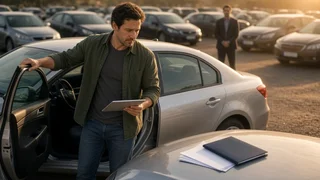
How to Check Whether a Vehicle Is Stolen
The Short Answer
To find out whether a vehicle has been reported stolen in the US, get its Vehicle Identification Number (VIN), confirm that the VIN matches on the car and on every document, and then run it through a theft-record check. The VIN is the unique code assigned to an individual vehicle. Free theft lookups are offered by the National Insurance Crime Bureau (NICB), a nonprofit supported by insurers. Title and brand history is available through reports drawn from the National Motor Vehicle Title Information System (NMVTIS), a federal database. Your local police department can also check a VIN against law enforcement stolen-vehicle records.
A clean result lowers the risk, but it does not prove the vehicle is legitimate. A recently stolen car may not appear in databases yet. Thieves can also put a legitimate car's VIN on a stolen one, a practice called VIN cloning, so that a lookup comes back clean. That is why the physical inspection and paperwork checks below matter as much as the database search.
Before You Start
You will need the following:
Access to the vehicle in daylight or good lighting; A flashlight and your phone camera to read and photograph VIN locations; The seller's title, registration and government-issued photo ID; A way to go online to run free and paid VIN checks; Contact information for your local police department's non-emergency line
For safety, meet private sellers in a public place during the day, and bring someone with you if you can. Some police departments designate safe exchange areas for this purpose.
Step 1: Find the VIN on the Vehicle
Most vehicles show the VIN in at least two places. These are the most common:
Dashboard: a plate at the base of the windshield on the driver's side, readable from outside the car; Driver's door jamb: a manufacturer's label on the door edge or the pillar it closes against; Other locations: depending on the make and model, it may also be stamped on the frame, the engine or other body parts, and the owner's manual or a dealer can tell you where
Vehicles built for the US market from the 1981 model year onward use a standardized 17-character VIN. It never contains the letters I, O or Q, because they are too easily confused with numbers. Older vehicles may have shorter VINs and fewer stamped locations, so checking them can take more effort.
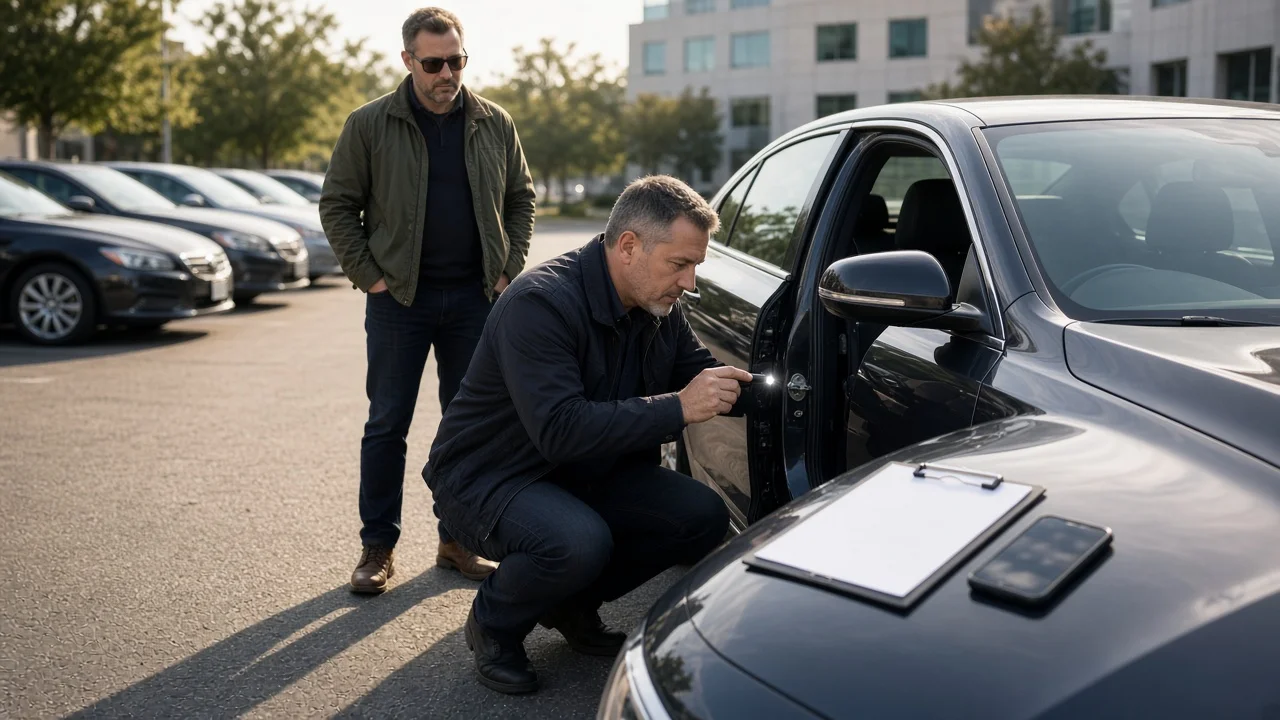
Step 2: Inspect the VIN Locations for Tampering
Look closely at each VIN location, and photograph it. Possible signs of tampering include:
A dashboard VIN plate that is scratched, bent, loose or held on with rivets or screws that look different from factory fittings; A door jamb label that is missing, torn, painted over or looks newer than the surrounding area; Characters that are misaligned, uneven or look re-stamped; Glue residue, tool marks or fresh paint around any VIN location
Stop here if you see clear tampering. Do not buy the vehicle, and see the section below on what to do if you suspect a theft.
Step 3: Match the VIN Across the Vehicle and the Paperwork
Every VIN on the vehicle should be identical, character for character. It should also match the VIN on the title, the registration and, where available, the insurance card. Then compare the name on the title with the seller's photo ID. If the seller is not the titled owner, ask why, and treat vague explanations with caution.
Stop if any VIN differs, or if the seller cannot produce a title in their name. Also be careful with a title that was issued very recently or transferred from another state shortly before the sale. That is not proof of theft, but it can be a sign of title washing, which means moving a vehicle through different states to hide its history.
Step 4: Run a Free Theft Check
Enter the VIN into NICB's free VINCheck tool. It searches theft and total-loss records reported by participating insurance companies. If it shows an open theft record, do not go ahead with the purchase.
Keep its limits in mind. The tool only covers what participating insurers have reported, so a vehicle that was never insured, or one whose theft was not reported through those channels, may not appear. This guide was not able to confirm any current usage limits or terms, so check them on the tool itself.
Step 5: Get a Title History Report
Order a vehicle history report from an approved NMVTIS data provider, or from a commercial history-report company. NMVTIS records title brands such as salvage, junk or flood, along with odometer readings and the states where the vehicle has been titled. Commercial reports often add accident, service and ownership details, and some include theft records. Prices and coverage vary by provider, and no specific figures were available for this guide.
Compare the report with what the seller told you and with the paper title. Mismatched states, ownership dates or mileage are reasons to dig further before you pay.
Step 6: Ask Police or the DMV to Verify the Vehicle
For the strongest confirmation, ask your local police department whether it will run the VIN against law enforcement stolen-vehicle records or carry out a VIN inspection. Some departments do this, while others will only check a VIN as part of an investigation. Some states require a VIN inspection before they will title a vehicle brought in from another state, usually done by the motor vehicle agency, police or an authorized inspector. Contact your state's motor vehicle agency to learn the local rules, since they differ from state to state.
Warning Signs in the Sale Itself
Even when every database check is clean, the circumstances of a sale can point to a stolen or cloned vehicle:
A price well below comparable vehicles, with no convincing reason; A seller who will only meet at a random location and avoids showing where they live; A seller who insists on cash, pushes for a fast deal or discourages inspections; Only one key, a key that doesn't look original, or damage to the ignition, steering column or door locks; A history report or license plate from a state that doesn't fit the seller's story; Missing or photocopied documents in place of originals
How to Confirm the Check Is Complete
You have done a thorough check when all of the following are true:
Every VIN location on the vehicle shows the same VIN, with no signs of tampering; The VIN matches the title and registration exactly; The seller's photo ID matches the name on the title; The free theft check shows no open theft record; The title history report is consistent with the seller's account and the paper title; Where available, a police or DMV VIN check has turned up no problems
Even with every item checked, a carefully cloned vehicle can still get through. A local police or official VIN inspection is the best protection against that, so it is worth arranging for higher-value purchases.
If You Suspect the Vehicle Is Stolen
Do not confront the seller, and do not try to keep or move the vehicle. Leave, then report the VIN, the license plate, a description of the vehicle and the seller's details to local police using the non-emergency line. Use 911 only if you are in immediate danger. Your photos of the VIN locations and documents can help investigators.
Why this matters: in the US, buying a stolen vehicle generally does not give you valid ownership, even if you paid in good faith. Police can seize the vehicle and return it to its rightful owner or insurer, which can leave you with the loss. The exact rules and any remedies available to you depend on your state, so for a dispute that is already underway, talk to a lawyer licensed in your state.