Charging an Electric Car With Solar, Generators and Off-Grid Power
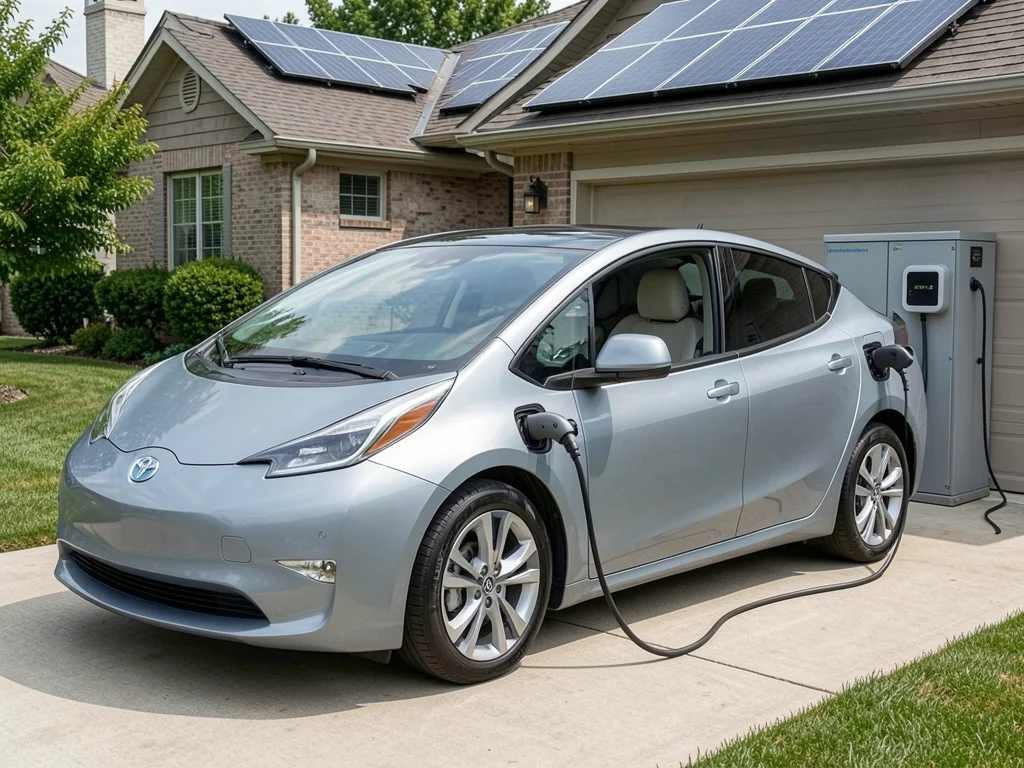
Charging an electric car with solar power can reduce grid use and make home energy more self-sufficient. How well it works depends on the equipment, how the system is sized and how the car is used. This guide explains how solar panels, wind turbines, generators and off-grid systems can supply EV charging equipment. It also covers whether public charging stations run on fossil fuels.
How Home Solar Supplies an Electric Car Charger
In a typical home setup, solar panels produce direct current, and an inverter converts it into alternating current for the household electrical system. The EV charger, properly called EV supply equipment, draws from that same system and passes power to the car's onboard charger. Bare solar panels are not wired straight into the charging port. The vehicle expects a controlled supply with safety signaling, so the panels, inverter, electrical panel and charger must all be compatible and correctly installed.
When the car is plugged in during daylight, solar charging uses whatever generation is available, and the grid covers any shortfall. Solar-aware charging controls go further. They track solar surplus, adjust charging current as clouds pass and cut back when household demand rises from appliances such as ovens or heat pumps. Many can also follow the vehicle's charge limit and a minimum charge target, so the car is ready for the morning commute even after a dim day.
Estimating Solar Capacity for Daily Driving
Sizing starts with daily charging energy. Multiply your typical daily distance by the car's measured energy consumption from its trip computer. Then add a margin for charging losses in the charger, cables and battery. Keep the units straight: kilowatts measure charging power, or the rate of flow, while kilowatt-hours measure the energy delivered. A modest charger running for several hours can replace a day's driving just as well as a powerful one running briefly.
Here is an illustrative example with assumed figures. A car using 10 kWh a day plus 10 percent losses needs about 11 kWh. If local solar yield were 4 kWh per installed kilowatt per day after system losses, roughly 2.75 kW of panels would cover it, before any household use. Shading, roof orientation, winter production and whether the car is home in daylight all change that figure. An installer will need roof details, electrical service capacity, recent utility bills and your driving pattern.
Where Solar Charging Stations Get Their Electricity
A solar-powered electric car charging station usually combines a canopy of panels, a grid connection and sometimes battery storage. The canopy supplies the site while the sun shines, and storage can shift some of that energy into evening sessions. The grid supplies the rest. A busy fast charger can draw far more power than a canopy produces, so visible panels do not prove that every session runs entirely on solar output generated at that moment.
So are electric car charging stations powered by fossil fuels? Grid-connected stations receive the local grid electricity mix, which may include coal or gas generation depending on the region and the time of day. Station disclosures can describe onsite generation, storage capacity and renewable electricity purchases such as certificates or supply contracts. Those purchases show what the operator bought on paper. They are not the same as the electricity physically flowing through the cable at a given moment.
Planning Off-Grid Charging and Outage Operation
Off-grid electric car charging needs generation, usable battery capacity, an inverter sized for the load and compatible charging equipment, all working without grid backup. That requires a realistic energy budget covering daily driving, household loads, charging losses and a reserve for cloudy or calm periods when renewable generation drops. Stored energy alone is not enough. The inverter and battery must also deliver the continuous power the charger draws for hours without shutting down or overloading.
Grid-tied homes face a separate issue during outages. Ordinary grid-connected solar generally shuts down when the grid fails, which protects utility workers. It keeps running only if the equipment supports approved islanded operation with automatic isolation from the grid. Adding backup capability changes protection, switching and code requirements. System design, electrical protection and installation therefore belong with qualified electricians and solar professionals. Ask them to confirm whether the car can charge during an outage, and at what rate.
What to Check Before Charging From a Portable Generator
Charging an electric car with a generator works only if the vehicle, charging equipment and generator manufacturers all permit it. Check the generator's continuous output rather than its surge rating, and confirm that its output quality suits sensitive electronics. Also confirm the available outlets and the charging load the EV charging equipment will draw. Chargers run protective checks on grounding and voltage, and a failed check can stop a charging session from starting at all.
Never modify grounding, use improvised adapters or bypass those protections to force a session. A fuel-burning portable generator used for EV charging must run outdoors, well away from doors, windows and vents, following the manufacturer's carbon monoxide and refueling guidance. The practical limits are real. A small unit may add only modest range per hour, long sessions need regular refueling, and some generators are not designed to run near full load for extended periods.
When a Wind Turbine Can Support EV Charging
A wind turbine can charge an electric car when a suitable turbine feeds the home's electrical installation through the correct controller and inverter. The EV charger then draws from that supply like any other load. Whether this is feasible depends heavily on the site. Measured wind speeds, turbulence from nearby buildings and trees, tower height and placement, and local zoning or permits all determine whether a turbine makes sense before any hardware is chosen.
A turbine's nameplate power says little about daily charging energy. Rated output usually applies at a specific, fairly strong wind speed that many sites rarely reach, so the actual energy depends on the site's wind across hours and seasons. Because output fluctuates, battery storage or a grid connection is usually needed to smooth the supply to the car. A professional assessment of the structure, electrical integration and safety is needed before installation.
How to Assess a Solar EV Charging Setup in Use
A useful review of a solar EV charging setup focuses on measured results rather than impressions. Over a defined period, track solar generation, energy delivered to the car, grid imports and the share of charging supplied by onsite solar. Record the system's capacity, the car's energy use, the monitoring period and whether battery storage is installed. Also note charging schedules, weather, household loads and time away from home. A car parked at work all day cannot use midday solar production.
Reliability and convenience matter as much as percentages. Check whether charging sessions finished as expected, whether the controls responded smoothly to passing clouds and household demand, and whether daily driving needs were met without manual intervention. Financial results depend on installation cost, electricity rates, payment for exported power and actual usage, so any payback estimate should use your own figures. If a system exports power cheaply by day and imports expensive power in the evening, changing the charging schedule may help more than adding panels.