Change car interior color
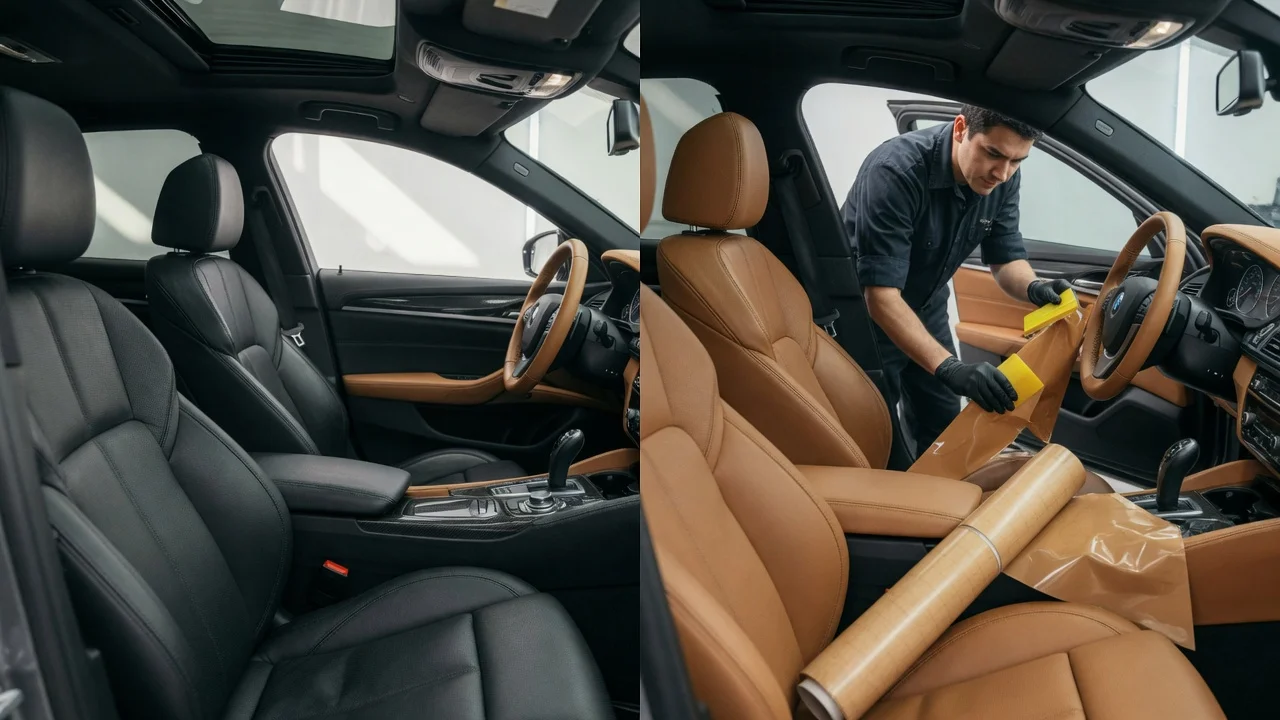
What changing a car interior color means
You change a car’s interior color by covering, dyeing, wrapping, painting or replacing cabin surfaces such as seats, door cards, the dashboard, console, carpet and headliner. Factory seat and trim color is set by the vehicle’s original specification; it is not a setting you can switch in most cars. On many later models you can change ambient lighting color in the infotainment menus, which alters glow around the cabin and does not recolor upholstery or plastics.
Scope matters. Recoloring seats alone is a different job from a full cabin change, because leather, cloth, vinyl, hard plastic, carpet and suede each take a different process. Results also vary by model year, trim and market, because airbag locations, heated or ventilated seats, occupancy sensors and the mix of materials are not the same across vehicles. There is no single torque figure, dye formula or paint system that applies to every interior.
Pick a method that matches the material
Match the process to the surface and to how permanent you want the change. Mixing methods is common: for example, new seat covers with wrapped trim, or dyed leather with painted plastic bezels. Color-matching across those materials is the part most likely to look uneven if it is rushed.
Method Typical use Permanence; Seat covers and carpet mats Cloth or leather seats; floor color Reversible; lowest disruption; Leather or vinyl dye Genuine leather and many vinyls in fair condition Semi-permanent; original grain still shows; Interior vinyl wrap Dash, console, door caps and other hard trim Removable if the film and prep are sound; Interior plastic paint Bezels, vents, switch surrounds and similar hard parts Durable if adhesion prep is correct; harder to reverse; Reupholstery or part replacement Seats, door cards, headliner, carpet; cloth and suede Most complete and most expensive
Cloth and Alcantara-style suede generally dye poorly compared with leather. Those surfaces are usually covered or reupholstered. Cracked, peeling or heavily worn leather is a poor dye candidate; the color will not hide damaged hide. Steering wheels, airbag covers and any panel marked as an airbag location need a method that does not add thickness, block a tear seam or disturb the module.
How to change the interior color
Work from a plan, then a test piece, then the visible cabin. Specific cleaners, dyes, films, paints and fastener torque values belong to the product instructions and, where parts come off the car, the manufacturer’s service information for that model year. Those figures are not interchangeable and are not restated here.
Define the cabin areas you will change and the finish you want: seats only, seats plus doors, or a full interior including dash, carpet and headliner. Photograph the cabin in daylight so you can compare color later. Identify each surface: leather, coated vinyl, cloth, plastic, painted trim, carpet or suede. Check whether seats are heated, ventilated or fitted with occupancy sensors, and note every airbag badge on the wheel, dash, seats and pillars. Choose the method for each surface and get a sample or swatch. If you are dyeing or painting, test on a hidden area or a spare piece first. If you are wrapping, confirm the film is sold for interior use and can handle the heat and UV load of a parked car. Gather method-specific tools. Seat covers often need only the kit’s clips and straps. Dye work typically needs a dedicated leather or vinyl cleaner, applicator and topcoat from the same system. Wrap work typically needs isopropyl alcohol for wipe-down, a squeegee, a sharp knife and a heat gun used with care. Interior plastic paint typically needs cleaning, a plastic adhesion promoter specified by the paint maker, and light coats. Reupholstery and carpet replacement are shop jobs unless you already trim interiors. Protect airbags, switches and screens before any chemistry or heat. Disconnect the battery only if you will unplug an airbag, seat module or similar safety device, and follow the waiting and reconnection sequence in the service information for that vehicle. Do not dye, wrap or paint over an airbag cover. Prep until the surface is clean, dry and free of dressings and silicone. Residue is a common reason dye rubs off and wrap lifts. Remove parts that can be taken off the car without disturbing airbags if that gives a cleaner edge; leave them in place if removal would mean seat-airbag or dash-airbag work you are not equipped to do. Apply the new color in the order the product specifies, usually several light coats rather than one heavy coat for dye and paint, and from the center outward for wrap. Keep heat guns moving. Allow full cure time before sitting on seats or using armrests; cure windows vary by product and shop temperature. Refit any panels, torque fasteners to the values in the service information, and restore power if the battery was disconnected. Confirm airbag warning lamps go out after the normal self-test. Recheck seat heaters, lumbar, occupancy warnings and seat-belt reminders.
Where DIY should stop
Have a trim shop or dealer-level technician handle seat removal on vehicles with side-airbag seats, dashboard work around a passenger airbag, steering-wheel airbag removal, curtain-airbag pillars and any repair that needs the airbag system disconnected. Incorrect refit can leave a warning lamp on or change how a cover tears in a crash. Headliners with a sunroof and carpet that is heat-welded or tucked under welded trim are also easy to damage without trimmer tools.
A completion check is visual and functional: even color in daylight, no dye transfer onto clothing after cure, wrap edges sealed, no trapped dirt under film, no paint on switch faces or lens optics, seats locked on their runners, and no new warning lamps. If color still mismatches across leather, plastic and cloth, that is a materials limit, not a step you skipped.
Cost factors
Price follows scope, material and labor, not a single published figure. Reversible covers and mats sit at the low end. Dye kits cost less than a shop dye job, which in turn costs less than full reupholstery. Wrap and interior paint are usually priced by panel count. Replacing OEM-colored seats, door cards, carpet and a headliner is the high end, especially on vehicles where those parts are trim-specific. Quotes vary by region, vehicle and how much disassembly the airbag and electronics layout requires; ask for a written breakdown of parts, film or dye, labor and whether color-matching across materials is included. Published national averages were not supplied for this guide, so treat any informal range you hear as a starting quote, not a specification.