Catalytic Converter Stolen: What to Do Before Replacement
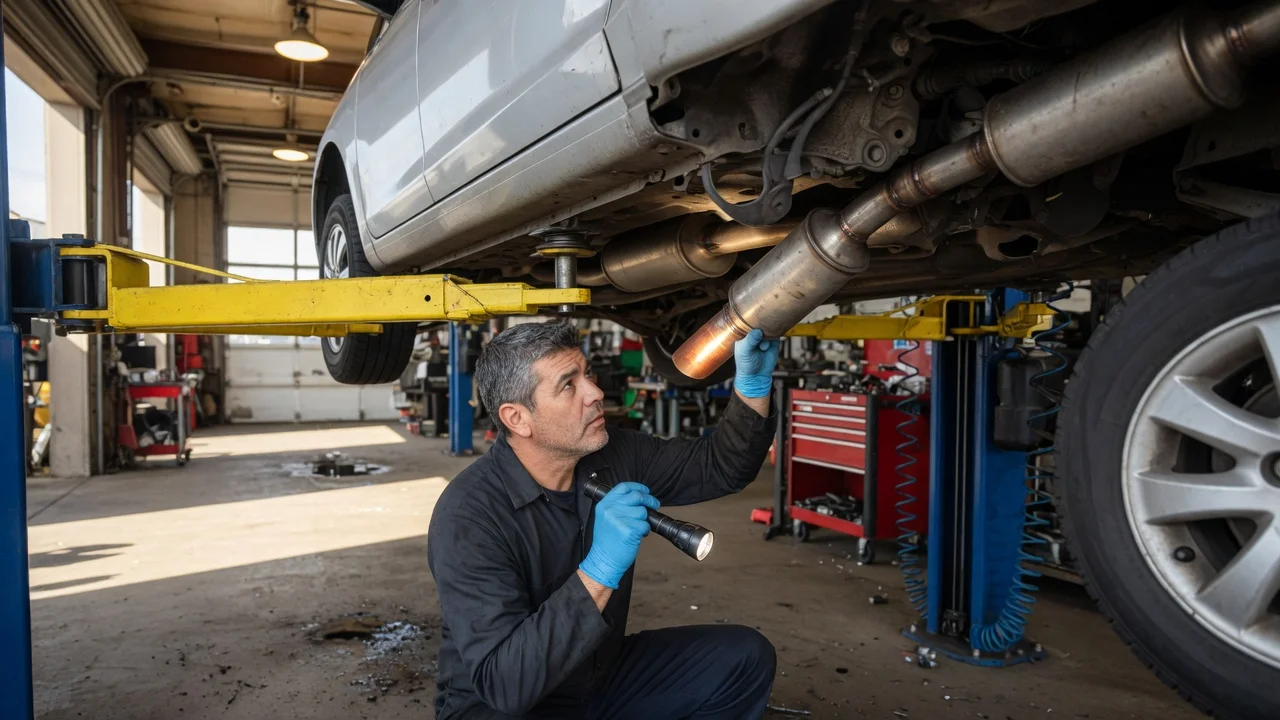
Confirm the damage before authorizing replacement
If you suspect your catalytic converter has been stolen, prioritize a safe inspection, document what you can see and check any insurance requirements before authorizing repairs. Ask a qualified repairer to confirm what is missing and assess the surrounding damage. Without vehicle details or an inspection, this guide cannot establish whether your car is safe to drive or identify the correct replacement.
1) Arrange an inspection and decide how to move the car
Leave the vehicle parked while you contact a repairer or roadside assistance provider. Explain the suspected theft and any changes you have noticed. Ask whether recovery is appropriate rather than starting or driving the car to test it. Do not crawl underneath a vehicle supported only by a jack.
2) Record the suspected theft
Note when and where you discovered the problem. Take photographs from a safe position, including any visible damage, without reaching underneath the vehicle. Contact the local police reporting service for instructions on reporting the suspected theft, and retain any report reference they provide.
3) Check insurance requirements before committing to repairs
If you intend to make an insurance claim, ask your insurer to confirm whether your policy covers the incident, what deductible or excess applies, and whether inspection or repair authorization is needed first. Also ask about recovery costs, repairer requirements and the records you should keep. No policy wording was supplied, so coverage and reimbursement cannot be confirmed here.
4) Get an itemized assessment and replacement estimate
Give the repairer the vehicle identification details and ask them to confirm the applicable model year, engine and market specification. Request an itemized estimate identifying the missing component, any additional damage found, the proposed replacement part, labor and any diagnostic work. Ask the repairer to explain which findings support each repair.
Before approving the estimate, ask the repairer to verify that the proposed part suits the vehicle and meets the requirements where it will be used. Request the part warranty and an explanation of any alternatives offered. No vehicle specification, manufacturer guidance, location or supplier quotation was supplied, so a particular part, price or installation procedure cannot be recommended.
5) Agree on how the completed repair will be checked
Before authorizing the work, ask what checks the repairer will perform to confirm that the replacement is correctly installed and that any related damage or warning indications have been addressed. On collection, obtain the itemized invoice, replacement part details, warranty terms and the results of those checks. Ask for an explanation of any unresolved issue before resuming normal use.