Catalytic Converter Delete: Consequences and Legal Considerations
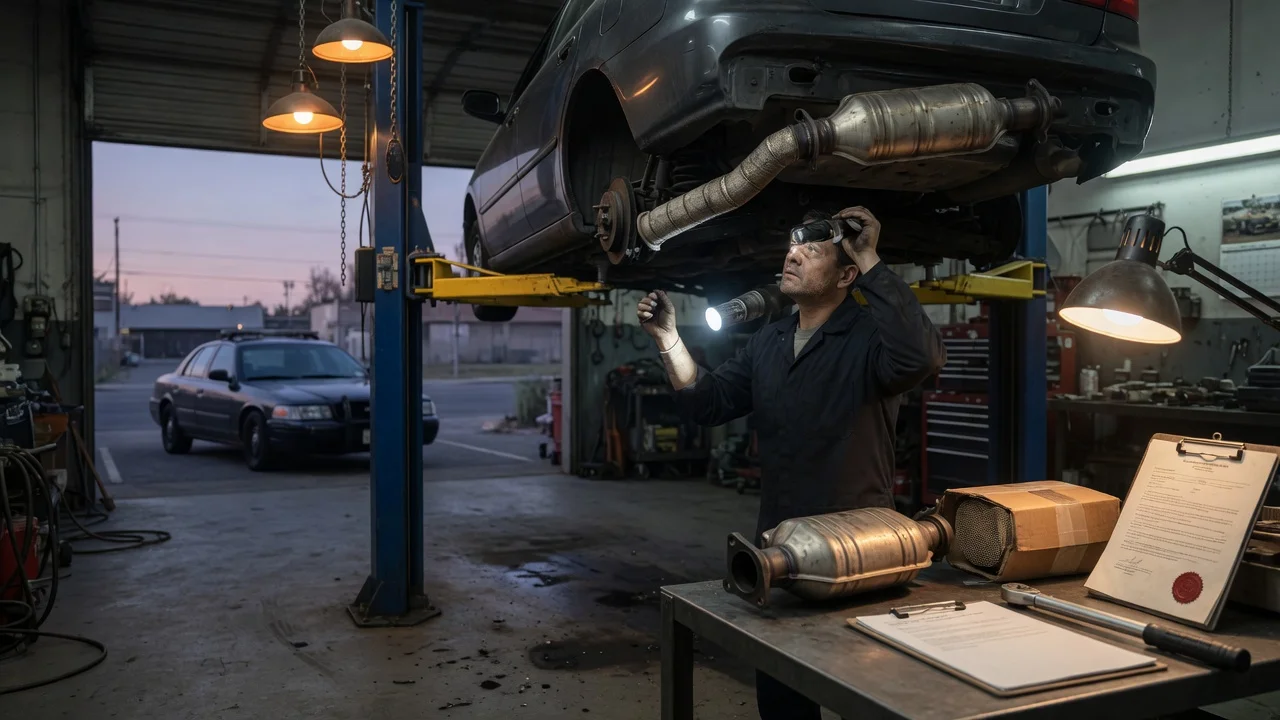
A catalytic converter delete removes or bypasses the catalytic converter so exhaust gas can flow without passing through the catalyst substrate. The term is often searched alongside phrases such as what does a catalytic converter delete do, catalytic converter removal, and catalytic converter delete pros and cons. The procedure can reduce exhaust restriction, but it also changes emissions behavior, creates potential engine-control faults, and has legal consequences that depend on where the vehicle is registered and driven.
Before you start
Check which emissions equipment the vehicle has before changing anything. Many modern vehicles use one or more oxygen or air-fuel ratio sensors before and after the catalytic converter. A delete may require removing the converter and possibly changing the exhaust pipe, while the engine control module may still expect a signal from a downstream sensor.
Confirm whether the vehicle is subject to emissions inspection where it is registered or used. A catalytic converter delete is generally not an emissions-compliant modification for a street-registered vehicle in many regions. Off-road or competition-only use can still require inspection of local rules rather than assuming the vehicle is exempt.
Decide whether the work must be reversed later. Keep the original converter, gaskets, fasteners, and any sensor fittings if a future restoration or sale may be required. Because sensor faults and diagnostic trouble codes are common, a plan to restore the stock exhaust is useful before the first cut or removal.
Step-by-step instructions
1) Identify the catalytic converter location and sensor positions for the exact engine and model year. 2) Check whether the converter is part of a larger factory assembly or a separately replaceable section. 3) Lift the vehicle safely, support it on stands, and allow the exhaust to cool. 4) Label and disconnect the downstream sensor connector without pulling on the wiring. 5) Unbolt or cut the converter section according to the replacement pipe design. 6) Fit the fabricated or aftermarket delete pipe and use new gaskets or the specified connection method. 7) Reinstall any sensor in the replacement section only if the pipe includes the correct bung and mounting angle. 8) Clear stored fault codes only after checking whether sensor readings or missing monitors are relevant.
A downstream sensor may still be present but measure different gas composition after the converter is removed. That can trigger converter efficiency faults or prevent some readiness monitors from completing. Some systems also respond to exhaust flow changes, so a delete pipe should preserve enough clearance from heat shields, wiring, and nearby brake or fuel lines.
Check the output
Start the engine and listen for leaks at each flange, clamp, or weld while the exhaust is cold and again after it warms up. Watch for vibration or contact against the body, crossmember, driveshaft, or suspension. Verify that the downstream sensor still reaches its connector and is not routed near a moving component.
Scan for diagnostic trouble codes and confirm which monitors have run. A missing or poor catalyst signal may keep the catalyst monitor incomplete, affect fuel control, or cause a persistent malfunction indicator light. Changes in sound and smell are expected with less catalyst material, but a sulfur-like or fuel-heavy smell together with a fault code can point to a separate issue.
Common problems and next steps
A converter efficiency code is the most likely result. On some vehicles the code may appear only after the engine repeats a specific drive cycle, so a short idle test is not enough to confirm success. If the check engine light appears, inspect the downstream sensor, its wiring, and the exhaust joint before assuming the fault is unavoidable.
A catalytic converter delete and emissions test are generally incompatible in areas that require a tailpipe or on-board diagnostics inspection. The vehicle may fail because of an illuminated light, incomplete monitors, or measured tailpipe emissions. Restoring the factory converter with known-good sensors is the most predictable fix for street use.
Do not apply a tune or sensor spacer unless it is legal for your use and supported by the vehicle tuning platform. Software changes can mask a problem rather than fix it, and may create additional inspection or warranty concerns. If the vehicle must pass inspection or be sold without hidden defects, reversing the modification and keeping the original parts is the safer next step.