Caterpillar C7, C9, C13 and C15 Oil Pressure Sensor Location Guide
Direct answer
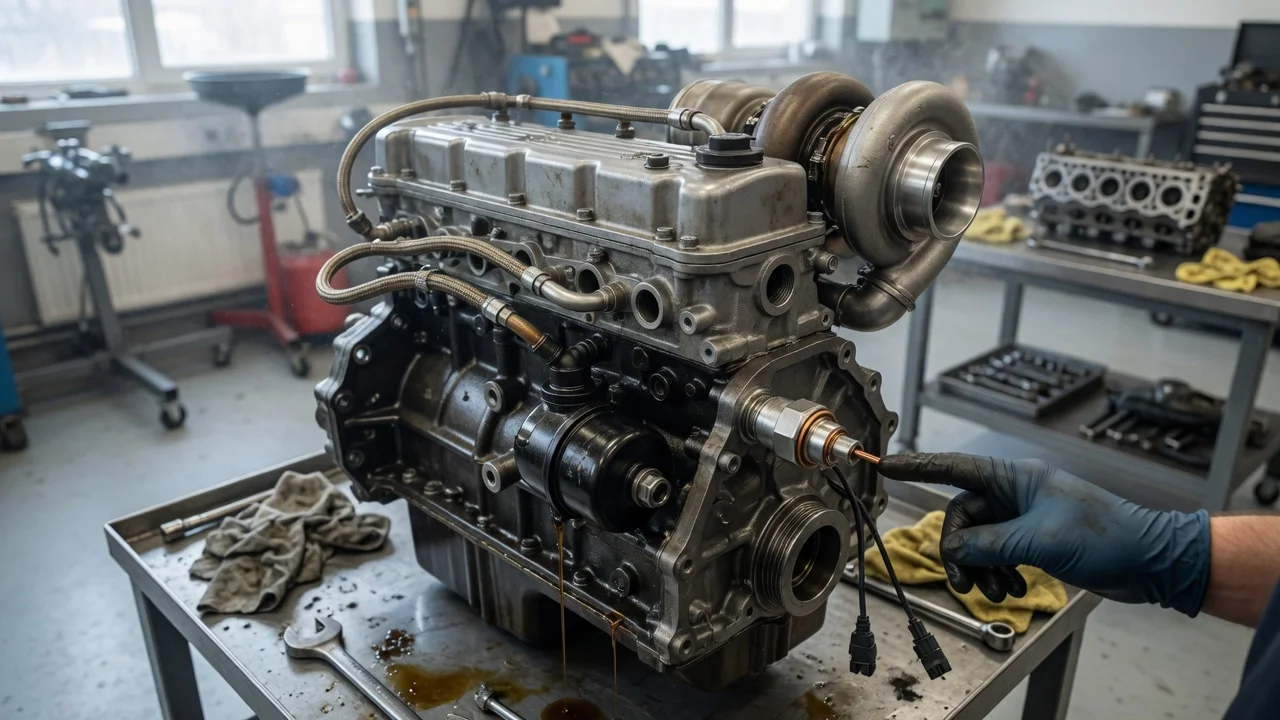
On Caterpillar C7, C9, C13 and C15 engines, the engine oil pressure sensor is mounted on the left side of the cylinder block, generally toward the rear section near the oil filter head or oil cooler housing. The exact position changes with the engine configuration, accessory layout and emission package, so the sensor should be confirmed against the specific engine serial number before removal. These engines share a similar sensor strategy, but bracket, harness routing and connector orientation differ between the four platforms.
Common location cues
The oil pressure sensor is usually a small cylindrical switch or transducer threaded into an oil gallery boss. Look for a single electrical connector, often a 3-pin Deutsch or similar sealed connector, and a hex body that accepts a deep socket or open-end wrench. On many C7 and C9 installations, the sensor is near the spin-on oil filter base or the engine oil cooler cover. On C13 and C15 engines, the sensor is commonly found on the left frame-rail side, above the oil pan rail and behind the oil cooler or filter manifold.
C7 engine location
On the Caterpillar C7, the oil pressure sensor is typically located on the intake side of the block, aft of the fuel filter base and inboard of the starter. On some chassis applications, the sensor may be hidden by the wiring harness or by the engine mounting bracket. Trace the harness branch that runs from the main engine controller to the lower left oil gallery; the oil pressure sensor connector is usually the lowest sensor in that branch near the block face.
C9 engine location
The Caterpillar C9 generally positions the oil pressure sensor on the left side of the cylinder block, near the front portion of the oil cooler and above the oil filter. Depending on the application, the sensor may share a manifold port with a mechanical gauge sender or be installed in a dedicated port behind the ECM coolant plate. On EPA 2004 and later models, the sensor is often a pressure transducer that feeds the ECM rather than a simple switch.
C13 engine location
On the Caterpillar C13, the oil pressure sensor is commonly located on the left rear of the engine block, behind the oil filter base and just above the oil pan flange. The sensor may point outward toward the frame rail or rearward toward the bell housing. On ACERT-equipped C13 models, the oil pressure sensor is frequently integrated into the high-pressure oil manifold area, so the exact port position depends on whether the engine uses the earlier HEUI or later common-rail fuel system.
C15 engine location
The Caterpillar C15 oil pressure sensor is normally threaded into the left side of the cylinder block, behind and slightly above the oil filter housing. In many on-highway trucks, the sensor faces the frame rail and may be difficult to see without a mirror or light. On C15 ACERT engines with diesel particulate filter packages, the sensor is still located in the same general oil gallery area, but heat shielding or a support bracket may cover the connector.
Identification and variant notes
The oil pressure sensor is easy to confuse with the coolant temperature sensor or fuel pressure sensor when they share a common wiring branch. The oil pressure sensor is the only sensor in that area that threads directly into a main oil gallery, usually with a 1/4-inch or 3/8-inch NPT or O-ring port. Before replacement, verify the electrical connector shape and pin count. Material uncertainty exists for aftermarket replacement sensors, which may use a different sealing style or body length than the Caterpillar part.
Practical guidance
Because these engines are installed in multiple equipment types, the accessible view changes with chassis, body and hood clearance. Work from the left side and trace the main engine harness from the ECM downward toward the oil filter. The oil pressure sensor is generally the lowest pressure sensor on the block in that area. If the sensor is not immediately visible, release the harness clips and use a small mirror to inspect behind the oil cooler or filter head.