Cars Without a CVT Transmission: New and Recent Models
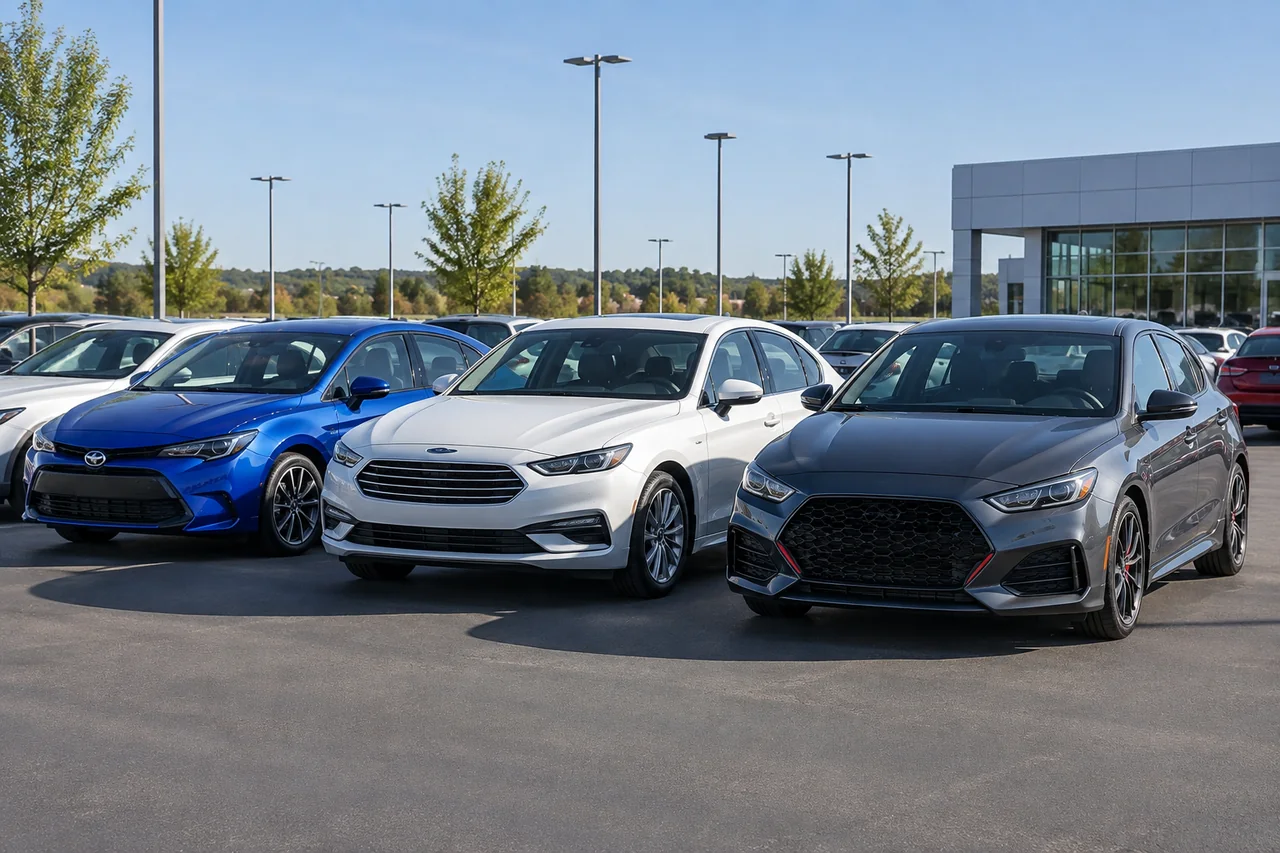
Shoppers asking what car does not have a CVT transmission usually want a conventional automatic or dual-clutch gearbox instead of a pulley-based continuously variable unit. Building a list of new cars without CVT transmission still means checking model year, powertrain, and trim level, because those details decide the hardware even when two vehicles share a nameplate.
Which Automatic Cars Qualify for This List?
This discussion covers US-market passenger cars whose automatic powertrains use a conventional stepped automatic or a dual-clutch transmission rather than a CVT. That is the practical meaning of non CVT transmission cars in showrooms. An automatic label on a window sticker does not settle the architecture. Some CVTs are marketed with a number of simulated speeds, paddle shifters, or a sport mode that mimics ratio steps. Those features describe control software, not proof that a torque-converter planetary gearbox or a dual-clutch unit is fitted.
Manual-only configurations sit outside this automatic-transmission scope, as do single-speed electric vehicles that have no multi-ratio gearbox at all. Eligibility also does not belong to an entire brand. One sedan in a lineup can use a stepped automatic while a related crossover or hybrid uses a CVT. Shoppers asking what cars do not have a CVT transmission need the specific model year and powertrain, including engine and drivetrain, because a later refresh or a different trim can change the transmission designation without changing the model name.
Mainstream Compact Cars by Brand
Among compact sedans and hatchbacks, Mazda3 automatic examples are a frequent answer to what cars don't have a CVT transmission, but eligibility still has to be established by model year, body style, engine, and drivetrain before any example is treated as confirmed. A sedan and a hatchback can share a name while pairing different engines or all-wheel-drive hardware with different gearboxes. The same caution applies across trims: a confirmed conventional automatic on one powertrain does not automatically cover a later engine, a different drive layout, or a hybrid variant of the same compact.
Volkswagen Jetta automatic configurations belong in the same compact group, yet Jetta and Jetta GLI entries should stay separate because a performance trim can use a dual-clutch transmission while a volume Jetta uses a different stepped automatic. For any compact that does qualify, a useful record names the model year, the applicable trim or powertrain, the transmission type, and the gear count from manufacturer documentation for that exact configuration. Compact crossovers and unrelated sedans from the same brand stay out of this section even if they also avoid a CVT.
Sport Sedans and Hatchbacks With Automatic Options
Sport compact automatics often use a dual-clutch transmission, which is a stepped gearbox with two clutches rather than a CVT. Volkswagen Golf GTI and Golf R dual-clutch configurations illustrate the point, but each included model year still has to be verified on its own. A prior-year dual-clutch unit does not prove the next model year kept the same hardware. Hyundai Elantra N dual-clutch configurations likewise need the exact trim designation, because neighboring Elantra trims can use an entirely different automatic architecture under the same sedan name.
A performance derivative needs its own entry for that reason: sharing a model name does not establish the transmission used by other trims. Base and mid-level versions of a sport sedan or hatchback may still use a CVT, a conventional torque-converter automatic, or a different dual-clutch unit. Optional automatic configurations also have to be labeled clearly. If a Golf GTI, Golf R, or Elantra N is offered with a manual in the same model year, treating a manual-equipped listing as the automatic version described here will misidentify the car a shopper actually sits in.
Luxury Sedans With Conventional Automatics
Luxury compact sedans remain a common place to find a conventional automatic transmission with a torque converter. BMW 3 Series configurations are typical candidates, yet only a stated model year and powertrain can be treated as covered. A rear-drive four-cylinder sedan, an all-wheel-drive variant, and a high-output version can carry different transmission designations even when they share the 3 Series badge. Cadillac CT4 configurations belong in the same luxury-sedan conversation, but trims should be separated wherever their transmission specifications differ rather than assuming one gearbox across the range.
Confirmed luxury entries should sit under the brand name with the transmission type and gear count identified for each applicable configuration, taken from that model year's documentation rather than from a neighboring sedan. A verified 3 Series or CT4 automatic does not extend to every sedan or hybrid the same manufacturer sells. Related cars can use a CVT, a dual-clutch unit, or a different stepped automatic. Treating a brand as uniformly non-CVT is how shoppers end up with the wrong powertrain after reading a broad list of cars without CVT transmission.
Confirmed Choices for the 2025 and 2026 Model Years
Searches for 2025 cars without CVT transmission and 2026 cars without CVT transmission need two separate tallies, each limited to configurations with established US-market transmission specifications for that model year. A 2025 Mazda3, Jetta, Golf GTI, Elantra N, 3 Series, or CT4 automatic cannot be copied into a 2026 entry unless the later model year is independently confirmed. Powertrain changes often arrive with a new model year even when styling barely moves, so last year's transmission type is not a substitute for current documentation.
Model year is also not the same as sale date. A new, unsold car on a dealer lot may still belong to an earlier model year, which is why a 2026 shopping trip can surface leftover 2025 cars without CVT transmission alongside newer builds. Inclusion of a configuration only means that powertrain is eligible; local new-car inventory still has to be checked. Build mix, unsold stock, and trim availability vary by region, so a theoretically qualifying car may not be sitting on the nearest lot even when the specification exists.
Verify the Transmission in a Recent Used Car
On a recent used car, exact model-year ranges should be cited only where the transmission specification has been confirmed throughout that range. A two-year run of the same badge can hide a mid-cycle powertrain change. The original window sticker or manufacturer build information for the individual VIN remains the cleanest check, because it records engine, trim level, drivetrain, and transmission designation together. Matching those four fields is how a shopper confirms a used Mazda3, Jetta, GTI, Elantra N, 3 Series, or CT4 is the non-CVT configuration they intended.
Dealer listing labels, paddle shifters, selector appearance, and perceived shifts are not enough to identify architecture. A CVT can be programmed to step, and a dual-clutch or torque-converter automatic can feel smooth enough to be misread. Transmission type also does not establish condition or durability. A correctly identified conventional automatic or dual-clutch unit can still be worn, overheated, or poorly serviced. Review the service records for fluid work and repairs, then arrange a professional inspection before buying, so the search for cars without a CVT transmission does not skip the mechanical check that actually matters.