Car Won't Start and Makes a Clicking Noise: Causes and Safe Checks
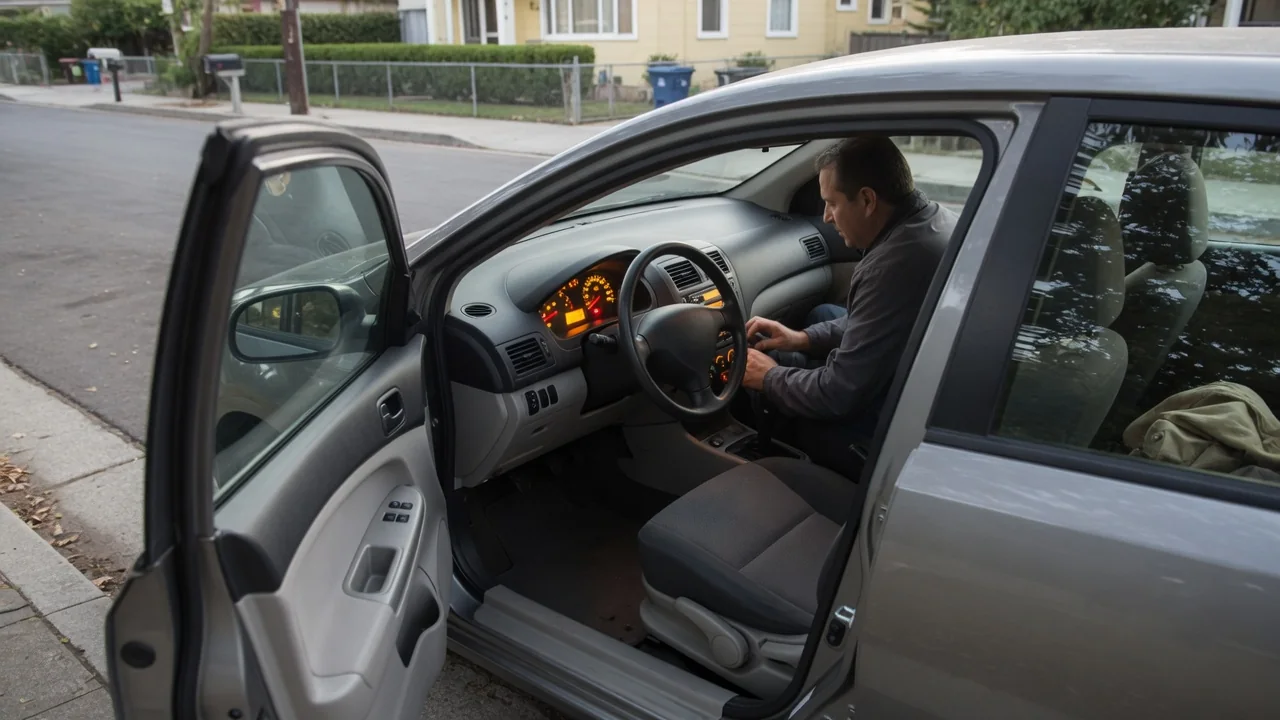
A click noise when trying to start a car is one of the most common no-start complaints, and it often happens while the dashboard lights still come on. The sound usually points to the starting circuit. It can come from a weak battery, corroded terminals, a poor ground connection, the starter relay or the starter solenoid. Watching and listening carefully helps narrow down the cause before anyone replaces parts.
Identify When the Clicking Happens
First, decide whether the engine turns over at all. Normal cranking sounds like a steady whirring or chugging rhythm as the starter spins the engine for a moment before it fires. If the car won't turn over and you hear only a clicking noise, that is a no-crank condition. It is different from an engine that cranks but won't run. Also note exactly when the sound happens. Some cars make a brief relay click when the ignition is turned on, which can be normal. A click that comes only when you try to start the engine points toward the starting circuit.
Next, listen to the pattern. A single click followed by silence means something different from rapid clicking that repeats as long as you hold the key or button. Watch the dashboard lights while you try. Flickering, dimming or a gauge cluster that resets is useful evidence. Where the sound seems to come from can also help a technician: under the dash, a fuse box, or low on the engine. Still, timing and location only narrow the possibilities. On their own, they cannot tell you which part has failed.
Rapid Clicking Can Signal Unstable Electrical Power
Rapid clicking when you try to start the car usually means the electrical power is unstable. The starter solenoid needs strong current to pull in and hold. When battery voltage sags under that load, the solenoid or starter relay lets go. The voltage recovers slightly, the solenoid engages again, and the cycle repeats as a fast, chattering click. A discharged or aging battery is a common cause. Resistance at the battery terminals, terminal corrosion, or a loose or corroded ground connection can starve the circuit in the same way.
Pay attention to what the rest of the car does when you try to start it. Headlights that dim sharply, instruments that flicker, or a clock and radio that reset suggest the system voltage is collapsing under load. These details are worth passing along, but they don't settle the question. Rapid clicking doesn't tell you whether the battery just needs a charge or is worn out. The battery could also be undermined by a charging-system fault, something draining it while the car is parked, or a poor connection elsewhere in the electrical system.
A Single Click Needs Starter-Circuit Testing
A single click when you try to start the car often means the solenoid or starter relay got the command and moved, but the starter motor didn't spin. That click shows part of the control side is working. It doesn't show that the starter motor is getting enough current. A weak battery can still produce one solid click. So can high resistance in a battery cable, burned contacts inside the solenoid, or internal wear or a winding fault in the starter motor itself.
Because so many faults look like starter problems, clicking alone is not a good enough reason to replace the starter. A new starter won't help if a corroded cable end or a weak ground is the real restriction. If you hear the same single click on every attempt, a technician should measure voltage at the starter while it is being asked to crank. They should also confirm the control signal from the ignition switch, relay and any safety interlocks, check the ground connections, and consider whether something mechanical is keeping the engine from turning.
Working Lights Do Not Confirm a Healthy Battery
Many drivers hear clicking while the lights come on and assume the battery must be fine. Headlights, dashboard lights and the radio draw only a small fraction of the current a starter needs. A weak battery can run them easily and still fail the moment the starter engages. A normal voltage reading with the car at rest doesn't prove the battery and its connections can deliver starting current under load. Neither does a recently replaced battery or a working infotainment screen.
Professional testing answers that question more directly. A battery load test or conductance test shows whether the battery can supply cranking power. A voltage-drop test measures power lost across the cables, terminals and ground paths while the starter is working. It can expose hidden resistance that a reading at rest misses. If a jump start gets the engine running, that suggests the electrical supply deserves a closer look. It still doesn't show whether the battery, a connection, the charging system or something else caused the original no-start.
Safe Observations Before Requesting Help
Before help arrives, keep the situation under control. Secure the car and set the parking brake. Confirm the transmission is in the position your owner's manual specifies for starting, and follow any requirement to press the brake or clutch. Turn off the headlights, climate control, heated seats and phone chargers so they don't compete for limited power. Avoid repeated or long starting attempts. They can drain a weak battery further and heat up the starter and wiring without telling you anything new.
If you can see the battery without removing any covers, look at it with the ignition off. Note any obvious white or greenish corrosion, a cracked case or a cable that looks loose. Leave touching and cleaning the terminals to qualified help, since both the battery acid and the battery's stored energy are hazards. Also write down any relevant history: recent slow starts, a long time parked, accessories or interior lights left on, or recent battery work. These details often matter as much as the click itself.
When to Stop and Call Roadside Assistance
Stop trying to start the car right away if you notice smoke, a burning smell, a swollen or bulging battery case, or leaking fluid. Move away from any immediate danger and call for appropriate help. Roadside assistance is also the sensible choice if the car is somewhere unsafe, if the clicking continues after these checks, or if the battery is hidden or hard to reach. If a jump start or booster pack is being considered, check the owner's manual for your specific vehicle and let qualified help make the connections.
A clear handoff speeds up diagnosis. Tell the technician whether the click happens when you turn the ignition on or only when you try to start the car. Say whether it was a single click or rapid clicking, whether the engine moved at all, and how the lights behaved. Mention whether a jump start worked and how the car ran afterward. Then ask for battery testing and starter-circuit checks, including voltage-drop and ground tests, before approving any parts. That way the repair targets the confirmed cause, not just the sound.