Car With Squiggly Lines Dashboard Light: Traction and Stability Control Explained
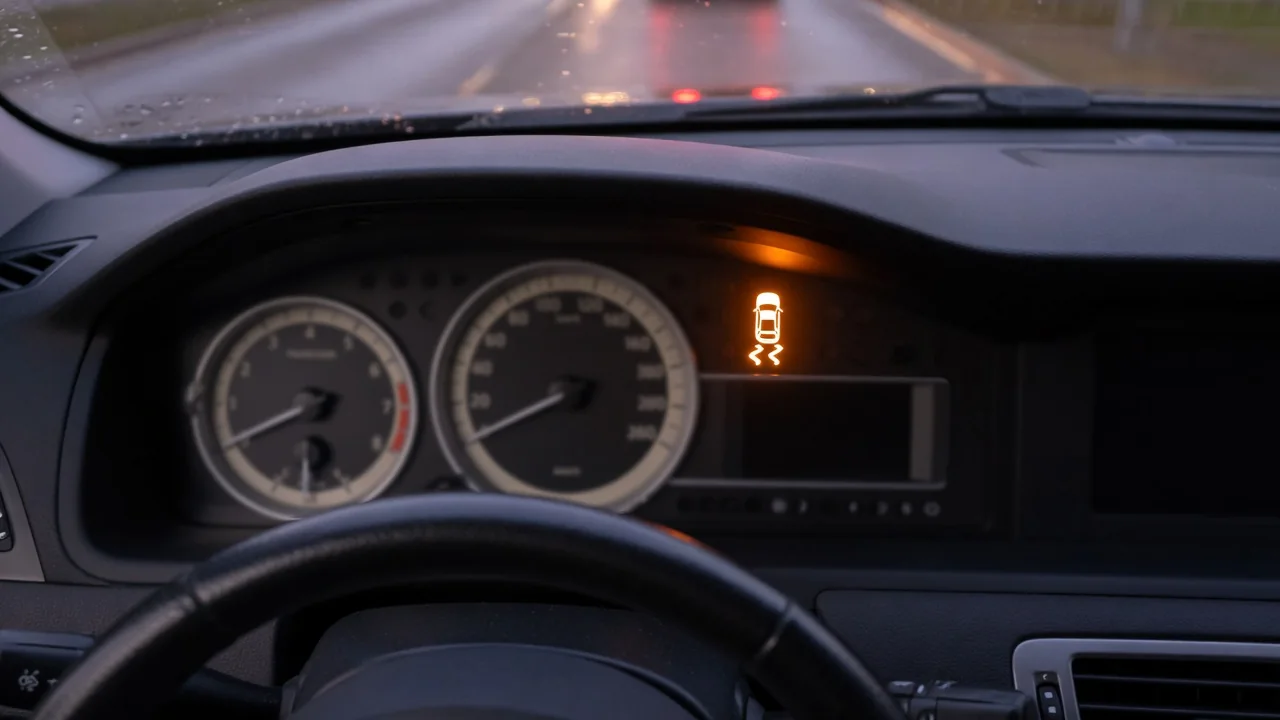
A car with squiggly lines behind it on your dashboard is not a decorative symbol; it is the traction control and electronic stability control light. This indicator tells you when the vehicle is actively managing wheel slip or when the stability system needs attention. Knowing the difference between a brief flash, a steady glow, and the OFF version helps you react correctly. From a Peugeot 307 skidding-car warning to a generic TCS light, interpreting this dashboard symbol can prevent unsafe driving on slick roads.
What the Car With Wavy Lines Symbol on Your Dashboard Means
The icon usually shows a car outline with two wavy skid marks beneath or behind it. Automakers use that same pictogram for traction control and electronic stability control, but they label the function differently—TC, TCS, ESP, ESC, VSC, or DSC. This means the symbol’s exact meaning can vary by brand and model, and the owner’s handbook is the reliable source for what the light indicates on a specific car rather than guessing from a generic chart.
A separate OFF version of the symbol often includes the word OFF or a crossed-out car. That indicator has a different meaning: the driver has manually disabled the traction or stability system, or the vehicle has switched it off because of a detected fault. During startup, the plain symbol normally appears briefly as part of the bulb check and then goes out. If it stays lit afterward, the system may not be active.
Why the Skidding-Car Light Flashes While You Drive
A brief flash while driving typically means the system is working as intended. The vehicle’s control unit detected wheel slip or a loss of grip and stepped in to help. This commonly happens on wet, icy, or snowy roads, on loose gravel, over painted road markings, or when accelerating hard out of a corner. The light should stop flashing once traction is restored; a short flicker is not a fault.
While the system intervenes, you may notice reduced engine power, pulsing from the brakes, or a grinding or buzzing noise. These sensations can be normal because the stability control is rapidly applying and releasing individual brakes. When the light flashes, ease off the accelerator and steer smoothly. Treat the flashing symbol as a sign that the road is slippery, and adjust your speed and inputs accordingly.
Steady Light or OFF Indicator: When Something May Be Wrong
A light that stays on without flashing after startup usually means the system has been switched off or has disabled itself after detecting a problem. Some vehicles let you press a traction or stability control button to turn the system off, which illuminates the OFF indicator. If the button was pressed accidentally, pressing it again may restore normal operation—but only if no underlying fault exists.
Traction control, stability control, and ABS often share sensors and components, so the ABS warning light or other warnings may come on at the same time. A steady traction light alone does not identify a specific cause. Before drawing conclusions, stored fault data must be read with a diagnostic tool. The light is a symptom, not a diagnosis, and clearing it without finding the cause can leave the vehicle without an important safety net.
Possible Reasons a Traction or Stability Control Warning Stays On
Several faults can keep the warning illuminated. A wheel speed sensor or its wiring may be damaged, a steering angle sensor may need calibration after an alignment or suspension repair, or a brake system fault can trigger the light. A problem in the related control module is also possible. No single cause is more likely without checking the vehicle; these are only places a technician will investigate.
Low or unstable battery voltage, for example after a jump start or battery replacement, can trigger warnings on some vehicles. Mismatched tire sizes, uneven wear, or very different tire pressures can confuse the system because it compares wheel speeds to detect slip. Fault codes and how they are read depend on the manufacturer, so a code must be checked against information for that specific vehicle rather than a universal definition.
Peugeot 307 Skidding-Car Warning Light: What Owners Should Check
Peugeot 307 owners should check the handbook for their model year and market to see which symbol and label their car uses. Equipment varies by version; some 307s display ESP, while others show ASR or another label for traction control. Noting whether the light appears alone or with a message on the display or other warnings helps a technician narrow down the cause, so record what you see.
Do not assume every 307 has the same traction or stability equipment, and do not rely on generic symbol charts. Stored faults should be read with diagnostic equipment that can access Peugeot-specific systems, and each code’s meaning must be confirmed for the exact vehicle. If the light stays on after a restart or appears together with brake or ABS warnings, arrange a professional inspection.
Is It Safe to Drive With the Traction Control Light On?
When the system is off or has a fault, the car may still drive normally on dry pavement but may lose the help it gives on slippery roads. Without traction control, a wheel can spin more easily during acceleration; without stability control, the vehicle may be harder to control in a sudden maneuver. Adjust your driving: accelerate and steer gently, leave more distance, and take extra care in rain, snow, or on loose surfaces.
The situation is more serious if the ABS or red brake warning is also on, or if the brakes feel different. Stop safely and get help if you notice reduced braking performance, a low pedal, or a warning that the brake system has failed. Do not switch the system off or ignore the warning just to get rid of the light; the light may be telling you that a safety feature is unavailable when you need it most.
Safe Checks Before a Professional Diagnosis
Before taking the car to a technician, park somewhere safe, switch the engine off, and restart. Watch whether the light clears after the startup check. If it returns, perform only simple visual checks: confirm the traction or stability button position, look at tire pressures and condition, and make sure the tires match in size and type. These observations can save diagnostic time.
Write down when the light appeared, the road conditions, and any other warnings on the dash. Do not disconnect sensors, handle brake parts, or clear codes without diagnosing them first—that can erase valuable information and create new hazards. Finding the actual cause needs proper diagnostic equipment and testing, so a warning that keeps coming back should go to a qualified technician rather than being ignored.