Car Wax Applicators, Pads, and Supplies: What You Need to Wax a Car
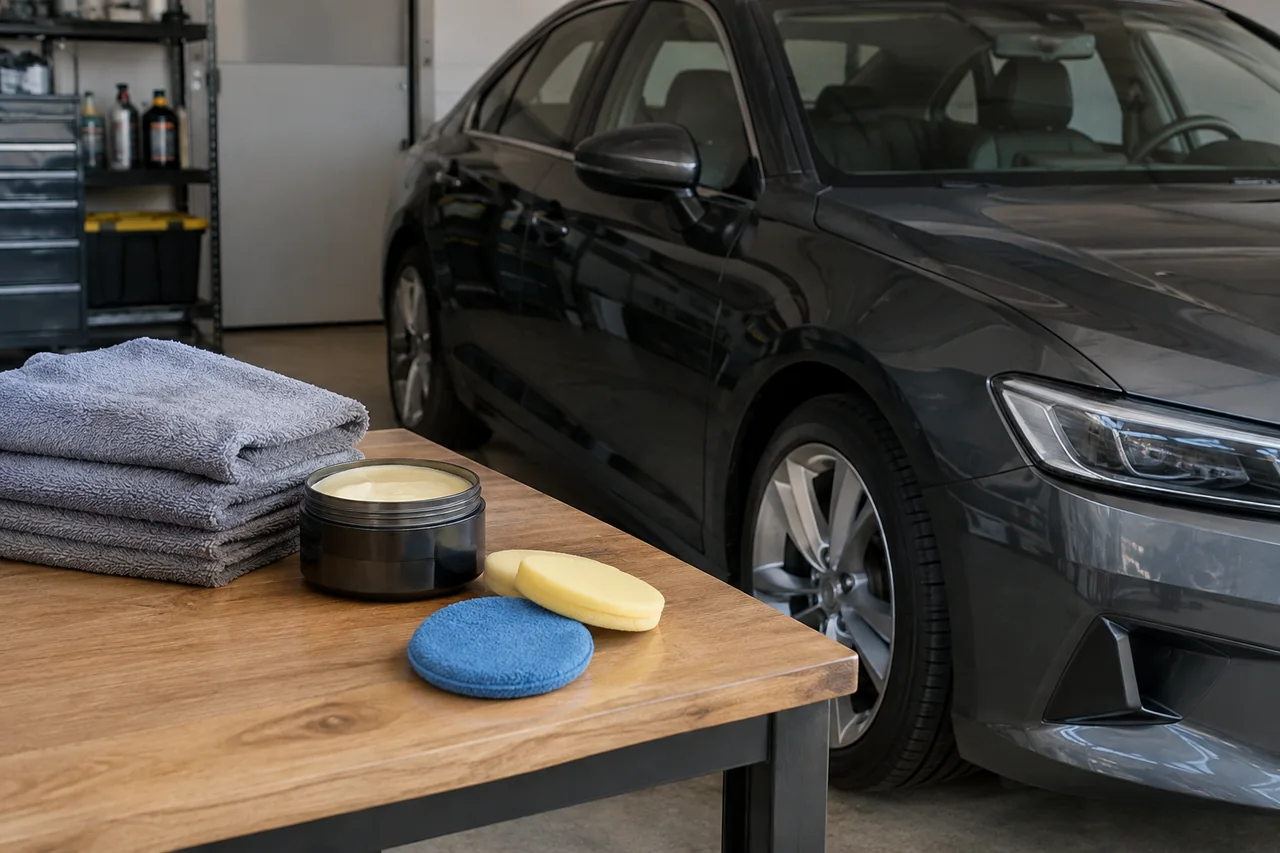
A car wax kit is more than a tin of product. A useful wax car kit pairs wax with a hand applicator, clean pads, and towels so a DIY job can go from washed paint to a thin wax layer without guessing at supplies. Car wax kits vary, so check the contents. This guide covers car wax equipment, applicators, and care of those detailing supplies.
What a Car Wax Kit Should Include
The core of any car wax kit is simple: a wax matched to the paint finish, a compatible wax applicator for car panels, and clean towels for residue removal. The applicator spreads product; towels lift haze after the wax has set according to the label. Finish suitability matters because some waxes are intended for clearcoat while others are restricted on matte paint, wraps, or textured trim.
Read the contents list on car wax kits before you buy. Many packages include only the wax, so a car wax applicator pad, extra wax pads for car work, and buffing towels may need to be purchased separately. Keep waxing supplies distinct from paint preparation items. Wash buckets, soap, and drying towels get the car clean and dry; they are not a substitute for a dedicated wax pad for car application.
Set Up Your Equipment and Work Area
Car wax equipment for a hand job includes more than the kit. Stage a wash bucket, a wash product suited to automotive paint, clean drying towels, and a clean surface for the wax, car wax pads, and towels. Paint preparation happens first: wash thoroughly, then dry completely so the applicator never rides over leftover water or grit. Keep the staging area off the ground so pads do not pick up dust.
Work in shade on cool body panels. Heat can make wax flash too quickly, leaving patchy residue that is harder to judge and remove. Adequate lighting, including moving around the vehicle, helps you see thin spots, missed edges, and wax residue. A hand wax job does not require a machine polisher. Machine polishing and paint correction are a different process and can cut or heat the finish if used to spread wax.
Choose a Hand Applicator Suited to the Wax
The wax applicator for a car is a hand tool that spreads a controlled, thin wax layer, not a towel for polishing or drying paint. The applicator stays loaded with product; a separate buffing towel removes residue after the wax has hazed or dried as directed. Useful features include a comfortable grip, an intact contact surface with no torn foam or frayed fabric, and a shape that reaches hoods, doors, and tighter panel areas.
Check the wax label for applicator recommendations before choosing among car wax applicators. Some products work well with foam, others with microfiber, and a few specify a pad style. Inspect every pad for trapped grit or damaged edges; dirt can mark paint as you spread wax. Keep spare clean car wax applicator pads nearby. If a pad falls or becomes contaminated, switch immediately rather than wiping it back onto paint.
Using Foam and Microfiber Applicator Pads
A foam applicator pad for car wax is usually a block or disc of open-cell foam, sometimes with a fabric face. Load it with a small amount of wax according to the product directions; extra product does not make a better layer and often leaves heavier residue. Work the foam applicator in overlapping passes so the film stays even. If the pad drags or cakes, add only what the label allows rather than pressing harder.
A microfiber applicator uses a fabric contact surface that can hold wax in the pile. Inspect those fibers for debris before the pad touches paint, since lint and grit hide in the nap. Material alone does not establish suitability. The wax directions and the pad's intended purpose govern selection, so use a pad meant for applying wax, not cutting compound. Do not treat abrasive polishing pads as interchangeable with hand wax applicators.
Select and Manage Microfiber Buffing Towels
A microfiber cloth for car wax removal should be a clean automotive paint towel, not a household rag. Choose a soft contact surface with no exposed hard labels or damaged edging that could scratch as you buff. Fold the towel into quarters for several clean faces, then rotate when a face loads with wax. When all faces are used, switch to a new towel instead of flipping a dirty side onto the finish.
Replace a buffing towel during the job when it becomes wax-loaded, damp, or visibly contaminated. A saturated towel smears rather than lifts residue, and a damp towel can leave streaks that look like missed haze. Keep paint towels separate from towels used on wheels, tires, and greasy areas. Brake dust and oil transfer grit to freshly waxed panels, so bag paint towels apart from wheel towels from the start.
Apply Wax and Remove Residue Without Overworking the Paint
Start only on washed, thoroughly dried paint. Wax does not remove grit or repair scratches; dirt left on the panel will ride under the car wax pad and can mark the finish. Follow the wax label for application amount, panel coverage, drying or haze requirements, and removal timing. Timing is product-specific, so a kit does not replace reading those directions on the day you wax.
Use gentle pressure and a thin, even application. Heavy coats waste product and leave stubborn wax residue that is harder to buff without extra passes. If residue will not lift, check the product directions for dwell time or temperature notes rather than scrubbing harder, because extra force can introduce marring. Confirm finish suitability before you open the kit, including restrictions for matte finishes, vinyl wraps, textured plastic trim, and unpainted surfaces.
Clean, Dry, and Store Pads and Towels
Reusable car wax applicators and towels last longer when wax residue is removed before storage. Follow the accessory maker's pad cleaning directions rather than guessing at solvents. Many foam pads can be rinsed or washed as specified until the face no longer feels greasy. For microfiber used with car wax, skip fabric softener, which coats fibers, and use the washing and drying settings the towel maker specifies.
Allow pads and towels to dry fully before you put them away. Damp foam and microfiber can hold odor and trap grit more easily. Store detailing supplies in a clean, covered location away from dust and garage grit. Inspect every item before reuse. Retire a pad with embedded debris, crumbling foam, or a torn contact surface, and retire towels with damaged edging or fibers that no longer feel clean against paint.