What a Car Tube Subwoofer Is and Whether It Fits Your Setup
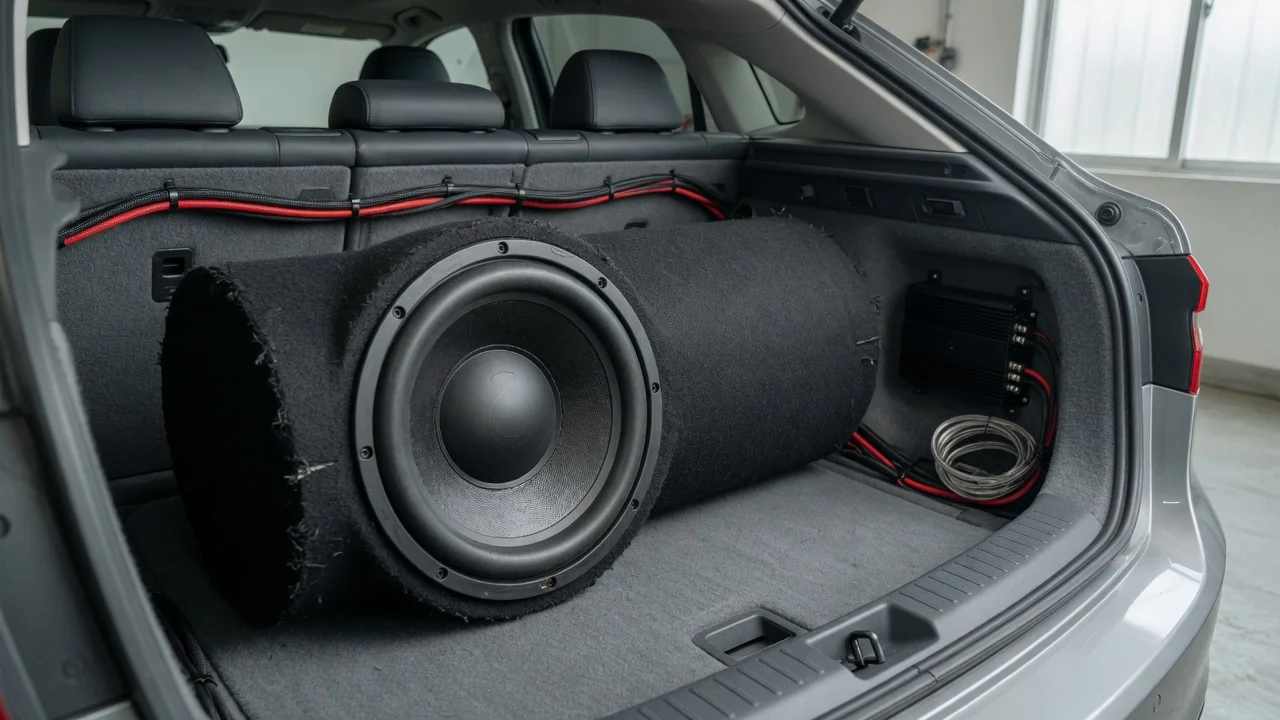
Short answer
A car tube subwoofer is a powered or passive subwoofer housed in a cylindrical enclosure. It adds low-frequency bass without taking up the floor space of a traditional box. The condition that usually matters most is installation space: a tube shape fits behind truck seats, in cargo corners, or along narrow trunk areas, but it may not fit under low seats or in shallow spare-tire wells.
What a tube subwoofer actually is
The term tube subwoofer refers to the enclosure shape, not a different type of speaker driver. The driver and amplifier function like those in a square or wedge box. The cylindrical body is usually made from rigid plastic or reinforced fiberboard. Many tube enclosures are ported, which helps produce more output from a smaller air volume. Some models include a built-in amplifier, while others require an external amplifier.
Key benefits
Shape: The round profile can be strapped against a seat back, placed in a trunk corner, or laid across a cargo floor without a tall box. Output per size: Ported tube designs often produce strong bass relative to their footprint. Portability: Many tube subs are easier to lift, move, or transfer between vehicles than a large MDF enclosure. Installation: All-in-one powered tubes reduce wiring compared with a separate amplifier and box.
Trade-offs and limitations
Fitment: Round enclosures may not sit securely on flat floors and can roll unless strapped or bracketed. Sound character: A ported tube may emphasize a narrower bass range and sound less controlled than a sealed enclosure on some music. Power limits: Compact powered tubes usually have modest amplifier power compared with separate subwoofer systems. Vehicle matching: Behind-seat fit depends on cab depth, seat angle, and whether the rear seats fold or have storage bins.
Where a tube subwoofer fits
The most common locations are behind the rear seat in regular cab pickups, in a trunk corner, or against a cargo area side wall. In a crew cab truck or SUV, a tube can sometimes sit under the rear bench if the space is tall enough, but many tubes are too large in diameter for that spot. The applicable measurement is not just overall length but the tube diameter and the space needed for the port opening to breathe.
Powered versus passive tube subwoofers
A powered tube subwoofer has its own built-in amplifier. It needs power, ground, a remote turn-on lead, and an audio signal. A passive tube subwoofer needs an external amplifier matched to its impedance and power handling. The powered version is simpler for a factory head unit installation, while a passive tube gives more flexibility if you already have an amplifier or want to choose your power level.
Compatibility points to check
Diameter and depth of the install location, especially behind a truck seat or under a bench. Whether the rear seat back is straight or contoured. Available cargo tie-down points or a suitable bracket location to keep the tube from rolling. Whether the head unit has RCA pre-outs or whether you need a high-level input or line output converter. Vehicle charging system capacity if the tube has a high-current amplifier.
Installation basics
Secure the tube so it cannot move in normal driving or a sudden stop. A rolling subwoofer can damage wiring or become a hazard. For powered models, route the power cable through a dedicated fused line from the battery and keep signal cables away from power wiring to reduce noise. Passive models need a correctly matched amplifier and a low-pass crossover set to blend the subwoofer with the cabin speakers.
Who should choose a tube subwoofer
A tube subwoofer is most appropriate when cargo or cabin space is awkward, when you want a simple all-in-one bass addition, or when easy removal matters. A traditional box enclosure may be a better choice if you want deeper extension, greater amplifier flexibility, or a shape that sits flat under a seat. The decision depends more on the vehicle layout and how much bass you want than on the tube design itself.
Evidence gaps to resolve before buying
Specific model measurements, amplifier power ratings, and exact behind-seat clearances vary by brand and vehicle. Measure the intended location in your car, confirm the mounting method, and check the subwoofer's written fitment and power requirements for your model year and trim before purchase.