Car Suspension Maintenance: Lubrication, Rust Prevention and Service
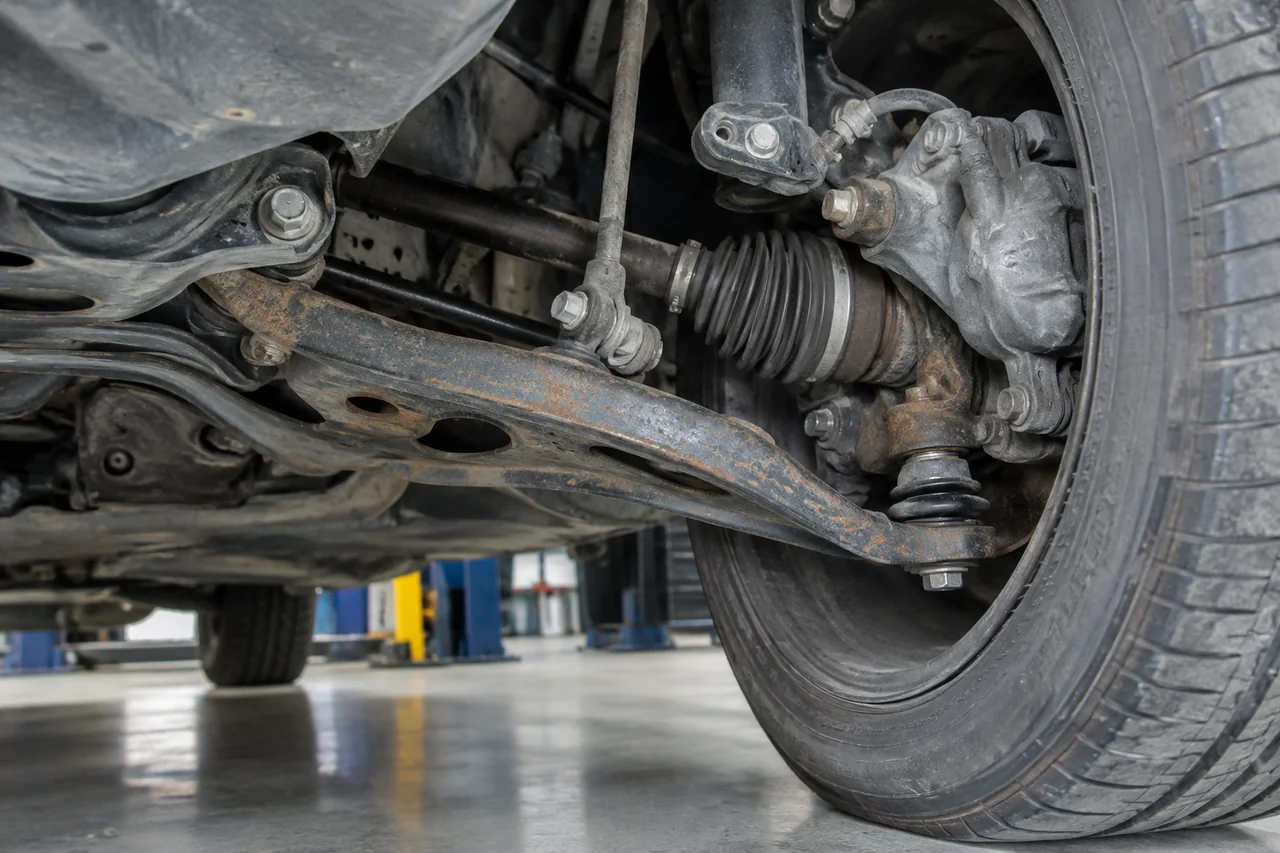
Car suspension maintenance keeps ride, handling and hardware in usable condition between inspections. A car suspension service typically starts with joints, rubber bushings, dampers and mounts rather than a fixed list of replacements. Lubrication, rust prevention and fastener checks only apply where design and condition allow them. Knowing what a visit includes helps you request the right car suspension services without assuming every joint needs grease.
What a Routine Suspension Service Includes
A routine car suspension service begins with inspection, not with a predetermined set of parts to replace. What follows depends on the vehicle's maintenance guidance, component design and present condition. A thorough suspension inspection typically looks at rubber bushings for cracking or collapse, dust boots for tears, dampers for fluid leaks, springs for breakage or sag, mounting hardware for looseness, and metal for surface corrosion. Those findings decide whether the visit stays at care or moves toward repair.
Alignment checks and component replacement are not automatically part of every car suspension maintenance visit. They follow inspection findings when geometry has shifted, a joint has play, or a bushing has failed. When you book car suspension services, ask for an itemized scope that separates inspection findings from required maintenance and recommended repairs. That split shows which work is lubrication, rust protection or fastener verification, and which work is replacement rather than scheduled care.
Which Suspension Components Need Lubrication
Car suspension lubrication is not universal. Some ball joints, tie-rod ends and other moving connections still have grease fittings that accept car suspension grease on a service interval. Sealed joints generally have no routine greasing provision and are packed at assembly. Before applying any lubricant for car suspension, check the vehicle or component instructions for lubrication locations and the approved lubricant specification. Using grease for car suspension on a sealed joint, or using the wrong product on a serviceable one, can displace a factory fill or attract grit without protecting the contact surface.
Spraying a car suspension lubricant spray onto an exterior surface does not establish that product reached the bearing or sliding face that needs lubrication. Dust boots, seals and joint housings are meant to keep contamination out and lubricant in; coating the outside may look wet while the working surfaces stay dry or already contaminated. Car suspension lubrication also cannot restore worn joints, cracked rubber bushings or torn boots. Once a boot is split, grease escapes and water and grit enter. Those parts need evaluation for repair or replacement rather than another coat of lubricant spray for car suspension.
When Silicone Spray Is Appropriate for Bushings
Silicone spray for car suspension is not automatically the right treatment for every bushing. Rubber bushings, polyurethane inserts and bonded mounts differ in material and construction, and some are intended to operate dry. Manufacturer guidance decides whether a silicone lubricant for car suspension belongs on that part at all. Confirm lubricant compatibility with both the bushing and the complete spray formulation, including propellants and carriers, rather than assuming every silicone product is suitable. A silicone lubricant spray for car suspension that swells rubber, washes away a factory coating or leaves a film on adjacent metal can create new problems.
Temporary quieting after a lubricant spray for car suspension cannot confirm the source or condition of a fault. A squeak may fade while a cracked bushing, dry sealed joint or loose mount remains unchanged. Keep any car suspension lubricant away from braking surfaces and tire tread, because a film on rotors, pads or rubber can reduce grip. If the bushing cannot be reached without raising the vehicle, removing a wheel or working in a confined area, stop and have a shop apply or withhold the product. Access and overspray control matter as much as the chemistry of the spray.
Choosing Grease for Serviceable Suspension Joints
For joints designed to be greased, the approved grease specification guides what car suspension grease to use, not a generic chassis product. That specification covers thickener, base oil and additives so the new fill does not fight remaining lubricant. Grease compatibility and the joint's lubricant history should be resolved before servicing. Mixing incompatible greases can soften a pack, cause oil bleed or leave a stiff residue that no longer protects the joint. If instructions name a particular grease for car suspension, match that callout rather than substituting by color or by whatever is already in the gun.
Damaged grease fittings, split dust boots and grease already escaping from a joint are inspection findings that need evaluation, not simply more car suspension grease. Extra product will not reseal a torn boot or repair a broken fitting, and forcing grease into a contaminated joint can worsen wear. Grease quantity and servicing method must follow component instructions so the joint is neither starved nor overpacked until the boot balloons. If a fitting is inaccessible from a safe working position, or the joint's condition is uncertain, have the work done professionally rather than guessing at a fill.
Managing Suspension Rust and Painting Suitable Parts
Car suspension rust often shows first as flaking, pitting, scale or a change in surface texture on control arms, springs, subframe areas and hardware. Cracks and distortion near rusted metal are more serious visual clues. Appearance alone cannot establish remaining strength, because surface corrosion may be shallow while a pitted section has already lost load-carrying metal. Follow vehicle guidance when cleaning away road grime and salt, then allow surfaces to dry and inspect existing protective coatings for chips, blisters or bare steel. Fresh dirt and moisture hide damage and also prevent any later coating from bonding.
Substantial corrosion needs assessment before painting car suspension parts. Paint and other protective coatings cannot restore lost metal or make a weakened arm, spring or mount safe. Coating work depends on component and finish guidance, and moving interfaces, seals, damper rods, threads, identification marks and braking surfaces must be kept free of paint. Overspray on a damper rod can damage a seal; paint on threads can hide fastener torque problems. Work that needs component removal, rust removal on suspect structural parts, or access beneath the vehicle belongs at a qualified shop, not in a driveway with limited lift and lighting.
Checking Loose Hardware and Knowing When to Seek Service
Routine suspension care does not mean indiscriminately tightening bolts. How to tighten suspension on a car is application specific: fastener torque, whether hardware is one-time-use, and the position of the arm or knuckle during tightening all matter. A bolt snugged in the wrong ride-height position can bind a bushing. Tightening fasteners also cannot correct worn rubber bushings or joints, and it is not a general way to make the suspension feel firmer. If a nut keeps turning, a thread is damaged, or a lock feature is missing, the hardware itself needs evaluation rather than more effort on the wrench.
From outside the vehicle, new clunks, a change in ride height, uneven tire wear or handling that feels unstable are reasons to schedule a professional check rather than to crawl underneath or load suspension parts yourself. Suspected loose mounts or joint play need a shop inspection with the vehicle properly supported. Stop driving when handling becomes unsafe or a component appears displaced, because a separated control arm or dangling damper is not a roadside adjustment. Fastener issues found during car suspension maintenance belong in the same itemized report as lubrication and rust findings so the repair sequence is clear.