Serpentine Belt Noise: Causes, Diagnosis, and Next Steps
Direct Answer
Serpentine belt noise is usually a high-pitched chirp, squeal, or rhythmic chirping that changes with engine speed. The most common causes are a worn, glazed, cracked, or contaminated belt; incorrect belt tension; misaligned or failing pulleys; or a seized accessory driven by the belt, such as the alternator, power steering pump, or air conditioning compressor. The exact fix depends on whether the noise appears only when the engine is cold or wet, under electrical load, or constantly while running.
What the Noise Can Sound Like
A serpentine belt does not always fail with one single sound. A sharp high-frequency squeal on startup or after driving through water often points to a slipping belt. A repeating chirp that follows engine rpm can indicate a single damaged rib on the belt or a pulley with a worn bearing. A louder squeal that worsens when the steering wheel is turned to full lock may come from a slipping power steering pump pulley. A metallic scraping or grinding sound is less characteristic of a belt problem and more likely a failing pulley bearing or accessory.
Common Causes by Condition
Worn or glazed belt: A belt with a hardened, shiny, or cracked ribbed surface loses grip and slips on the pulleys, producing a squeal. Wet or damp conditions: Moisture on the belt or pulleys temporarily reduces friction, causing a short squeal that fades as the belt dries. Incorrect tension: On vehicles with an automatic tensioner, a weak tensioner spring can allow slack. On older designs with manual adjustment, a loose belt slips more easily. Contamination: Oil, coolant, power steering fluid, or belt dressing on the belt can cause slippage and uneven wear. Misaligned pulley: A pulley that is not square to the belt path can create a chirp or squeak and wear the belt edge. Failing pulley bearing: An idler pulley, tensioner pulley, or accessory pulley with a dry or failing bearing can chirp, squeak, or rumble. Seized or binding accessory: If the alternator, air conditioning compressor, or another driven component begins to bind, the belt can slip over that pulley and squeal, especially under load.
Diagnostic Checks Without Special Tools
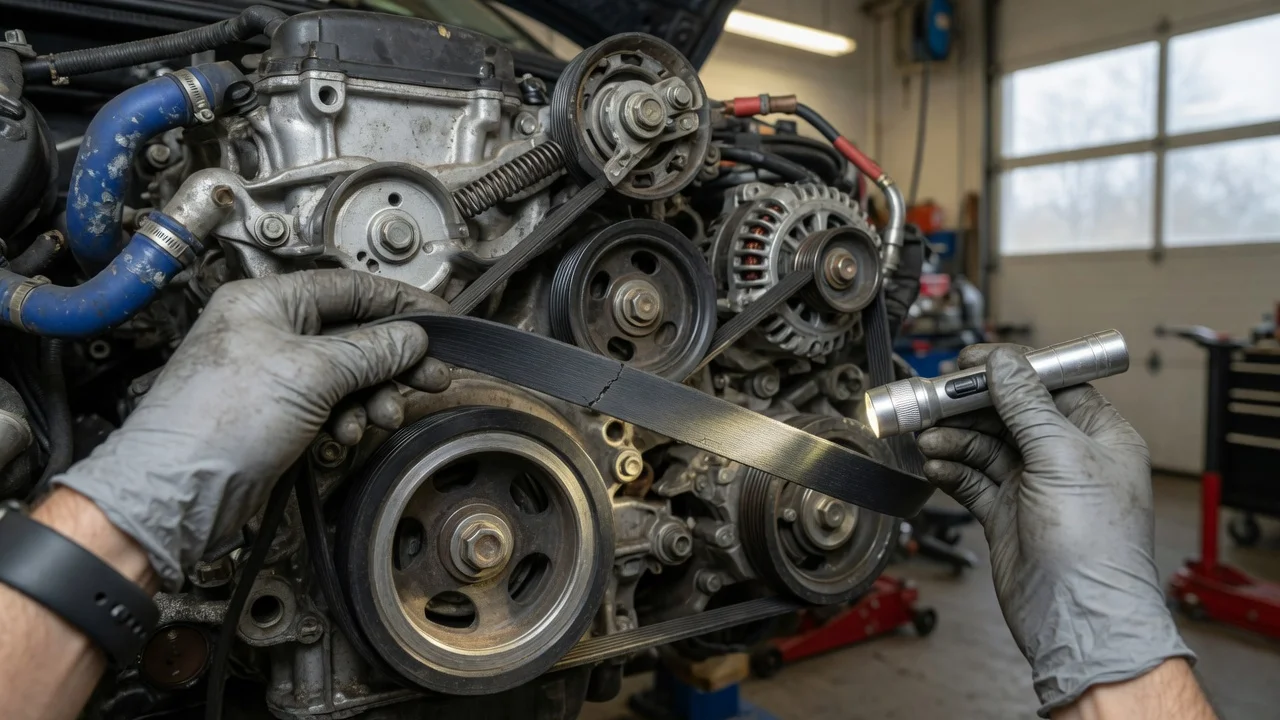
With the engine off and the key removed, look at the belt's ribbed side for cracks, missing chunks, glazing, or frayed edges. The belt should sit evenly in every grooved pulley. Check for oil or coolant residue on the belt and around the front of the engine. By hand, press on the longest span of the belt between pulleys. A span that deflects more than about half an inch on a manually tensioned system may be loose, but an automatic tensioner should keep the belt taut and resist movement. The tensioner arm should not bounce or feel weak.
With the engine running, listen from the wheel arch or engine bay while keeping hands and clothing away from moving parts. If the sound is a steady squeal, note whether it appears only for the first few seconds after a cold start or persists. If turning the steering wheel or switching on the headlights, rear defroster, or air conditioning changes the noise, the load is affecting belt grip or an accessory pulley.
Model-Specific Qualifications
Serpentine belt systems vary by vehicle generation and engine. Some use a single automatic tensioner, while some older or heavy-duty engines use a manual tensioner or a stretch-fit belt with no tensioner. Certain diesel and performance engines may route the belt around additional accessories or use two separate belts. Because the exact tension spec, belt length, and pulley layout depend on the model year, powertrain, and market, a noise diagnosis should be checked against the routing diagram and tension specification for the specific vehicle rather than a generic replacement interval.
Likely Repairs and Limitations
If the belt is visibly cracked, glazed, contaminated, or worn beyond its specified interval, replacement is the standard repair. If the noise persists after a new belt, the tensioner, idler pulleys, and accessory pulley alignment should be inspected. A noisy pulley bearing typically requires replacement of that pulley rather than lubrication. If a driven accessory is binding or seizing, replacing the belt alone will not stop the noise for long. Without measuring belt wear with a gauge or checking drive alignment with a laser tool, some internal tensioner wear may not be visible from outside.
When to Act
A brief startup squeal that disappears can be monitored, but a constant chirp or squeal suggests reduced grip or a failing bearing. Because the serpentine belt often drives the water pump, alternator, and power steering pump, a sudden belt break can cause immediate loss of charging, power steering assistance, and engine cooling. If the noise is loud, constant, or accompanied by a battery warning light, overheating, heavy steering, or a burning rubber smell, stop driving until the drive system can be inspected.