Car Radio Turns On but Has No Sound: Causes and Safe Checks
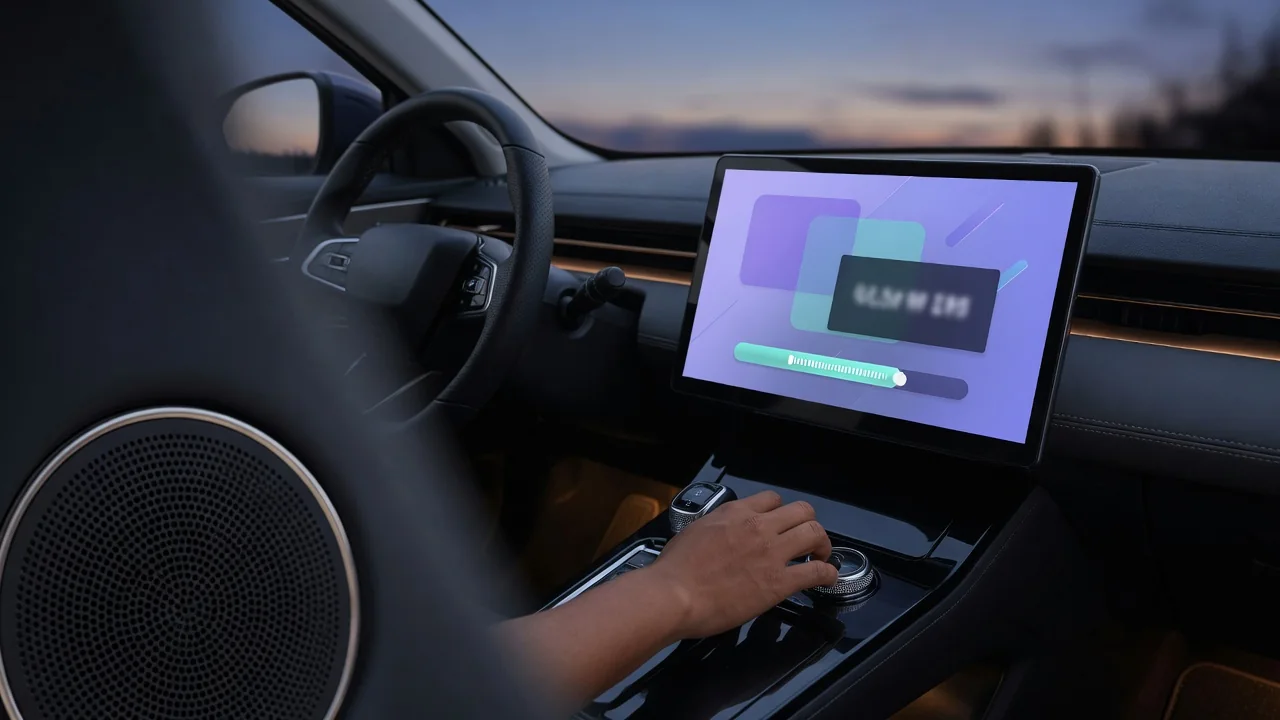
When car radio speakers are not working even though the display lights up and the buttons respond, the cause can be as simple as a muted setting or as involved as a failed amplifier. This guide explains what the symptom actually tells you, which checks are safe to make at home, and when the problem belongs with a professional.
What It Means When the Radio Powers On but the Speakers Stay Silent
A lit display and responsive buttons confirm that the head unit is receiving power, and very little else. The screen, tuner, and controls can all behave normally while the audio signal is lost somewhere downstream. Sound has to leave the head unit, often pass through a car amplifier, travel along the speaker wiring, and finally move a speaker cone. A break at any of those stages produces silence, and the display gives no hint about which stage is responsible.
The kind of silence matters. No sound from any speaker suggests something they all share, such as a setting, a software fault, the head unit's audio output, or an amplifier. Sound from only some speakers points toward individual channels, wires, or the speakers themselves. Crackling or distortion usually suggests a poor connection or a damaged speaker instead of a complete loss of signal. Even so, no single symptom identifies one cause by itself, so working through the possibilities step by step is the only reliable approach.
Settings and Source Checks to Rule Out First
Begin with the volume and the mute setting, including the steering wheel controls, which are easy to press by accident. Then confirm the selected source, whether that is FM, AM, Bluetooth, USB, or aux. A radio left on an aux input with nothing plugged in looks normal and plays nothing. Trying more than one source is useful evidence: if FM plays but Bluetooth audio does not, the speakers and amplifier are working and the fault lies with that source or device.
Next, review the fader and balance. If these have been moved fully to one corner, all audio may be going to speakers that are missing or not working. A connected phone can also take over the sound, holding it during a call or voice assistant session, routing it to the handset, or playing with its own media volume turned down. Watch the screen for any audio or amplifier warning messages, and check the owner's manual for audio menu options you may not know about.
Software Glitches, Resets, and Anti-Theft Modes
A modern infotainment system is a computer, and its audio function can freeze while the screen, navigation, and menus carry on normally. This kind of glitch often appears suddenly, affects every source at once, and leaves no visible warning. A full ignition-off cycle, giving the system time to shut down completely before restarting, may clear it. Many vehicles also have a restart procedure for the system, and the owner's manual is the right place to find it.
Some radios enter a locked or code-required state after the battery has been disconnected or has gone flat. Depending on the manufacturer, the unit may show a message, ask for a radio anti-theft code, or simply refuse to operate normally, and the recovery steps differ from one brand to another. Guessing at codes or reset sequences can make matters worse on some units. The owner's manual or a dealer can confirm the correct reset steps and whether a software update is available.
Fuses, Amplifiers, and Factory Premium Audio Systems
Many vehicles with a premium audio system use a separate amplifier mounted away from the dashboard, with its own power feed and often its own fuse. In that arrangement the head unit only supplies a low-level signal, and the amplifier does the work of driving the speakers. If the amplifier loses power or fails internally, the head unit keeps working exactly as before, with stations tuning and tracks displaying, while every speaker in the car stays silent.
The fuse chart in the owner's manual shows which fuses serve the radio, the amplifier, and related circuits, and there may be more than one audio fuse in more than one fuse box. A blown fuse should only be swapped for one of exactly the same rating, never a higher one, because the rating protects the wiring. If the new fuse blows again, the circuit has a fault that needs professional diagnosis, and repeated replacement only adds risk.
Wiring and Speaker Faults Behind Partial or Intermittent Sound
Sound that cuts in and out over bumps, or changes when a door is opened or closed, often points to a loose connector or a damaged wire. The door speaker harness is a common suspect because it flexes every time the door moves, and wires in the hinge area can fatigue over the years. When some speakers play and others do not, the shared parts of the system are probably working, which narrows the problem to certain channels, wires, or speakers.
A blown speaker may buzz, rattle, sound thin, or stay completely silent. The fader and balance controls make a handy diagnostic tool here: moving the sound to each corner of the cabin in turn shows which speaker is misbehaving without removing anything. Recent history is also worth recalling. An aftermarket stereo or alarm installation, body or door repairs, or water getting into a door or the trunk can all disturb speaker wiring, and a technician will want to hear about them.
Safety Limits for DIY Car Audio Troubleshooting
Dashboards, pillars, and door panels on many vehicles hide airbags and their wiring, and trim in those areas should not be removed without the proper procedures. An airbag system that is handled incorrectly can be dangerous. Wiring deserves the same caution. Splicing, bypassing, or probing circuits without the vehicle-specific wiring diagrams and the knowledge to use them can damage the head unit, the amplifier, or other electronic modules that share the same network.
Disconnecting the battery is sometimes suggested as a universal reset, but on some vehicles it can trigger a radio code request, erase stored settings, or affect other modules. If the owner's manual does not describe it as a step for your vehicle, it is better left alone. Sensible at-home troubleshooting stays within settings, documented restarts, a visual look at accessible connections and speakers, and a fuse inspection using the fuse chart.
When to Get Professional Audio or Electrical Testing
Some signs mean the car should go to a shop without further home attempts. These include a fuse that keeps blowing, a burning smell from the dash or the amplifier area, no sound on any source after settings and resets have been ruled out, and other electrical problems appearing at the same time. Technicians can test the amplifier, the speaker circuits, and the head unit output with proper equipment and the vehicle's wiring information, which replaces guesswork with measurement.
A few notes made before the visit can shorten the diagnosis. Write down which sources fail, which speakers are affected, when the problem began, whether it comes and goes, and any recent work or battery trouble. It is also reasonable to ask a dealer whether any software updates or service bulletins apply to the audio system on your vehicle. There may not be any, but a known fix, where one exists, can save considerable diagnostic time.