Car Radiator Replacement Cost: Parts and Labor
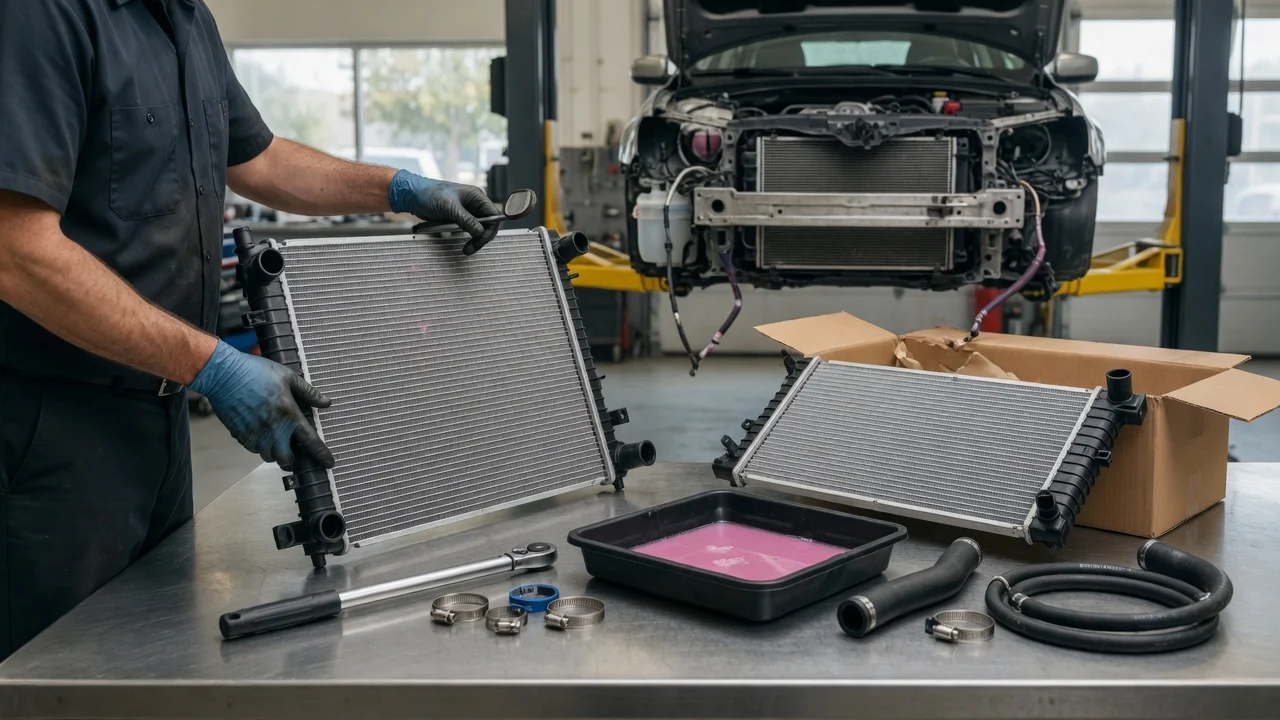
What a car radiator replacement should cost
For most common passenger vehicles, a car radiator replacement can run from roughly $400 to $1,300 or more when parts and labor are combined. The radiator itself may account for about $150 to $500, while labor commonly adds another $200 to $800. The range is wide because the radiator design, engine configuration, cooling system layout, and local shop rate all affect the final bill. A vehicle that requires radiator removal from a crowded engine bay will usually cost more in labor than one with easy access.
This is a broad estimate, not a quoted price. The final quote for a specific vehicle can move higher because of additional cooling system parts, diagnostic time, or coolant disposal and refill requirements.
Parts cost: the radiator itself
The radiator is the heat exchanger that removes excess engine heat by passing hot coolant through thin tubes while outside air moves across the cooling fins. Replacement radiators are sold as new units, remanufactured units, or aftermarket equivalents. Factory-style replacement parts generally cost more than economy aftermarket radiators, while heavy-duty or performance units can raise the parts total further.
The radiator price is not the only parts cost. A complete replacement often includes a new radiator cap, coolant, and possibly replacement hoses or hose clamps. If the radiator has an integrated transmission cooler or engine oil cooler, the replacement part and fittings can also cost more.
Labor cost: how the radiator is replaced
Labor typically covers draining the cooling system, disconnecting the radiator hoses and any transmission cooler lines, removing the cooling fan assembly and mounting brackets, lifting out the old radiator, installing the new unit, reconnecting the lines, refilling the system, and bleeding trapped air. Shops may also pressure-test the cooling system after the repair.
Some vehicles allow the radiator to come out through the top after only basic component removal. Others require moving the condenser, air intake pieces, or front bumper structure, which increases the labor time. The engine bay layout matters more than the radiator price itself in many estimates.
Factors that change the price
Vehicle application: model year, engine, transmission, and trim can change the radiator size and available replacement parts. Integrated coolers: radiators with built-in transmission or oil coolers typically carry a higher part price. Additional failed parts: damaged hoses, a cracked expansion tank, or a failing thermostat may be recommended during replacement. Coolant type: some vehicles require a specific coolant formulation, which affects the fluid cost. Shop rate and location: labor rates differ by region and repair facility. Warranty coverage: a longer parts warranty may come with a more expensive radiator.
When radiator replacement is needed
A radiator may need replacement when it is leaking coolant, has a damaged tank or neck, shows severe internal blockage, or has fin and tube damage that cannot be repaired reliably. Signs include a falling coolant level without an obvious external leak, coolant odor, visible staining near the radiator, or repeated engine temperature warnings.
A leak may sometimes be repairable, depending on its location and the radiator construction. A crack in a plastic tank is generally not a dependable long-term repair candidate, while a small leak in an accessible metal area may be assessed differently. Replacement is the common route when the core is compromised or the unit is heavily corroded.
What should be checked before you agree to the work
Whether the quote includes coolant, radiator cap, hoses, and disposal fees. Whether the replacement radiator is new, remanufactured, or aftermarket and what warranty it carries. Whether the shop found damage to the condenser, cooling fan, or radiator support that would be handled separately. Whether the estimate includes pressure testing and bleeding the cooling system after installation.
Owning the repair decision
For a driver deciding between replace, repair, or delaying service, the radiator replacement cost is best compared against the risk of engine overheating. A failed radiator can turn a controlled parts bill into severe engine damage, so the full ownership trade-off includes both the repair estimate and the cost of continued driving with a compromised cooling system.