Car Radiator Replacement Cost: Parts and Labor
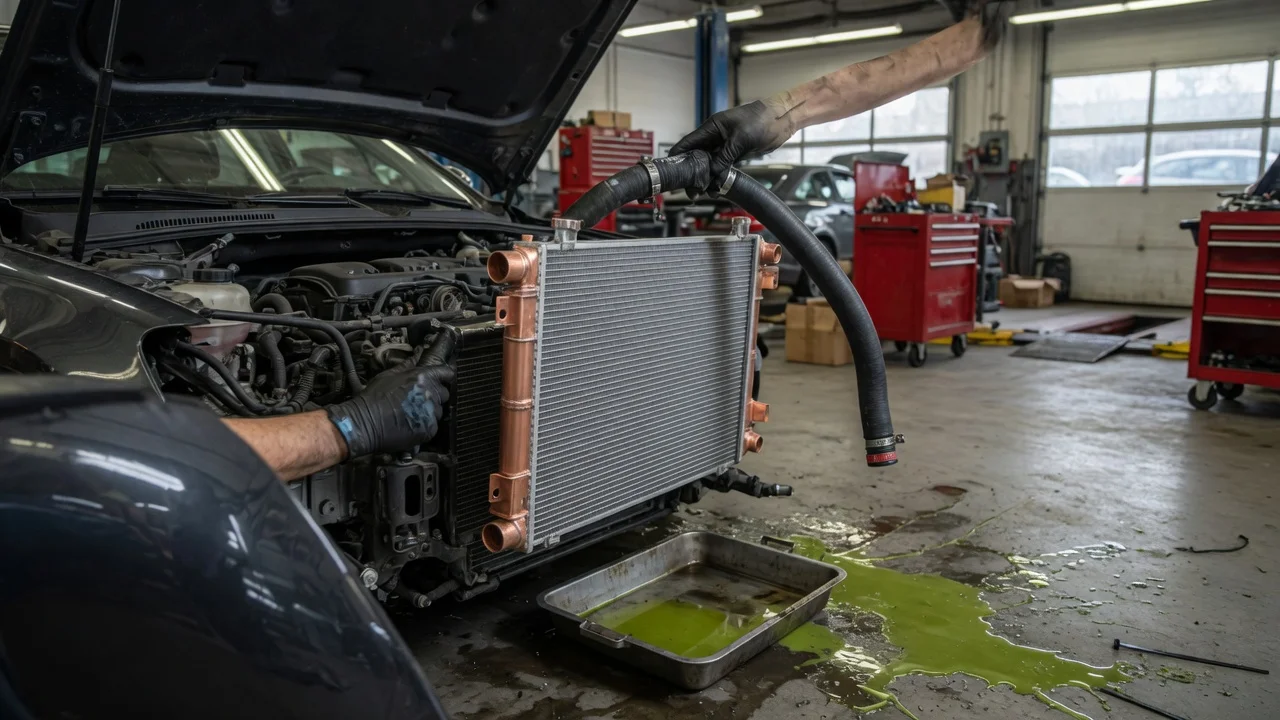
What a car radiator replacement may cost
A car radiator replacement is usually priced as two separate amounts: the radiator assembly and related parts, plus the shop labor to drain the cooling system, remove the old unit, install the new one, refill the system, and bleed trapped air. The total depends most on the vehicle, the radiator type, whether other cooling system parts are replaced at the same time, and local labor rates.
This article gives a practical framework for estimating the job and comparing quotes. Because no supplied price data is available for this specific article, avoid treating any figure here as a firm nationwide quote. The strongest way to get an accurate number is to request an itemized estimate for your exact year, make, model, engine, and transmission.
Why the vehicle changes the estimate
The radiator is a heat exchanger mounted near the front of the vehicle. Coolant flows through a network of small tubes while outside air passes across the fins, removing heat from the engine. A replacement must match the available space, inlet and outlet positions, transmission cooler fittings if equipped, and the mounting points of the original design.
On some vehicles, removal is straightforward. On others, the bumper cover, fan assembly, air intake ducts, charge air cooler, or other components must first be moved out of the way. That additional access work is often the main reason labor estimates differ between vehicles even when the radiator itself looks similar.
Parts that affect the final cost
The radiator itself is only one part of the estimate. Replacing it disturbs coolant, seals, and often the hoses at their connection points. A shop may recommend, or the job may require, some of the following:
Radiator assembly, which may include the core, tanks, and sometimes an integrated transmission cooler; Coolant or antifreeze matched to the vehicle specification; Upper and lower radiator hoses if they are swollen, cracked, or difficult to remove cleanly; A new radiator cap if the old one no longer holds the correct system pressure; Hose clamps or O-ring seals for connections that are disturbed; Transmission fluid if an integrated transmission cooler line is opened
Some replacement radiators are sold with a warranty that also requires new coolant and sometimes specific installation steps. Confirm whether the quoted warranty covers parts only, labor, or both, because that can change whether a higher part price is worthwhile.
What is typically included in labor
A complete radiator replacement is more than unbolting one component. A careful shop commonly includes the following steps in its labor estimate:
Allow the engine and coolant to cool enough to work safely; Disconnect the battery if recommended by the vehicle service procedure; Drain the cooling system into an appropriate container; Remove obstructing components needed for access; Disconnect hoses, fan wiring, and transmission cooler lines where present; Remove the old radiator and transfer any reusable brackets or mounts; Install the new radiator and reconnect all lines and hoses; Refill with the specified coolant mixture; Run the engine and bleed trapped air from the system; Check for leaks and confirm the cooling fan operates correctly
Trapped air can cause erratic temperature readings and poor heater output, so the final bleeding and leak check are important parts of a complete job, not optional extras.
When the radiator should be replaced rather than repaired
Minor seepage at a hose connection may be fixed by replacing a hose or clamp. A cracked plastic tank, a damaged core, or corrosion that has opened a leak inside the fin area usually points toward replacement. Plastic-tank radiators can also fail where the tank is crimped to the aluminum core after years of heat cycling.
If the radiator has failed because of overheating, debris damage, or neglected coolant, replacing it without correcting the underlying cause can lead to another failure. A shop should note whether the coolant condition, thermostat, fan operation, or system pressure suggests an additional problem.
How to compare quotes
Ask each shop for the parts separate from labor, with the brand or source of the radiator and the coolant specification. That makes it easier to see whether a lower quote simply uses a different part quality or omits coolant, hoses, or the final bleed procedure.
Useful details to confirm before approving work are: whether the estimate includes disposal of the old coolant, whether the thermostat or radiator cap is also recommended, whether the replacement carries a parts and labor warranty, and how the shop will confirm that the system is free of air after refilling.
Bottom line
The complete radiator replacement total is best estimated from an itemized quote for the exact vehicle and cooling system configuration. The radiator assembly, coolant, hoses or seals, access labor, and final bleeding all contribute to the price. Comparing estimates on parts and labor separately is the most practical way to judge whether a quote is reasonable without relying on a generic national average.