Car Radiator Coolant: What It Is and How It Prevents Overheating
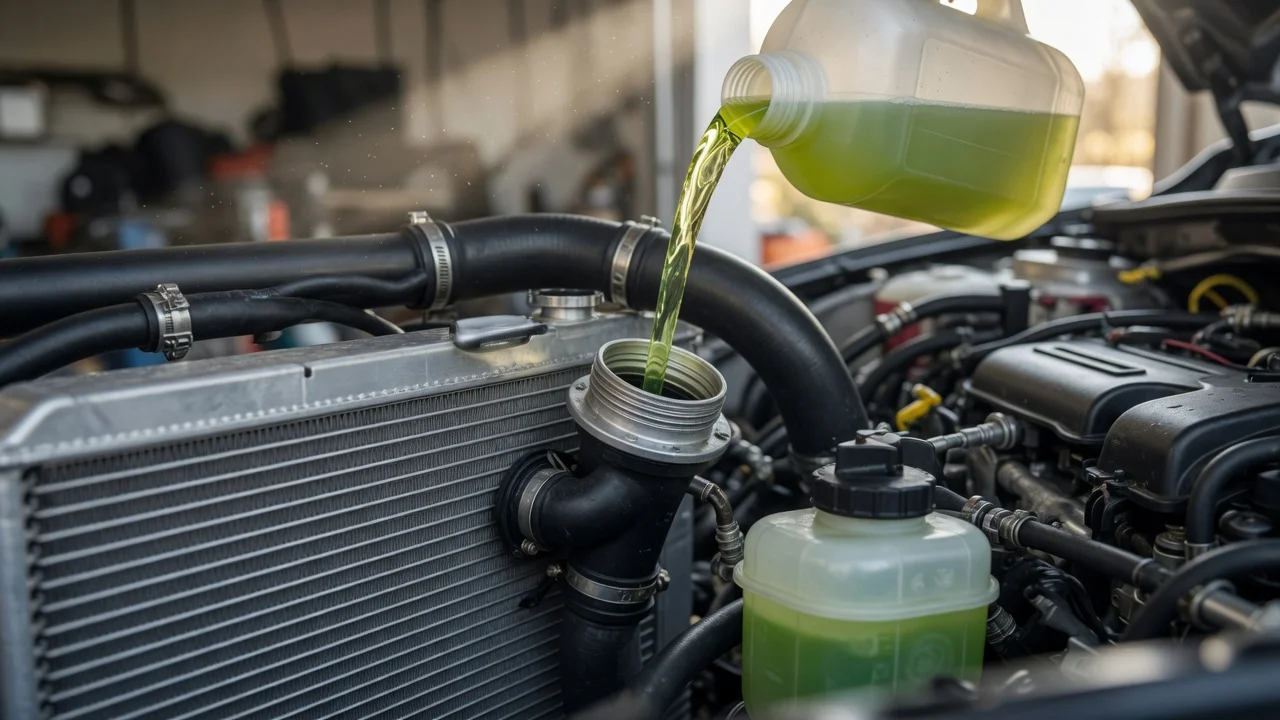
What is car radiator coolant
Car radiator coolant is the heat-transfer fluid that circulates through the engine and radiator, moving excess combustion heat away from the engine and releasing it to the outside air. The term is commonly used for the liquid mixture in the cooling system, although the exact service name can vary by automaker. Some vehicle information refers to the same fluid as engine coolant or antifreeze. The radiator is only one part of the system; the coolant also travels through coolant passages in the engine block and cylinder head, hoses, a thermostat, a water pump, and on many vehicles a heater core.
What the fluid actually is
In most modern vehicles the coolant is not plain water. It is a mixture of water and a glycol-based concentrate, often ethylene glycol or propylene glycol, combined with a corrosion-inhibitor package. The concentrate lowers the freezing point and raises the boiling point of the mixture. Keeping the correct water-to-concentrate ratio matters because the ratio affects both freeze protection and heat transfer. A mixture that is too concentrate-heavy can carry heat less effectively, while too much water can reduce boiling and corrosion protection.
Why a hot engine needs the fluid moving
The water pump pushes coolant through the engine. The hot coolant then reaches the thermostat. Once the fluid reaches the thermostat's opening temperature, the thermostat opens and allows coolant to flow to the radiator. Air passing through the radiator fins removes heat, and the cooled fluid returns to the engine. The radiator cap helps maintain system pressure, which raises the boiling point and reduces the chance of boiling during heavy load or hot-weather driving.
Coolant for an overheating car
If the temperature gauge is climbing or an overheating warning appears, the first safe action is to stop the vehicle, turn off the engine, and let it cool. The immediate response is not simply to add coolant while the system is hot. Opening a hot radiator cap or pressurized reservoir can release scalding fluid and steam. The priority is heat reduction and a controlled inspection once the engine is cool enough to touch safely.
First checks when the engine is cool
Check the coolant level in the reservoir or expansion tank against the marks on the tank, when the vehicle is parked on level ground. Inspect for visible leaks under the vehicle or around hoses, the radiator, the water pump area, and the radiator cap. Look for coolant staining, crusty residue, or a sweet odor, which can indicate a leak. Do not open the cooling system unless the engine and radiator cap are cool.
When topping up may be appropriate
If the level is below the minimum mark and no severe leak is immediately evident, a small top-up may allow continued cautious driving to a repair facility. The replacement fluid must match the type specified for the vehicle. Coolant specifications vary by make, model, engine, and sometimes model year. The owner's manual or the service information for the specific vehicle is the authoritative source for the correct coolant chemistry, color, and mixture ratio. Color is not a safe universal guide because different chemical types can share a color, and mixing incompatible coolant types can reduce corrosion protection or form deposits.
Critical rule for a hot cooling system
Never open a hot radiator or pressurized reservoir. Wait for the system to cool before checking the level or adding fluid. If coolant is boiling, steam is escaping, or the warning light remains active, continuing to drive can cause major engine damage such as a failed head gasket or a warped cylinder head. A vehicle that keeps overheating after a top-up or while driving needs diagnosis rather than repeated refills.
Signs the overheating has another cause
The coolant level is within the normal range, but the engine still heats beyond normal. The cooling fan does not operate when needed. The thermostat is stuck closed. The water pump or its drive belt has failed. The radiator is clogged internally or blocked externally by debris. Coolant is mixing with engine oil or transmission fluid, or white exhaust vapor suggests internal leakage.
Will adding coolant fix the problem
Adding coolant may restore a low fluid level, but it does not fix the cause of the loss. A cooling system should remain reasonably stable between service intervals. A vehicle that needs frequent top-ups has a leak or another fault that must be found. Repairing the source of the loss is more important than repeatedly restoring the level.
Why the correct fluid matters
Using the wrong coolant can damage seals, accelerate corrosion, or reduce the system's ability to manage temperature. Always use the type specified for the vehicle and configuration. If the exact specification cannot be confirmed from the owner's manual or reliable service information for that vehicle, this should be treated as a material gap rather than resolved by guessing from appearance or aftermarket labeling.
Before returning to the road
After any overheating event, have the system inspected if the cause is not clear. Confirm the correct coolant level, the absence of leaks, the operation of the cooling fan, and the condition of the pressure cap. Even if the level is restored, a repeat overheating event during normal driving means the vehicle should be stopped again and the cooling system diagnosed before further use.