Car radiator coolant
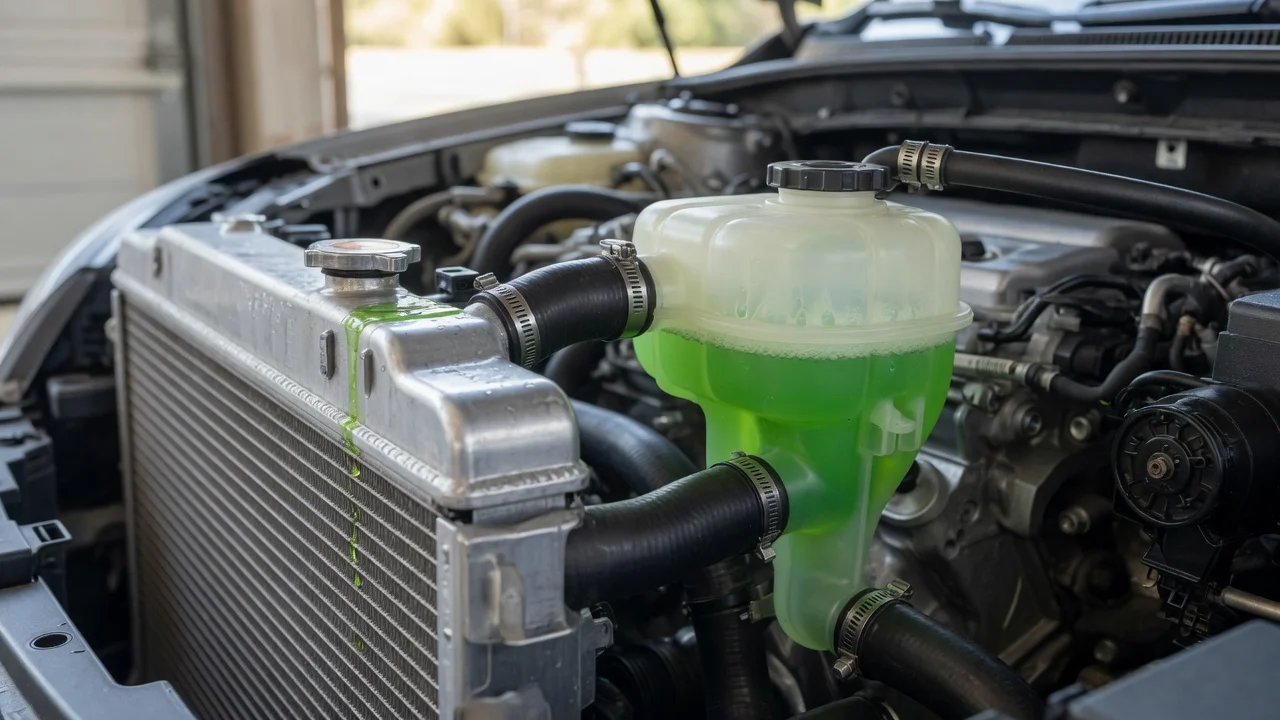
What radiator coolant is
Car radiator coolant is the liquid that circulates through the engine and radiator to carry heat away from the engine. It is also called engine coolant or antifreeze mixture. In most modern vehicles it is a blend of concentrated antifreeze and water, plus corrosion inhibitors, rather than plain water alone.
The name “radiator coolant” is slightly broader than the radiator itself. The liquid fills the cooling system: engine water jackets, radiator, hoses, heater core, and often a separate overflow or expansion tank. The radiator is the heat exchanger that dumps that heat into the air; the coolant is the fluid that moves the heat there.
What it does in the cooling system
The water pump pushes coolant through passages around the cylinders and cylinder head. Heat from combustion transfers into the liquid. Hot coolant then flows to the radiator, where airflow across the fins cools it before it returns to the engine. A thermostat meters that flow so the engine can reach a stable operating temperature and stay there.
Raises the boiling point of the mixture compared with water alone, which helps the system stay liquid under pressure. Lowers the freezing point so the coolant is less likely to freeze and expand in cold weather. Carries corrosion inhibitors that protect aluminum, iron, solder, and other metals in the cooling circuit. Supplies the heater core, so cabin heat depends on the same fluid.
A pressurized cap on the radiator or expansion tank raises the boiling point further. Exact boil and freeze protection depend on the mix ratio, the coolant chemistry, and the cap rating for that vehicle. Those figures are vehicle- and product-specific and are not universal.
Types and compatibility
Coolants are sold as concentrate (meant to be mixed with water) or as a premixed ready-to-use fluid. Color is a weak identifier. Different formulas can share a color, and the same chemistry can be dyed differently by brand or market. Matching the specification in the owner’s manual or under-hood label matters more than matching the color in the tank.
Common chemistry families include inorganic additive technology (IAT), organic acid technology (OAT), hybrid organic acid technology (HOAT), and later phosphate- or silicate-modified variants. Mixing incompatible types can reduce corrosion protection or form sludge. The correct type, mix ratio, and service interval depend on the vehicle’s model year, engine, and market specification. If that information is missing, treat the fill as unknown until it is identified from the vehicle documents or a known-good service record.
Coolant and an overheating car
Low, old, or wrong coolant is one common reason an engine runs hot, but it is not the only reason. Overheating means the cooling system cannot reject heat as fast as the engine produces it. Coolant problems sit alongside other faults in that chain.
Level too low: air in the system, a leak from a hose, radiator, water pump, heater core, or head gasket, or loss from a failed cap. Wrong or degraded mix: reduced boil protection, poor heat transfer, or inhibitor breakdown. Flow or heat-rejection faults that are not the fluid itself: stuck thermostat, failed water pump, clogged radiator, inoperative cooling fan, collapsed hose, or a blown head gasket.
If the temperature warning is on or the gauge is in the hot range, stop driving when it is safe to do so. Opening a hot radiator or expansion-tank cap can release scalding steam and liquid. Check the level only after the engine has cooled, using the markings on a translucent tank when the vehicle has one. Adding water can be a short-term emergency measure on some engines, but it dilutes freeze and corrosion protection and does not fix a leak, a failed thermostat, or a fan that is not running. The lasting fix is the coolant type and mix the vehicle specifies, plus repair of whatever caused the loss or the heat.
What you can check without guessing specs
You can confirm that the reservoir or radiator is between the cold-level marks when the engine is cold, that the fluid looks relatively clear rather than rusty, milky, or full of oil, and that hoses and the radiator are not obviously leaking. Milky coolant or persistent white exhaust can point to oil or combustion gases in the cooling system; those need diagnosis rather than a simple top-up. Freeze protection, boil point, and remaining inhibitor life require a tester or a shop analysis; those numbers cannot be read from color or smell alone.
When topping up or replacing coolant, use the specification named for that vehicle. If the current fluid is unknown, a complete drain, flush, and refill with the specified type is the cautious path. Do not assume a “universal” bottle matches every engine, and do not treat radiator coolant as interchangeable with brake fluid, power-steering fluid, or windshield washer fluid.