Car Overheating and Leaking Coolant: How to Find the Leak
Before you start
Coolant, also known as antifreeze, circulates through the engine and radiator to control temperature. If the level drops too low, the engine can overheat. Finding a coolant leak is a local inspection process you can do yourself with basic tools. No internet service or external tool is required.
Step-by-step instructions
Wait until the engine is completely cool before opening the hood. A hot cooling system is under pressure and can spray hot coolant. Check the coolant reservoir level first. If the reservoir is empty, the leak may be significant and the system should not be driven until repaired.
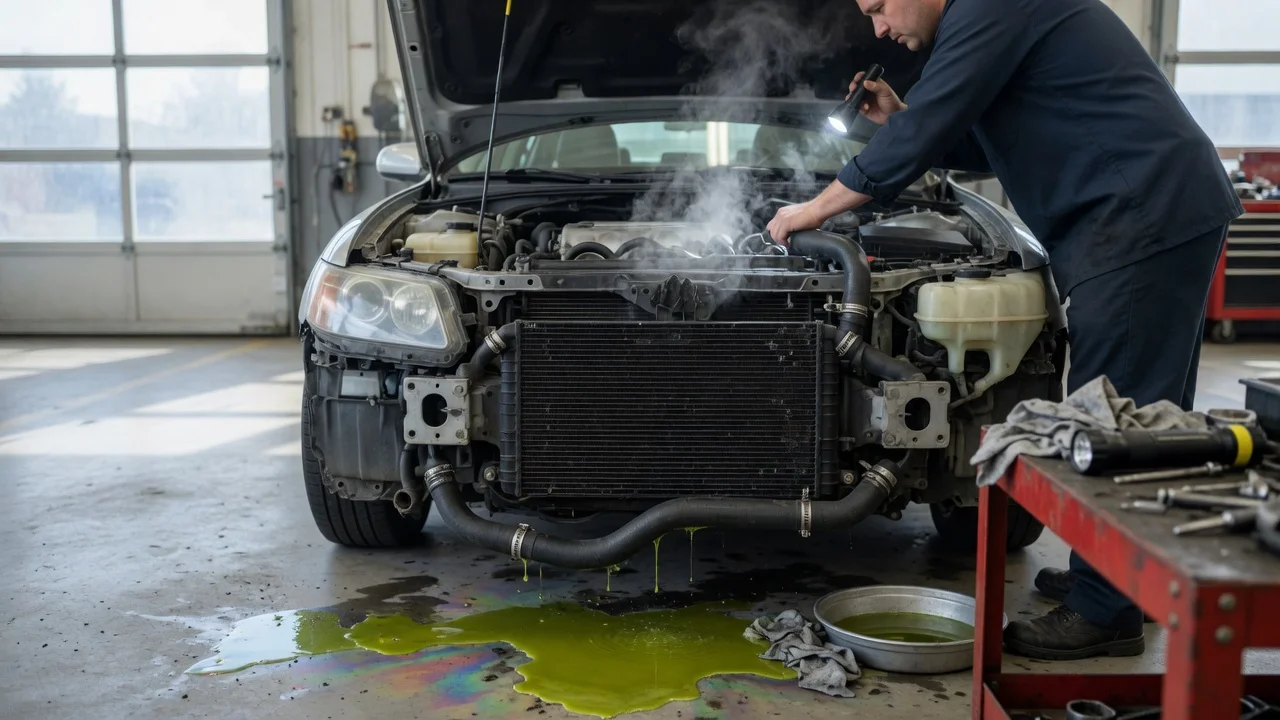
Inspect the ground under the car for puddles. Coolant is often bright green, orange, yellow, pink, or blue. It can feel slightly slippery and may have a sweet odor. A puddle near the front of the engine bay may point to the radiator, hoses, or water pump.
Look for dried residue on engine parts. Leaking coolant often leaves a crusty or chalky stain around hose connections, the radiator, the thermostat housing, and the water pump. Follow any visible trail upward to find the highest wet or stained point; that is often close to the source.
Check the output
After inspecting, note whether you found an obvious puddle, a wet area, or dried residue. A coolant level that is slightly low with no external sign is not proof of a fixed location. Internal leaks, such as those through a head gasket, may not leave a visible external trail.
Common problems and next steps
A small leak may appear only when the engine is hot and the cooling system is under pressure. If no leak is visible when cold, have the system pressure-tested by a professional. Do not add plain water as a long-term substitute for coolant.
If the coolant is leaking into the engine oil, the oil may look milky or foamy on the dipstick. This condition requires immediate professional diagnosis and should not be ignored, because continued operation can cause major engine damage.