Car Maintenance Schedule by Mileage: 30,000 Miles to Beyond 100,000
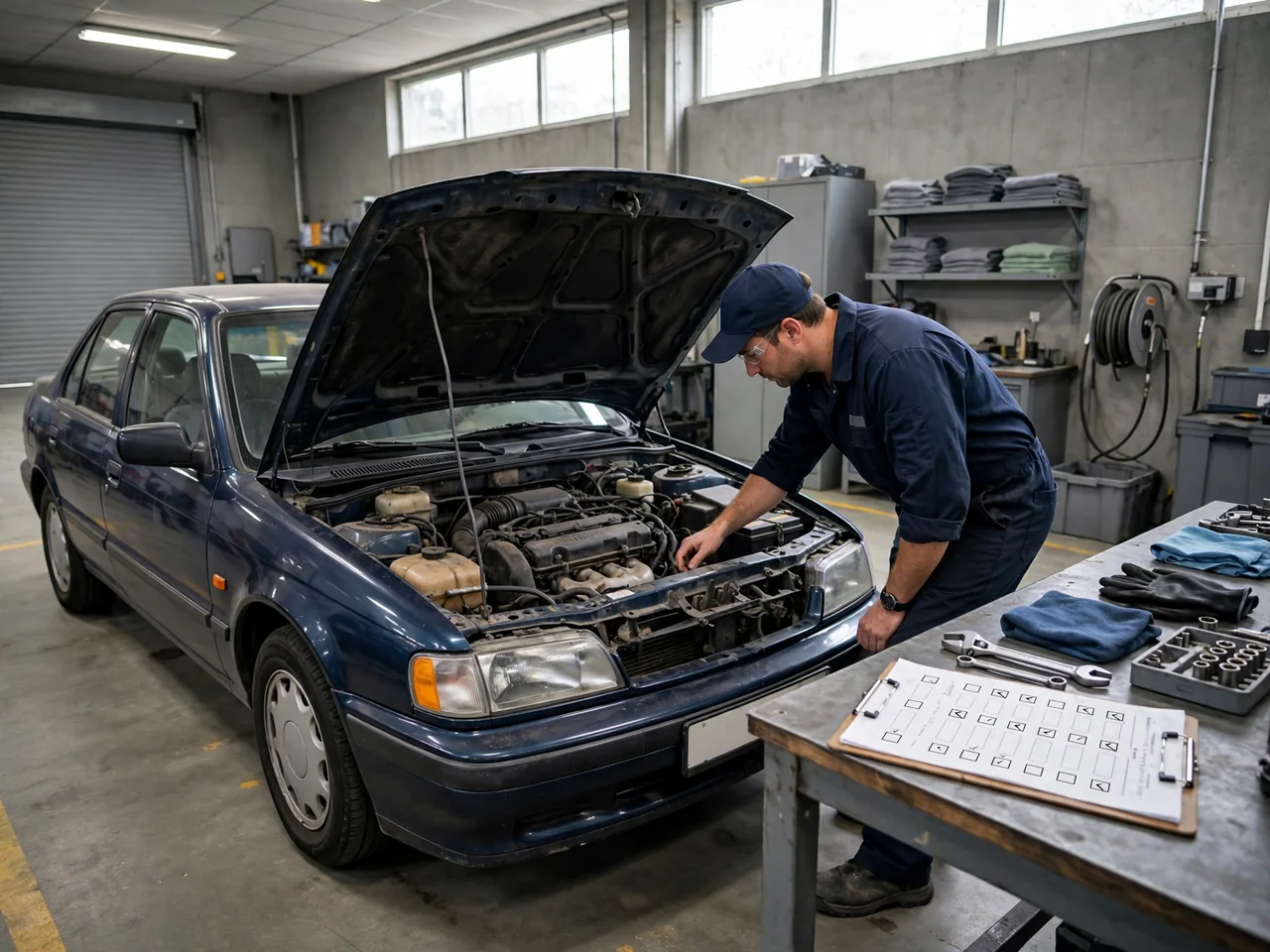
A car maintenance schedule by mileage is useful only when it matches the vehicle. Car maintenance for high mileage starts with the owner's manual and the records of completed work. Time and mileage intervals both apply, and severe driving conditions can move service earlier. From 30,000 miles through years past 100,000, keep fluids, belts, suspension, and inspections on a documented plan instead of guessing from a round number.
Build a Mileage Schedule From the Vehicle’s Maintenance Requirements
The only reliable car maintenance schedule mileage comes from the schedule written for that model year, engine, and transmission. The owner's manual, in-vehicle maintenance screen, or a dealer printout keyed to the VIN lists those tasks. Do not borrow a chart from a similar model or a generic 30-60-90 list. Engine family, drivetrain layout, and transmission type change which fluids, filters, and inspections apply. Confirm the published time and mileage intervals and, when both are listed, follow whichever comes first so calendar age is not ignored on a low-mileage car.
Round numbers such as 30,000 miles are planning checkpoints, not a universal replacement interval for every belt, fluid, or filter. Many items repeat on shorter oil or tire cycles, while others are inspection-only until a later specified limit. Severe driving conditions—short trips, extreme heat or cold, dusty roads, towing, or heavy stop-and-go—may put the vehicle on the manufacturer's severe-service schedule. Compare that schedule with maintenance records so overdue work is identified from what was actually performed, not from the odometer alone.
At 30,000 Miles, Review Routine Service and Inspection Results
At 30,000 miles, start by confirming that recurring oil, oil-filter, and tire services were completed on the applicable schedule, including any earlier time limits. Missed oil changes and neglected rotation show up later as wear, not as a single overdue sticker. Engine air filters and cabin filters have separate requirements; neither should be assumed due simply because the odometer hit a round figure. Replace them when the schedule, inspection, or restricted airflow calls for it, and leave them in service when they still meet the stated interval.
Brake and tire inspections at this checkpoint should rest on measured remaining tread and lining, plus any vibration, pulling, or uneven wear already reported. Those findings decide whether a closer look or service is needed; mileage by itself does not. Scheduled fluid inspections are not the same as fluid changes. A level and leak check on coolant, brake fluid, power steering, or transmission fluid may be due while a drain-and-fill is not. Record what was inspected, what was measured, and whether a change is actually specified.
At 60,000 and 90,000 Miles, Check Upcoming Scheduled Work
The 60,000 and 90,000-mile windows are where spark plugs, coolant, transmission fluid, and other drivetrain fluids often appear on a manufacturer schedule, but only where that schedule actually lists them. Some engines use long-life plugs; some cooling systems specify a first service far from these round numbers; some transmissions call for inspection rather than a change. Check the published requirement for the installed engine and gearbox, then compare it with work already recorded so a fluid that was recently serviced is not changed again solely because the odometer lined up.
Before any timing belt service is planned, confirm whether the engine uses a timing belt, a timing chain, or another drive design. A chain is not maintained on a belt interval, and a belt interval is engine-specific. Accessory belts that drive the alternator, water pump, or air conditioning serve a different job and may have a different inspection or replacement requirement. Vehicle age also matters: rubber and fluids age on the calendar. Previously completed work plus the stated time and mileage limits should decide what is due, not the milestone itself.
After 100,000 Miles, Establish a Documented Maintenance Baseline
Crossing 100,000 miles is a reason to review service history, not a trigger for an automatic package of replacements. High mileage car maintenance works best when documented completed service, overdue scheduled work, and items with unknown history are separated. A missing record is not proof that a part failed; it is a gap that inspection or a conservative follow of the remaining schedule has to close. Build that baseline from invoices, the owner's manual, and current measurements so high-mileage service priorities are based on evidence rather than a round odometer reading.
Safety concerns and overdue critical maintenance come first: braking, steering, tires, lighting, and any scheduled item that protects the engine or drivetrain if it is past due. Remaining work is then planned from inspection findings and the actual remaining intervals. Mileage alone does not justify switching oil viscosity, pouring in additives, or choosing a transmission flush. Those decisions depend on the manufacturer's fluid specifications, the condition found, and the design of the unit. A high-mileage oil or a flush is not required simply because the car passed 100,000 miles.
Track Fluid Loss, Belt Condition, and Suspension Symptoms
Between scheduled visits, safe observations still matter. New driveway spots, a rising need to add oil or coolant, unusual noises, and warning lights are reasons to inspect sooner, not to ignore the next interval. Fluid color on the dipstick or in the reservoir cannot by itself establish fluid condition or identify the correct service. Dark oil can still be within its interval; light-looking fluid can still be contaminated or hygroscopic. Use the specified test or change interval, and treat unexplained loss as a leak or consumption issue that needs diagnosis rather than a top-off habit.
Suspension wear rarely announces itself with a single obvious failure. Uneven tire wear, clunks over bumps, excessive bouncing after a dip, and new steering wander or pull are signs that a professional inspection is due. Those symptoms do not identify a particular ball joint, bushing, or damper. Visible cracking, glazing, or fraying on an accessory belt warrants assessment, but an accessible glance cannot establish remaining life for every belt, especially a timing belt that is covered, or for internal components the belt drives. Inspection findings, not appearance alone, should drive the next step.
At 120,000 Miles and Beyond, Keep the Schedule Current
Past 120,000 miles, keep recurring services on their actual completion dates and mileages instead of resetting every task each time the odometer hits a round figure. Oil, filters, and tires continue on their own cycles; a coolant or plug service already done at 90,000 is not automatically due again at 120,000. Record inspection measurements, the fluid specifications used, the work completed, and the next manufacturer-specified due point. That running log is the practical form of high-mileage car maintenance, and it is what makes a later shop visit faster and more accurate.
Revisit the plan when driving patterns change—new towing, more short trips, hotter climate—or when symptoms appear between visits. Severe driving conditions can move a vehicle onto a shorter interval even late in its life. Some conditions are not a scheduling issue: overheating, an oil-pressure warning, or a sudden loss of braking or steering control means stop safely and arrange help rather than driving to the next appointment. Car maintenance for high mileage stays useful only while the schedule is current, the records are complete, and urgent warnings are treated as urgent.