Car Insurance for a Driving Test: Requirements and Coverage
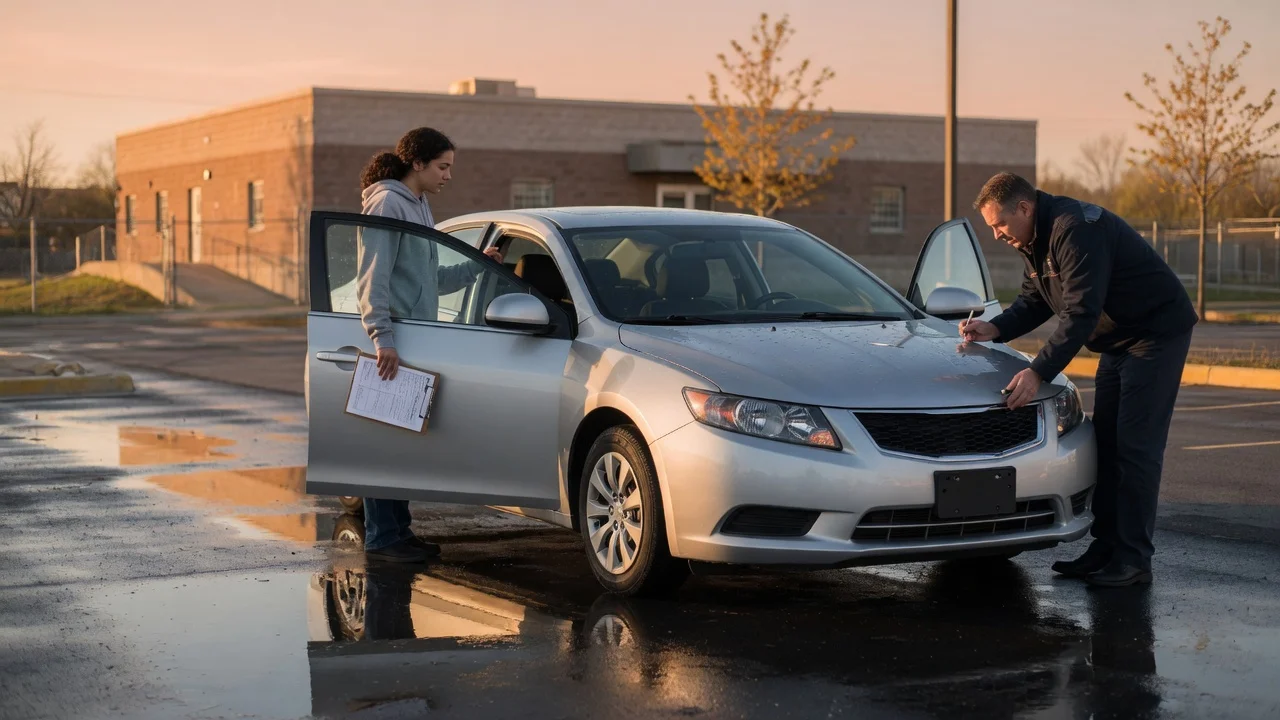
What insurance a driving test actually needs
A car used for a driving test must be legally insured for the person who will drive it during the test. The examiner is not the insured driver. The candidate is. If the policy does not cover that person at the wheel, the test can be refused and any collision on the route would fall outside the policy.
Exact rules, minimum cover and proof documents vary by country and, in the United States, by state. Treat the points below as the practical checklist; confirm the local testing authority’s vehicle rules and the insurer’s wording before test day.
Who must be covered
The policy has to respond while the test candidate is driving on public roads, usually with an examiner in the passenger seat. Cover for the registered keeper or a parent who is not in the car is not enough on its own. Learner status, age, licence type and named-driver clauses all change whether that person is insured.
The candidate must be a permitted, named or otherwise authorised driver under the policy in force that day. Learner-only policies, provisional-licence restrictions and “main driver” rules can exclude a test candidate even when the car itself is insured. An examiner is typically protected by the testing authority’s own indemnity, which does not replace motor insurance on the vehicle. If someone else owns the car, their consent and their insurer’s agreement are both required.
The usual ways to get cover
Most candidates use one of four arrangements. The right choice depends on who owns the car and how the existing policy is written.
Driving-school or instructor car
A dual-control instructor car is the simplest option. Schools carry motor trade or instruction policies designed for lessons and tests, including a candidate at the wheel and an examiner on board. Ask the instructor to confirm that test-day use is included and that any dual-control, signage and vehicle-condition rules of the test centre are met.
Family or friend’s car
Cover is not automatic. Many household policies insure a listed driver only, or they restrict learners, under-25s, or anyone who is not the main user. Call the insurer, add the candidate as a named driver if required, and get written confirmation that the test itself is allowed. Temporary learner policies exist in some markets where the owner’s insurer will not add the candidate, or where adding them would raise the annual premium too far.
The candidate’s own car
If the candidate already insures the car, check that the licence class on the policy matches the test (for example a provisional or restricted licence versus a full licence) and that there is no clause barring tests, tuition or an additional passenger who is an examiner. After a pass, the policy may need an update because the licence status has changed.
Hire or courtesy car
Standard self-drive hire agreements often exclude learners, tests and drivers under a set age. Only use a hire or courtesy car if the rental contract and its insurance explicitly allow a driving test with an examiner. Do not assume collision-damage waiver on a rental replaces the legal liability cover the test centre will look for.
What level of cover is required
Testing authorities generally require the car to meet the same legal minimum as any other vehicle on the road, not a special “test-only” product. In practice that means valid third-party liability at least, plus whatever extra the jurisdiction mandates (such as personal-injury protection or uninsured-motorist cover in some U.S. states). Comprehensive cover is not always a legal test requirement, but it is the cover that pays for damage to the test car itself if the candidate hits a kerb, barrier or another vehicle.
Policy type, excess and named-driver status affect who pays after an incident, not whether the centre will start the test. A large excess on a parent’s comprehensive policy can still leave the family meeting most of a claim if the candidate is at fault.
Documents and vehicle checks on the day
Bring proof that the car is insured and legal to use. Centres differ on format (paper certificate, digital card, or an on-the-spot database check), so follow the booking instructions for that site.
Insurance certificate or digital equivalent showing the vehicle and, where the policy requires it, the candidate as a driver. Registration documents and, where applicable, proof the vehicle is taxed or registered for road use. A current safety inspection or MOT-equivalent pass if the local rules require one for that vehicle’s age. L-plates, supervisory mirrors, dual controls or other learner markings only if the local test rules still require them for that licence class. The owner’s permission if the candidate is not the registered keeper.
Insurance that has lapsed, a policy that names a different car, or a candidate who is not authorised to drive it are common reasons a test is cancelled at the start. Check the registration number, cover dates and driver list the day before.
Points that change the answer
Jurisdiction is the main qualifier. A U.K. practical car test, a U.S. state road test, and other national tests do not share one insurance form or one minimum limit. Some centres verify insurance electronically; others want a document in the car. Some policies cover any licensed driver with the owner’s permission; others cover only named people. Commercial instruction policies and private motor policies are written to different uses, so an instructor’s cover does not automatically extend to a privately owned car used on the same test.
A pass can also change the insurance position the same day: a new full licence, a change from provisional to standard rates, or a no-claims position that still sits with a parent’s policy. Update the insurer after the result so the policy matches the licence the candidate now holds.
What to do next
Decide which car will be used, then ask that car’s insurer three questions: is the candidate authorised to drive it, is a driving test an allowed use, and what proof should be carried. If the answer is no, switch to an instructor’s car or a temporary policy that names the candidate and the test vehicle. Do this before the booking window closes, because adding a driver or arranging short-term cover can take longer than a same-day endorsement.