Car Insurance After a Fender Bender: Claims, Deductibles and Premiums
The essential answer
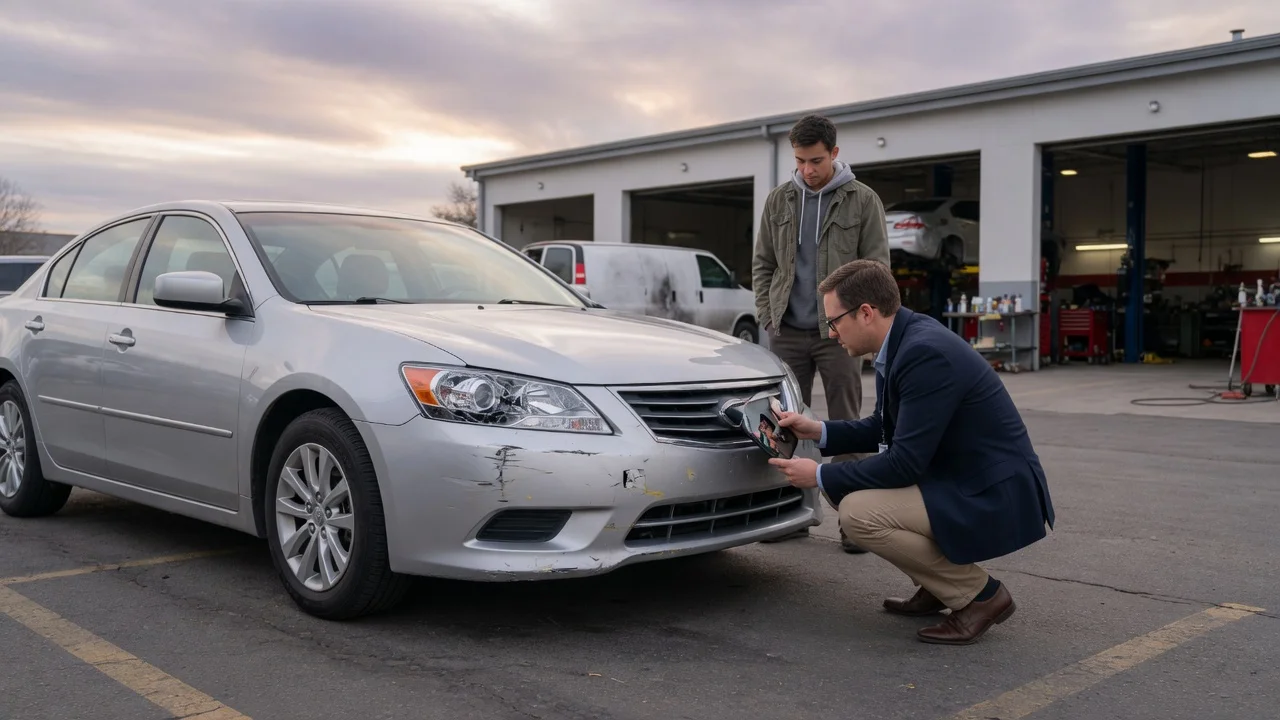
A fender bender is a low-speed collision that usually damages bumpers, fenders, lights, trim or paint rather than the vehicle’s structure. Whether insurance pays, and whether you should use it, depends on three things: the coverages on the policy, who is at fault, and whether the repair bill is larger than the deductible you would owe. Filing a claim can pay for repairs; it can also raise future premiums and use up accident-forgiveness or claims-free discounts. Those trade-offs, not the word “fender bender” itself, decide the next step.
This guide covers a typical personal auto policy after a minor crash. It does not replace the declarations page, the policy contract, or the accident-reporting rules of the state where the crash happened. Coverage names, deductibles, surcharge rules and reporting thresholds vary by insurer, policy form, model year of the vehicle only insofar as repair cost and parts availability change, and especially by state market. Where a figure is not documented here, it is treated as unknown rather than estimated.
Which coverage actually pays
Liability coverage pays other people when you are at fault: their vehicle repairs, and in many policies their bodily-injury costs, up to the limits you bought. It does not pay to fix your own car. Collision coverage, if you carry it, pays to repair or total your vehicle after a crash with another vehicle or object, minus your collision deductible, regardless of fault in many policy forms. Comprehensive coverage is for non-collision events such as theft, hail or hitting an animal; it is usually the wrong bucket for a fender bender. Uninsured or underinsured motorist property-damage coverage, where sold, can apply if the other driver is at fault and has little or no insurance. Medical-payments or personal-injury-protection (PIP) coverages, where required or purchased, address injury costs and are separate from the body-shop bill.
If you lease or finance the vehicle, the lender or lessor often requires collision and comprehensive. If you only carry liability, your insurer will not pay to restore your own bumper or fender after an at-fault crash. A gap in coverage is a policy fact, not a claims-adjuster preference.
Fault, no-fault and who files
In an at-fault (tort) system, the driver who caused the crash is expected to pay the other party’s property damage through liability insurance. You may still file a collision claim on your own policy to get your car repaired faster, after which your insurer may seek recovery from the at-fault insurer (subrogation). If subrogation succeeds, your collision deductible is often reimbursed; that outcome is not guaranteed and depends on liability being accepted and the other policy having enough limit.
In a no-fault system, PIP typically handles injury bills first, while property damage may still be handled through liability, collision, or a state-specific property-damage process. Some states restrict or delay lawsuits for pain and suffering. The same dented bumper can therefore produce different claim paths in different states. The police report, photos, witness accounts and any traffic citation are evidence of fault; they do not, by themselves, force an insurer to accept liability.
Deductibles: the amount you pay first
A deductible is the portion of a covered collision (or comprehensive) loss that you pay before the insurer pays the rest, up to the vehicle’s actual cash value and the policy’s other terms. Liability claims for damage you cause to someone else generally have no deductible on a standard personal auto policy, though that is a policy-form point and should be read on your declarations page. If a repair estimate is $1,200 and the collision deductible is $1,000, insurance would pay the covered remainder after inspection and any betterment or aftermarket-parts terms. If the estimate is below the deductible, a collision claim usually pays nothing toward the repair.
A higher deductible lowers the premium in exchange for more out-of-pocket risk. A lower deductible does the reverse. After a fender bender, the practical test is whether the documented repair cost, including parts, labor, paint blend, diagnostics and possible hidden damage, exceeds the deductible by enough to justify a claim. Hidden damage behind a bumper cover is common enough that a first estimate can rise after the shop removes the cover; until the vehicle is inspected, the true cost is uncertain.
When filing a claim is the better money decision
File when someone is injured, when the other vehicle or property is damaged and liability is in dispute, when your car may be unsafe to drive, or when the repair will clearly exceed the deductible by a wide margin. Also file when the other driver is uninsured or flees, if you have coverage that responds. Do not treat “it looks cheap” as a closed estimate: a cracked radiator support, a misaligned sensor, or a bumper-mounted camera or radar unit can turn a cosmetic hit into a four-figure repair. Advanced driver-assistance systems (ADAS) on many late-model vehicles need calibration after bumper, grille or windshield work; that labor is part of the loss if the policy covers it, and it is a cost you would otherwise pay yourself.
Injury, disputed fault, or damage to other people or property: report promptly and follow the insurer’s and the state’s reporting rules. Your repair cost clearly above the deductible, especially with ADAS, lights or structural parts involved: a collision claim is often the rational path if you carry the coverage. Your repair cost near or below the deductible, no injuries, and fault is clear and minor: paying out of pocket can protect a claims-free record, if the other party agrees in writing and you still meet any legal duty to report. The other driver admits fault and their insurer accepts the claim: you may repair through their liability coverage without using your collision deductible, though you then depend on their process and their limits.
Paying privately does not erase a legal duty to report an accident that meets a state’s injury, damage-amount or tow-away threshold. Those thresholds differ by state and are not listed here. A private cash settlement also does not stop the other party from later claiming injury. Get the agreement in writing, keep photos and estimates, and confirm that any release actually matches what you intend to settle.
How a fender-bender claim can change premiums
Insurers price future coverage using, among other factors, at-fault accidents, not-at-fault accidents in some rating plans, tickets, and how recently those events occurred. An at-fault collision claim is the version most likely to raise the premium at renewal. A not-at-fault claim is less likely to surcharge in many markets, but it can still appear on the claims history that other insurers see when you shop. The size of any increase is not a universal percentage. It depends on the company, the state rating rules, your prior record, the claim payment, and whether the policy includes accident forgiveness.
Accident forgiveness, if you have it, typically waives the surcharge for a first at-fault accident that meets the insurer’s rules (for example, a minimum number of claims-free years). It does not always waive the claim’s effect on a claims-free discount, and it usually applies once. Usage-based or telematics programs may also re-rate after a crash if braking or speed data is part of the score. Shopping after a surcharge is allowed; a new insurer will still see industry claims records and may price the same accident.
A documented, supported finding on the exact average premium change after a minor at-fault claim is not supplied here. Treat any single “average increase” figure you hear as unverified unless it is tied to a named rating filing, regulator report or insurer disclosure for your state and company.
Totals, actual cash value and diminished value
If repair cost plus salvage math exceeds the vehicle’s actual cash value (ACV), the insurer may declare a total loss and pay ACV minus deductible, subject to policy terms and any state total-loss regulation. A low-value older car can total from what still looks like a fender bender, because labor and parts can exceed market value. ACV is typically the pre-crash retail or market value of that year, make, model, mileage and condition, not the cost to replace it with a new vehicle and not the amount you still owe a lender. If you owe more than ACV, only gap coverage (if purchased) is designed to cover that difference.
Diminished value is the idea that a repaired car is worth less than an identical car with no accident history. Some states and some liability claims allow a third-party diminished-value claim against an at-fault driver. First-party diminished-value coverage on your own policy is less common and is a policy-specific question. Whether you can recover it after a minor repair is a legal and market issue; it is not automatic.
What to do after the impact
Move out of traffic if the cars can be driven and local law allows it; switch on hazard lights. Check for injuries. Call emergency services if anyone is hurt or if the vehicles are blocking a live lane. Exchange names, contact details, insurance company and policy numbers, license plate, and vehicle year, make and model. Photograph both vehicles, the scene, license plates and any traffic controls. Avoid admitting fault at the scene. Stick to facts. Fault is determined later from evidence and the policy contracts. Notify your insurer within the time the policy requires, even if you think you will pay yourself. Late notice can complicate coverage. Get a written estimate from a shop that can inspect behind the bumper and identify ADAS calibration. Compare that number with your deductible before you decide to claim. Keep damaged parts and all invoices if you repair out of pocket; you may still need them if the other party’s insurer later accepts liability.
Scope, variants and gaps
Commercial autos, rideshare use, rental contracts, and policies in Canada, the United Kingdom and other markets use different forms and compulsory limits. A personal policy may restrict or exclude coverage if the vehicle was being used for delivery or livery when the crash occurred. Glass-only claims, OEM-versus-aftermarket parts, aftermarket bumper sensors, and branded-title total-loss cars are handled under separate policy and state rules. None of those special cases is specified with a single national rule in the material for this article.
Material uncertainties you should resolve from your own documents and your state: the exact accident-reporting dollar threshold; whether your state is no-fault; your collision and comprehensive deductibles; whether accident forgiveness applies; whether a not-at-fault claim still affects a discount; ADAS calibration cost for your vehicle’s year, make, model and trim; and the insurer’s total-loss threshold. Until those are read from the policy, the declarations page, a written estimate and the applicable state rule, the money decision after a fender bender remains incomplete.