Car EVAP System Explained: Diagram, Parts and How It Works
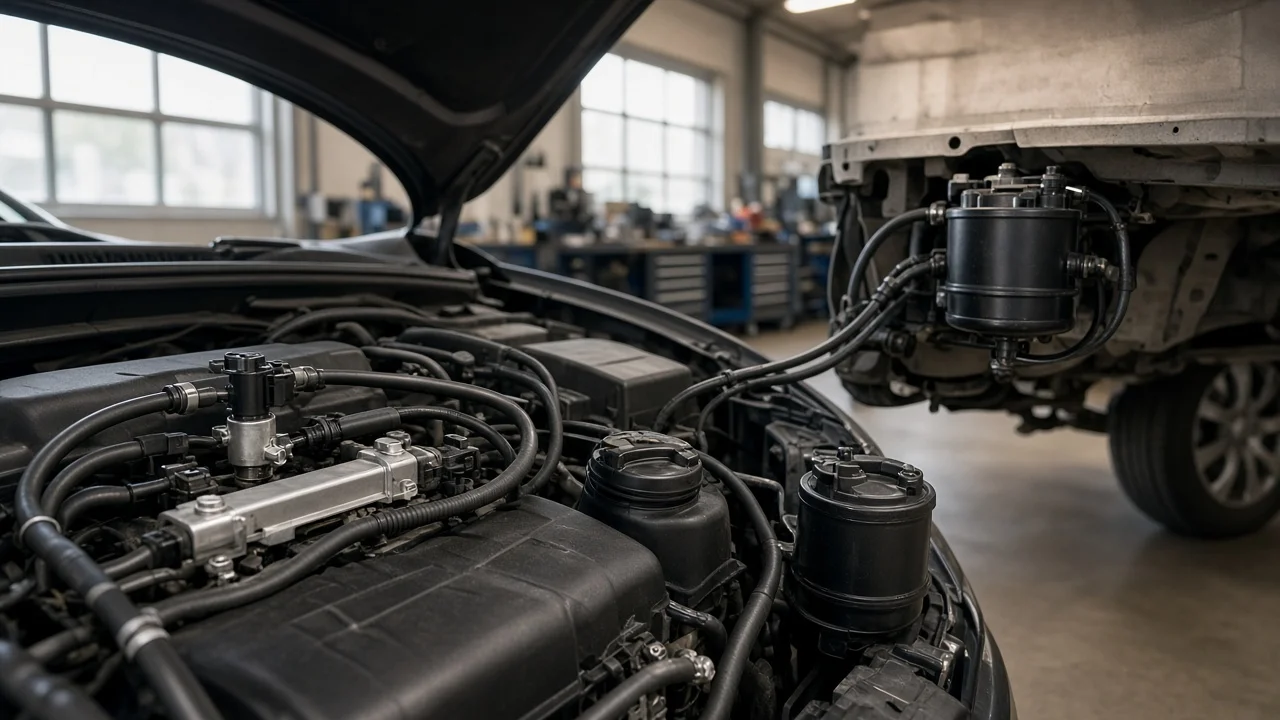
Your car's EVAP system, short for evaporative emission control system, keeps gasoline vapor from escaping the fuel tank into the air. Instead of venting fumes, it stores them and later lets the engine burn them. This guide explains what the EVAP system does in a car, walks through a simple text diagram of how vapor moves, and covers what owners can check before a technician gets involved.
What the EVAP system does in a car
The evaporative emission control system is a sealed network of lines, valves and a charcoal-filled canister that captures fuel vapor from the tank. Gasoline evaporates constantly, more so on hot days and after the car has been parked in the sun. Without an EVAP system, those hydrocarbons would vent straight into the atmosphere, contributing to smog and to the raw-fuel smell common around older vehicles. Modern gasoline cars store the vapor, then feed it into the engine to be burned during normal driving.
It helps to separate the EVAP system from fuel delivery. The fuel pump, fuel filter, fuel rail and injectors work under real fuel pressure to supply liquid gasoline to the engine. The EVAP side handles only vapor and runs close to atmospheric pressure, using small amounts of vacuum or pressure for monitoring. A fault in one does not automatically mean a fault in the other, although both can affect how the engine runs.
Car EVAP system diagram, step by step
Picture the system as three connected paths. Storage path: fuel tank → rollover and vent valves → vapor line → charcoal canister. Purge path: charcoal canister → purge valve → intake manifold → combustion chamber. Fresh-air path: outside air → filter → canister vent valve → charcoal canister. The filler neck and gas cap, or a capless filler, seal the top of the tank, and a fuel tank pressure sensor watches the whole sealed volume.
The charcoal canister is the centerpiece. Activated carbon inside it holds hydrocarbon molecules much like a sponge holds water. On many systems the canister vent valve stays open most of the time, letting displaced air leave clean while vapor stays trapped in the carbon. The purge valve, usually closed, sits between the canister and the intake. When the engine computer opens it, engine vacuum draws fresh air in through the vent, across the carbon, and carries the released vapor into the engine.
How the EVAP system works while you drive
Purging happens only when the engine computer allows it, typically once the engine is warm and running in closed loop. Because the vapor adds fuel that was not metered through the injectors, the computer watches oxygen sensor feedback and adjusts fuel trim to keep the mixture correct. Heavy purge flow from a full canister can briefly push short-term fuel trim toward the negative side, which is normal. A purge valve stuck open, however, can upset the idle and make the engine hard to start right after refueling.
The system also tests itself. During a leak check, the computer closes the vent valve and uses engine vacuum, a dedicated pump, or the natural pressure change as the tank cools to see whether the sealed system holds. If pressure or vacuum decays too quickly, it stores a diagnostic trouble code and turns on the check engine light. Codes in the P0440 to P0456 range point to faults such as incorrect purge flow, purge or vent circuit problems, pressure sensor issues, or leaks classified as small, large or very small. These tests run only when specific conditions are met, such as a suitable fuel level and ambient temperature, so a fault may take several drive cycles to appear or clear.
What changes from one car to another
Fuel type matters first. Gasoline is volatile, so gasoline vehicles carry a full EVAP system. Diesel fuel evaporates far less readily, and many diesel passenger vehicles use simpler tank venting rather than a charcoal canister with a purge valve; check the specific vehicle before assuming either layout. Engine configuration matters too. A naturally aspirated engine has intake vacuum available for purging much of the time, but a turbocharged engine spends periods under boost, when the intake manifold is pressurized. Those engines often use check valves and a second purge route, sometimes with a venturi ahead of the turbocharger, so vapor can still be drawn in.
Hybrids and plug-in hybrids may run the engine so rarely that there are few chances to purge. Many of them use a sealed, pressure-holding fuel tank with an isolation valve, and the fuel door may require a button press so the tank can release pressure before opening. Most modern cars also include onboard refueling vapor recovery, which routes vapor displaced during fill-ups into the canister, and some use capless filler necks with a spring-loaded flap instead of a gas cap. These differences change which parts exist, where they are mounted and how leak tests are run.
What the owner can do
Start with the simplest causes. After a check engine light appears, make sure the gas cap is present, the correct type, tightened until it clicks, and that its rubber seal is not cracked or missing. On capless fillers, look for debris that might hold the flap open. Stop fueling when the nozzle shuts off the first time; topping off can push liquid fuel into the canister, which is designed for vapor only and can be damaged by it.
Note any symptoms and when they occur: a raw fuel smell near the rear of the car, hard starting only after refueling, a pump nozzle that keeps clicking off during fill-ups, or a rough idle. An inexpensive OBD-II scanner can read stored codes and freeze-frame data, and one with live data lets you watch fuel trim behavior. Write the codes down before clearing anything, because clearing them also resets readiness monitors that an emissions inspection may require. A visual check of accessible vapor hoses for cracks or loose connections is reasonable with the engine off and cool.
Avoid steps that go beyond inspection. Do not loosen fuel lines, the fuel filter or injector connections, and do not try to relieve fuel pressure yourself; port-injected systems hold pressure after shutdown, and direct-injection systems operate at far higher pressure. Never use an open flame or create sparks near a suspected vapor leak. Fuel additives and injector cleaners do not seal EVAP leaks or free a sticking valve, so treat claims otherwise with skepticism.
Limitations and next step
This explanation describes typical designs, not every vehicle. Component names, locations, normal valve states and the exact test strategy vary by manufacturer, model year and engine. The same code can come from a loose cap, a cracked hose, a failed valve, a faulty pressure sensor or a wiring problem, so replacing parts based on a code alone often wastes money. Vehicle-specific service information is needed for test procedures and specifications.
If the light returns after you have confirmed the cap, see a technician. A professional leak check typically uses a smoke machine that fills the sealed system with visible, low-pressure smoke to reveal leaks, plus a scan tool that can command the purge and vent valves during testing. A strong fuel odor, especially inside the cabin or with visible wetness under the car, should be inspected promptly rather than driven on. EVAP components may also be covered by an emissions warranty, so check your vehicle's documentation before paying for repairs.